

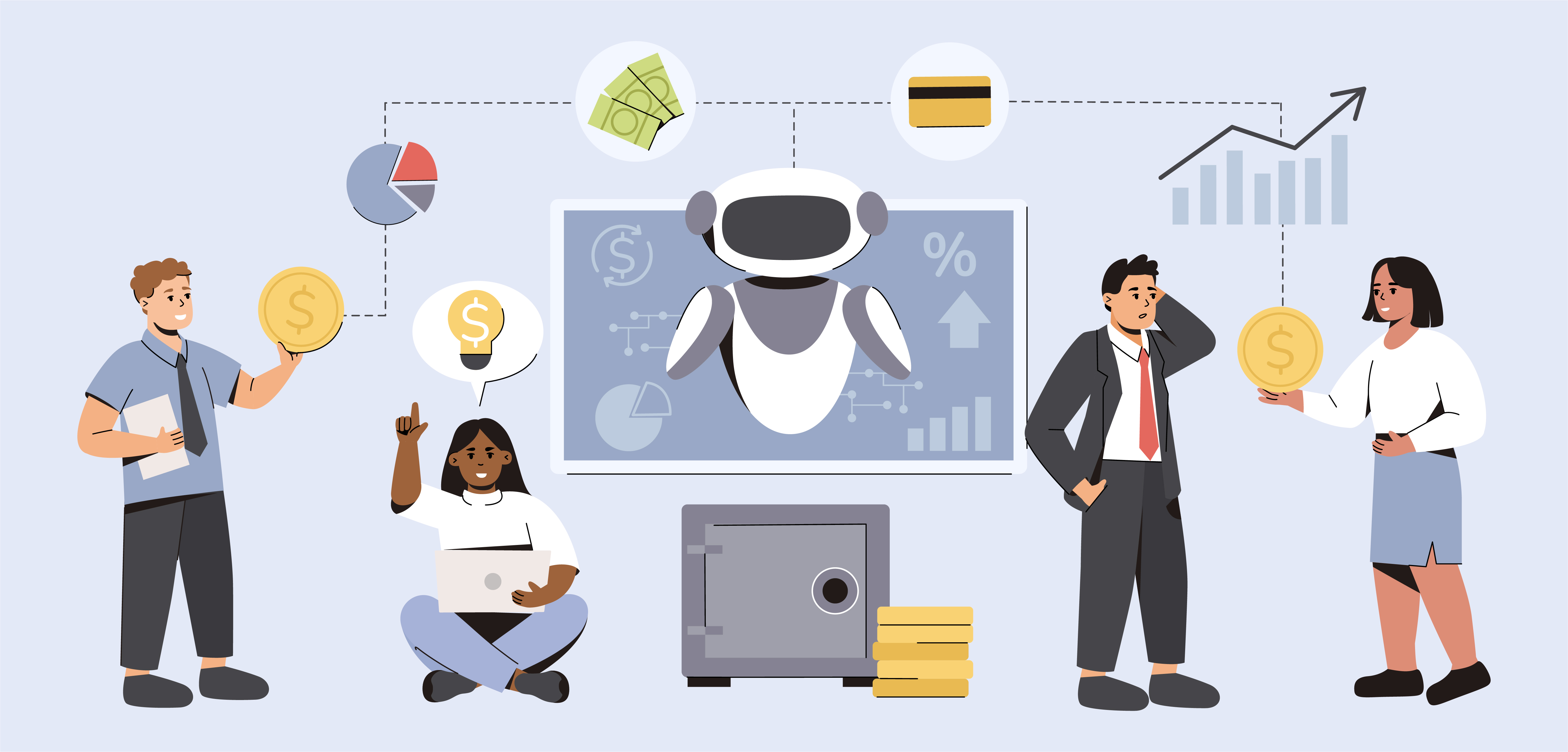
Imagine, you are scrolling through your phone, and every customer interaction feels like ‘that’s what I wanted’-- No generic emails, no irrelevant ads, and no repetitive loops. That’s what AI agents in marketing do-automation that feels alive.
For marketers, scaling personalisation used to be challenging. Today, with agentic AI, we do more than just scale- we adapt in real time. AI agents are your backstage conductors. They detect signals, make decisions, and facilitate smooth experiences, so that you can dedicate your time to strategy, creativity, and connection.
In this blog, we will look at how AI agents are shaping the customer journey, why an AI agent would help, and the human inputs that will still be important.
How AI Agents are Transforming Customer Journeys: A Step-by-Step View
AI agents aren’t a futuristic concept anymore. These systems can analyse context, take action, and repeat autonomously.
- Define Goals and Desired Outcomes: Determine what you want to achieve before building an agent. Decide whether you want to increase conversions, reduce drop-offs, enhance customer retention, or increase upsell rates. Set key metrics and guardrails. These goals guide agent decisions.
- Map out the Journey and Pain Points: Outline your customer journey: discovery, engagement, conversion, nurture, and loyalty. Make sure to pinpoint friction, delays, gaps, and decision nodes at each stage.
- Figure out where your prospects stall and where you have repeated manual handoffs. These are the candidate zones for AI agents.
- Design Agent Roles and Responsibilities: Assign the AI agents specific tasks, like:
- Find the intent, whether it is browsing behaviour or content interaction.
- Route or escalate leads.
- Trigger message variants, offers, and A/B tests.
- Arrange across channels (email, SMS, push, chat).
- Learn from outcomes and adapt.
- Data, Integration, and Context: A powerful AI agent works with data, including customer profiles, journey history, behavioral signals, and external intent data. All of this data should be tied together: this includes the CRM, analytics, and content systems. In addition, context matters. Agents need memory; they need to know what the prospect has seen, what they have clicked, and what they have asked, so they do not repeat or contradict themselves.
- Decision / Logic layer: This is where the agent "thinks." It uses either models or rules to decide which next step to take (which message to send, in which channel to send it, when to stop sending messages, when to escalate to a human agent, and so on). In practice, it typically works best to use some hybrid of pure rules based on safe zones and learning where patterns are rich and predictable.
- Actions & Orchestration: Now that an agent has decided, it acts by sending a message (when applicable), updating a record, queuing something internally, or escalating to a person. The orchestration also needs to ensure some consistency across relevant channels while following business rules.
- Monitoring, Feedback, and Iteration: Observe the agent once the deployment is done. Check whether its decisions are beneficial. Monitor metrics, analyse missteps, give human feedback, and retrain models. This cycle can be complex.
- Governance and Oversight: Ensure you wrap your agents with governance, such as access controls, audit logs, escalation paths, ethical constraints, and fallbacks. You don’t want them acting in a vacuum. Do not try to build everything at once; instead, opt for a stage-by-stage approach. Start with one journey, one agent, one case, and expand further.
Benefits of Using AI Agents in Marketing
Here are the benefits of applying this structured approach:
- Precision & Relevance: Agents utilising real-time signals and journey context can more accurately determine which message or channel will capture prospects.
- Faster Reactions: Since agents make real-time decisions, prospects engage when they're most receptive, not minutes or hours later.
- Less Waste & Redundancy: Agents avoid sending duplicate or contradictory messages because they have a memory of state.
- Operational Scale: You don't have to multiply headcount to accommodate more users, more channels, or more variants.
- Continuous Improvement: Every action is data; every result is feedback to agents that they will continue to improve, often outperforming static rules.
- Unified Experience: When agents coordinate across systems, the journey feels cohesive, rather than disjointed.
These are not hypothetical; marketers who have incorporated agentic AI have higher conversions, customer experience, and improvement (less in-the-moment rescue).
Why Does Human Touch Still Matter?
Even with smart agents functioning in the background, relying entirely on artificial agents is impractical. Here’s why:
- Edge cases & Exceptions: Not all customer behavior fits neat models. There are times when odd or high-stakes situations require humans to take over.
- Brand Identity and Emotional Resonance: Humans own tone, values, humor, and stories. While agents do the scaffolding, humans fill the soul.
- Ethics, Fairness & Trust: Autonomous agents need moral limitations. Humans observe, track, adjust bias, and protect user privacy.
- Strategic Creativity & Innovation: Agents optimise, but humans create. New offers, campaigns, and innovative moves come from human imagination.
- Interpersonal Relationships and Loyalty: In many settings (B2B, service, long purchase cycle), people prefer human interaction over bots. Agents can warm up, but humans can resolve queries and close the loop.
Final Thoughts
Adopting AI agents is a disciplined journey. From defining goals to mapping journeys, establishing roles, integrating data, deploying cautiously, iterating, and governing, you need to focus on all aspects.
By doing so, AI agents can transform friction into fluidity, responses into right-time resonance, and scale into personal relevance. However, the process can only succeed if there’s human involvement, be it steering, refining, empathising, and adding meaning.
Web Circle help clients adopt AI agents. Its balanced approach will help you automate smartly by preserving the human touch.
FAQs
How soon can I see results from deploying an AI agent?
The result would depend on the use case and data quality. However, many organisations show measurable enhancement in key metrics (open rate, conversion, and engagement) within weeks of first deployment.
Which use cases are best suited for AI agent pilots?
Lead qualification, message timing optimisation, routing or escalation, and next best offer selection are good starting points. They are relatively bound and rich in behavioral signals.
How do I avoid repetitive or conflicting messaging by the agent?
To avoid repetitive or conflicting messaging by the agent, ensure it has memory (state), context, content constraints, and logic. Do include fallback rules and human oversight.