


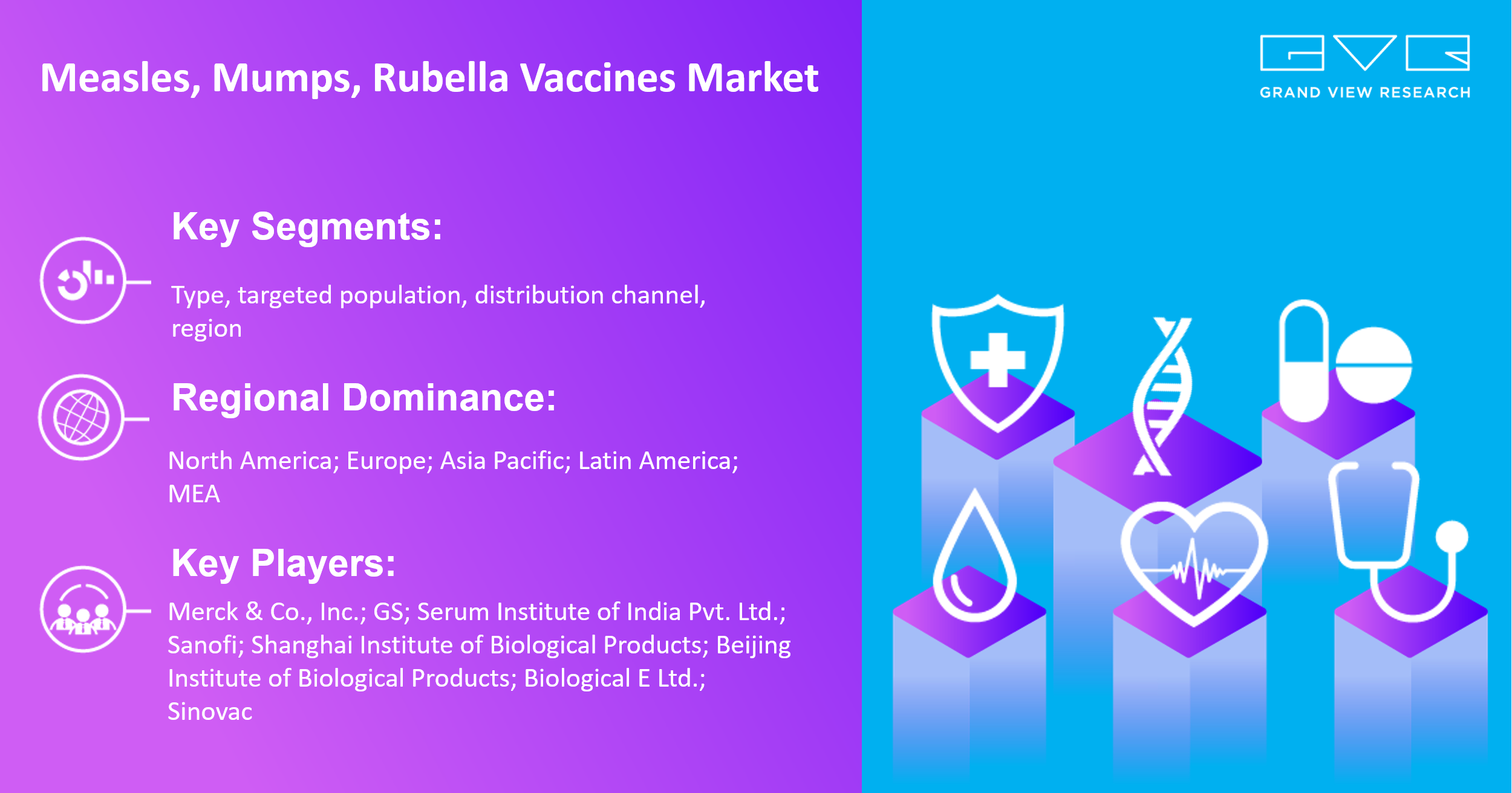
San Francisco, 03 October 2025: The Report Measles, Mumps, Rubella Vaccine Market (2025 - 2030) Size, Share & Trends Analysis Report By Type (Monovalent, Trivalent), By Target Population (Infants & Children, Adults), By Distribution Channel (Hospitals & Healthcare Institutions), By Region, And Segment Forecasts
The global measles, mumps, rubella vaccine market size is expected to reach USD 2.95 billion by 2030, registering a CAGR of 8.47% from 2025 to 2030, according to a new report by Grand View Research, Inc. This growth is due to increasing government support and public health campaigns. A key turning point was in April 2025, when the U.S. Health Secretary Robert F. Kennedy Jr., a long-time vaccine skeptic, publicly endorsed the MMR vaccine amidst a surge in measles outbreaks in Texas. His public reversal and endorsement came after the second measles-related death in the state, drawing significant media attention and spurring nationwide discussion. Although it stirred backlash from segments of his prior supporter base, Kennedy's statement played a vital role in shifting public perception and reinforcing the importance of MMR vaccination. This event served as a catalyst for boosting vaccination campaigns and improving compliance among hesitant populations. High-profile endorsements can create powerful ripple effects across communities, strengthening efforts to increase immunization coverage and minimize the risk of future outbreaks, especially in areas facing rising anti-vaccine sentiment.
Product approval is another major growth driver in the MMR vaccine market. In June 2022, GSK announced that the U.S. Food and Drug Administration (FDA) approved its Priorix vaccine for active immunization against measles, mumps, and rubella in individuals aged 12 months and older. Already licensed in over 100 countries, including Canada, Australia, and across Europe, Priorix has distributed over 800 million doses globally, demonstrating its reliability and widespread use. Its FDA approval provided U.S. healthcare providers with an alternative to Merck's M-M-R II, enhancing supply chain resilience and meeting rising demand amid global outbreaks. The availability of more options also fosters competition, potentially reducing costs and improving accessibility. Regulatory approvals such as this not only validate the safety and efficacy of new vaccines but also expand the overall market by encouraging adoption among both healthcare professionals and hesitant individuals.
Government initiatives continue to play a central role in driving the MMR vaccine market growth. In February 2025, the New Mexico Department of Health launched a dedicated online resource in response to an alarming rise in measles cases. This initiative focused on raising awareness, identifying local outbreaks, and educating the public about the importance of timely vaccination. It represents a broader trend in which state and national governments are leveraging digital platforms to enhance public engagement, address misinformation, and support immunization logistics. Government-led awareness campaigns, school-entry vaccine requirements, and increased funding for immunization programs are proving effective in mitigating outbreak risks and ensuring community-wide protection. Such efforts reflect a global policy commitment to achieve measles elimination targets, especially after setbacks during the COVID-19 pandemic. Coordinated government action remains critical in maintaining high vaccination rates and ensuring the success of public health efforts.
In the Asia Pacific region, local manufacturers and public-private collaborations are playing a vital role in expanding MMR vaccine accessibility. In November 2023, Indian Immunologicals Limited (IIL) launched the Mabella vaccine-a measles and rubella combination vaccine developed in partnership with the Polyvac Institute of Vietnam. This launch coincided with the 25th anniversary of the Human Biologicals Institute and marked a significant milestone in India’s efforts to provide affordable vaccines to its population. The Mabella vaccine supports India’s Universal Immunization Programme (UIP), which targets millions of children annually. By offering a domestically produced, cost-effective alternative, this launch has the potential to strengthen vaccination coverage, especially in underserved regions. Moreover, such collaborations signify the importance of regional vaccine self-sufficiency and innovation. As more countries in Asia Pacific develop and license their own vaccines, the regional market is set to grow rapidly, reducing dependency on imported formulations and boosting health infrastructure.
Request sample report of Measles, Mumps, Rubella Vaccines Market@ https://www.grandviewresearch.com/industry-analysis/measles-mumps-rubella-vaccine-market-report/request/rs1
Targeted immunization programs in response to localized outbreaks also contribute significantly to market expansion. For example, in November 2024, Sri Lanka’s Ministry of Health initiated a special vaccination campaign targeting specific districts following a rise in measles cases. This week-long program focused on high-risk areas where immunization coverage had declined and aimed to contain the spread through rapid, door-to-door vaccine deployment. These focused interventions showcase how agile, targeted strategies can rapidly close immunity gaps and prevent disease resurgence. Such national initiatives often receive support from global health organizations like the WHO and UNICEF, further amplifying their impact. In low- and middle-income countries, where routine vaccination systems may face infrastructural or funding challenges, these targeted drives are crucial. They highlight the importance of responsive public health policies and demonstrate how even short-term campaigns can fuel market demand, support local vaccine distribution networks, and contribute to global disease elimination goals.
Measles, mumps, and rubella are viral infections that pose significant risks, particularly to non-immune pregnant women and their unborn children or newborns. The rising prevalence of these diseases and frequent outbreaks are key factors fueling market growth. According to the World Health Organization (WHO) and Centers for Disease Control and Prevention (CDC), measles claimed an estimated 107,500 lives globally in 2023, with the majority of victims being children under five. The WHO also reported a 20% increase in global measles cases from 2022 to 2023, totaling approximately 10.3 million infections. As per CDC data from April 2025, seven measles outbreaks-defined as three or more linked cases-were reported, with 93% (660 out of 712) of confirmed cases associated with these outbreaks. In contrast, 2024 saw 16 outbreaks, accounting for 69% (198 out of 285) of total cases.
Outbreaks are largely driven by under-vaccination caused by misinformation, vaccine hesitancy, and under-resourced healthcare systems. In response, governments and public health agencies have launched extensive immunization initiatives aimed at curbing the spread of these diseases. National programs, such as the Expanded Programme on Immunization (EPI), incorporate MMR into standard childhood vaccination schedules. Routine measles immunization, supplemented by mass vaccination campaigns in regions with low coverage, remains a crucial strategy in reducing global measles-related mortality, especially in low-income countries, where about 95% of these deaths occur.
The WHO advocates for two doses of measles vaccine for every child, administered either alone or as part of combination vaccines like MR (measles-rubella), MMR (measles-mumps-rubella), or MMRV (measles-mumps-rubella-varicella). In April 2024, the Iraqi Ministry of Health, with support from UNICEF and WHO, launched a nationwide vaccination campaign targeting over 7.5 million children aged 6 to 12 years to protect against measles, mumps, and rubella.
Public funding and free vaccine distribution are critical for ensuring equitable access, particularly in underserved populations. International organizations such as WHO, UNICEF, Gavi-the Vaccine Alliance-and the Pan American Health Organization (PAHO) play vital roles in supporting global immunization efforts, especially in low- and middle-income countries. Their collaborative initiatives significantly improve vaccine accessibility, equity, and coverage.
Increased public awareness of vaccine-preventable diseases has further contributed to market growth. Awareness efforts, such as WHO's World Immunization Week held during the first week of April 2025, emphasize the importance of vaccines across all age groups. Public health campaigns have been instrumental in improving immunization rates and promoting community-wide protection.
Gavi, the Vaccine Alliance-a global health partnership-has been central to advancing vaccine access in low-income countries. Through innovative financing mechanisms like the International Finance Facility for Immunization (IFFIm), Gavi secures long-term funding to issue bonds, accelerating vaccine procurement and distribution. This model has proven effective in addressing global health emergencies and enhancing access to life-saving immunizations.




Clostridium difficile is a gram-positive, spore-forming bacillus, anaerobic, which is identified to cause-related pseudomembranous colitis and diarrhea.
Clostridium difficile infection (CDI) is a severe medical condition as well as even though increased awareness of CDI spates has heightened surveillance.There are exceptionally less accepted drugs for the cure of clostridium difficile infections as well as in general, off-label drugs are utilized often to treat these infections.
Major market players in the worldwide market are concentrating on fortifying their positioning by purchasing small but conventional producers of medicines for the treatment of clostridium difficile infection along with are developing producing capabilities to attain economies of scale.Request For Report Sample: https://www.researchreportinsights.com/report/sample/110114856/Clostridium-Difficile-Infection-Treatment-MarketVancomycin Drug Type will be Witnessing a Firm Growth in the Global Clostridium Difficile Infection Treatment Market During the Calculated Through 2025The worldwide market for clostridium difficile infection treatment is considered to account for a market valuation in excess of US$ 1,316.7 Million through 2025 end, up from an approximated figure of US$ 752.3 Million in 2016 end and creating an incremental opportunity of about US$ 519.6 Mn during 2017 to 2025.
The global market for clostridium difficile infection treatment is likely to see firm expansion all through the calculated period with a 6.5% CAGR in value terms.Market SegmentationBased on the drug type, the worldwide market includes fidaxomicinthe, vancomycin and metronidazole.
The vancomycin is anticipated to record a stable expansion all through the calculated period by a CAGR of 6.3% in the said period.On the basis of the route of administration, the worldwide market includes injectable and oral.
The injectable category is likely to see noteworthy expansion all through the anticipated period with a 7.1%CAGR over the predicted period.On the basis of the distribution channel, the overall market includes mail order pharmacies, retail pharmacies and hospital pharmacies.

UpMarketResearch offers a latest published report on “Global Ferro Silicon Powder Market Analysis and Forecast 2018-2025” delivering key insights and providing a competitive advantage to clients through a detailed report.
Get Free Exclusive PDF Sample Copy of This Report https://www.upmarketresearch.com/home/requested_sample/23718 Ferro Silicon Powder Industry research report delivers a close watch on leading competitors with strategic analysis, micro and macro market trend and scenarios, pricing analysis and a holistic overview of the market situations in the forecast period.
It is a professional and a detailed report focusing on primary and secondary drivers, market share, leading segments and geographical analysis.
Further, key players, major collaborations, merger & acquisitions along with trending innovation and business policies are reviewed in the report.
The report contains basic, secondary and advanced information pertaining to the Ferro Silicon Powder Industry global status and trend, market size, share, growth, trends analysis, segment and forecasts from 2018 - 2025.
In this study, the years considered to estimate the market size of Ferro Silicon Powder : History Year: 2013-2017 Base Year: 2017 Estimated Year: 2018 Forecast Year 2018 to 2025 The scope of the report extends from market scenarios to comparative pricing between major players, cost and profit of the specified market regions.
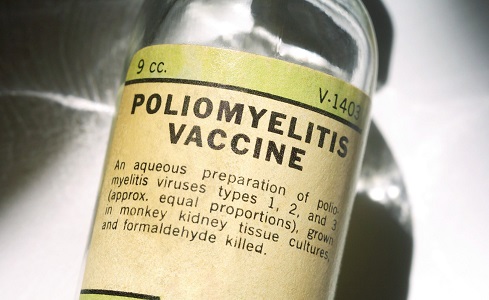
Get FREE Sample Report Before Buying @ https://www.upmarketresearch.com/home/requested_sample/7034 UpMarketResearch offers a latest published report on “Global Poliomyelitis Vaccines Market Analysis and Forecast 2018-2025” delivering key insights and providing a competitive advantage to clients through a detailed report.
Further, key players, major collaborations, merger & acquisitions along with trending innovation and business policies are reviewed in the report.
The numerical data is backed up by statistical tools such as SWOT analysis, BCG matrix, SCOT analysis, PESTLE analysis and so on.
The statistics are represented in graphical format for a clear understanding on facts and figures.
The generated report is firmly based on primary research, interviews with top executives, news sources and information insiders.
Region-wise Analysis Global Poliomyelitis Vaccines Market covers:North AmericaEuropeChinaJapanIndiaSoutheast AsiaOther regions (Central & South America, Middle East & Africa) The Major players reported in the market include:SanofiGSKBibcolSerum InstituteTiantan BiologicalIMBCAPanacea Biotec LtdBio-MedHalfkin Bio-Pharmaceuticals For More Information, Please Visit https://www.upmarketresearch.com/home/enquiry_before_buying/7034 Global Poliomyelitis Vaccines Market: Product Segment Analysis:IPVOPV Global Poliomyelitis Vaccines Market: Application Segment Analysis:Research & Academic LaboratoriesPharmaceutical & Biotechnology CompaniesOthers Global Poliomyelitis Vaccines Market: Key Stakeholders:Poliomyelitis Vaccines ManufacturersPoliomyelitis Vaccines Distributors/Traders/WholesalersPoliomyelitis Vaccines Subcomponent ManufacturersIndustry AssociationDownstream Vendors In this study, the years considered to estimate the market size of Poliomyelitis Vaccines are as follows:History Year: 2013-2017Base Year: 2017Estimated Year: 2018Forecast Year 2018 to 2025 The Report covers in-depth analysis as follows:1 Industry Overview of Poliomyelitis Vaccines2 Manufacturing Cost Structure Analysis of Poliomyelitis Vaccines3 Technical Data and Manufacturing Plants Analysis of Poliomyelitis Vaccines4 Global Poliomyelitis Vaccines Overall Market Overview5 Poliomyelitis Vaccines Regional Market Analysis6 Global 2013-2018E Poliomyelitis Vaccines Segment Market Analysis (by Type)7 Global 2013-2018E Poliomyelitis Vaccines Segment Market Analysis (by Application)8 Major Manufacturers Analysis of Poliomyelitis Vaccines9 Development Trend of Analysis of Poliomyelitis Vaccines Market10 Poliomyelitis Vaccines Marketing Type Analysis11 Consumers Analysis of Poliomyelitis Vaccines12 Conclusion of the Global Poliomyelitis Vaccines Market Professional Survey Report 2017 Buy Poliomyelitis Vaccines Market analysis & forecast 2018-2025 Report along with complete TOC @ https://www.upmarketresearch.com/buy/poliomyelitis-vaccines-market “Poliomyelitis Vaccines Market Analysis and Forecast 2018-2025” report helps the clients to take business decisions and to understand strategies of major players in the industry.