

In today’s competitive market, maintaining product quality and consumer trust is crucial. The ISI Mark Certification plays a vital role in ensuring that products sold in India meet defined safety, quality, and performance standards. Managed by the Bureau of Indian Standards (BIS), the ISI Mark symbolizes reliability and compliance with national standards. Whether it’s electrical appliances, construction materials, or household products, the ISI Certification assures consumers that the product is safe, durable, and tested for performance.
What is the ISI Mark?
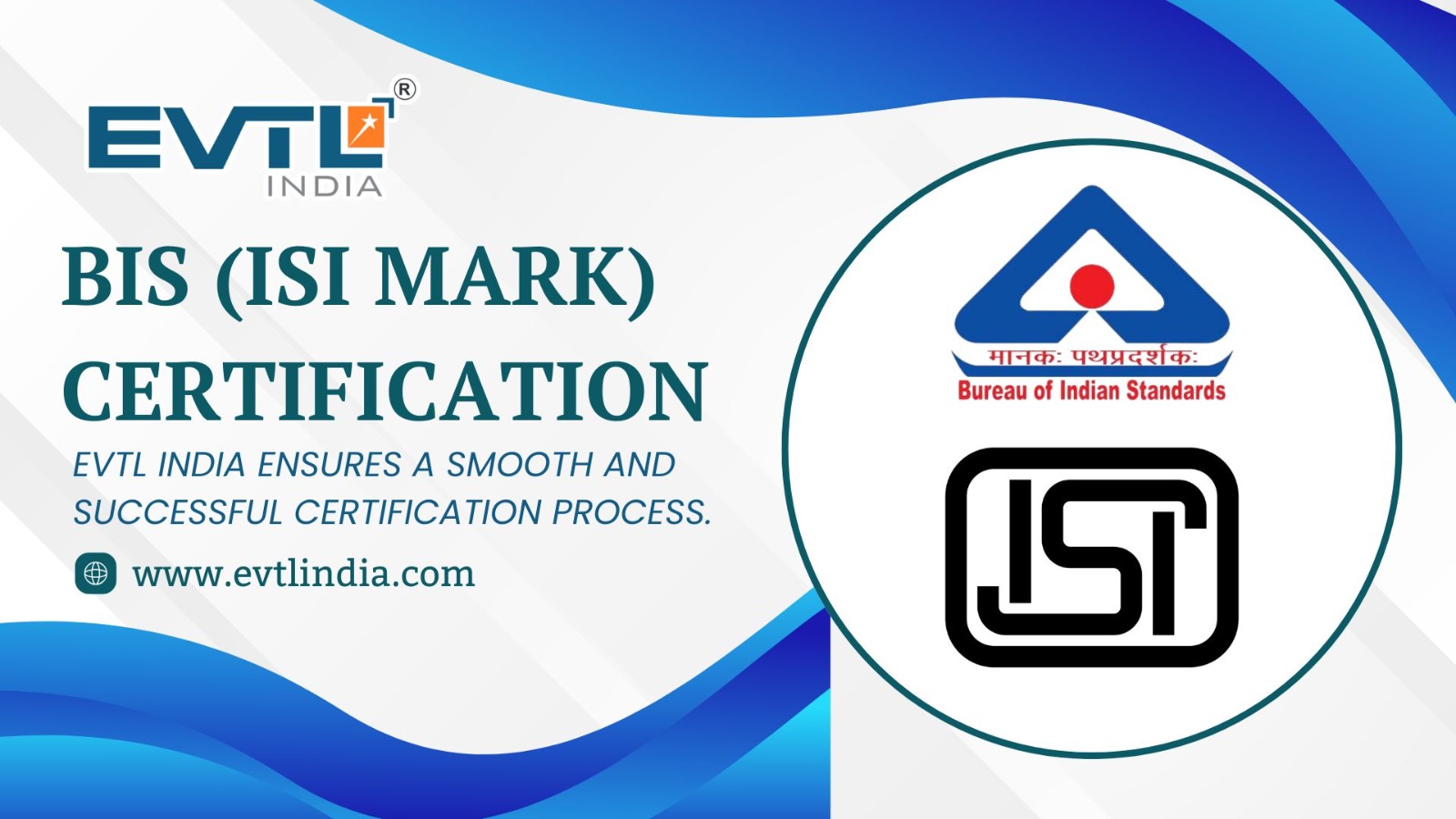
The ISI Mark stands for the Indian Standards Institute, now known as the Bureau of Indian Standards (BIS). It serves as a symbol of quality assurance for products manufactured and sold in India. Any product carrying the ISI Mark indicates that it has been tested according to the specifications prescribed under Indian Standards (IS).
The mark is not merely a label—it reflects the manufacturer’s commitment to quality and safety. Products with ISI Mark undergo strict quality checks, factory inspections, and laboratory testing before they reach the market.
Importance of ISI Mark Certification
The ISI Mark Certification is more than just a compliance requirement; it builds a foundation of trust between manufacturers and consumers. Here’s why it holds immense importance:
Assures Quality and Safety: Products with ISI Mark ensure that they meet all the technical and safety requirements specified by BIS.
Legal Requirement for Certain Goods: For many products, such as electrical wires, cement, LPG cylinders, and switches, ISI Certification is mandatory before sale in India.
Market Acceptance: ISI Marked products enjoy higher consumer preference and market credibility.
Reduces Risks: Manufacturers minimize product failures, recalls, and reputational damage by following BIS standards.
Government Recognition: ISI Certification reflects compliance with national regulations, making it essential for government tenders and large-scale projects.
ISI Mark Registration Process
The ISI Mark Registration process is a systematic approach that ensures product quality through assessment, inspection, and testing. Below is the step-by-step process:
Selection of Product and Standard Code:
Identify the applicable Indian Standard (IS Code) related to your product. Each product category has a unique IS number defined by BIS.
Filing Application:
The manufacturer submits an online application with necessary documents, including manufacturing details, factory layout, and test reports.
Product Testing:
Samples of the product are sent to a BIS-recognized laboratory for quality testing as per the applicable Indian Standard.
Factory Inspection:
BIS officials conduct an inspection of the manufacturing unit to ensure production facilities, raw materials, and quality control systems meet the required norms.
Grant of Licence:
Upon successful evaluation of test results and inspection reports, BIS grants the ISI Mark Licence to the manufacturer.
Post-Certification Surveillance:
Even after certification, BIS conducts periodic factory inspections and sample testing to maintain consistent product quality.
Documents Required for ISI Certification
To apply for ISI Certification, manufacturers must submit the following key documents:
Factory registration and manufacturing licence
Details of machinery and production process
Test reports from a BIS-approved laboratory
Quality control plan and internal test records
Factory layout and list of equipment
Authorized signatory details and undertakings
Products Under Mandatory ISI Mark Certification
The Government of India mandates ISI Mark Certification for specific products to ensure consumer safety. Some examples include:
Electrical appliances such as switches, fans, and wires
Household and industrial LPG cylinders
Cement, steel bars, and building materials
Automotive tyres and tubes
Packaged drinking water
Pressure cookers and helmets
These products cannot be sold in India without a valid ISI Mark Licence.
Validity and Renewal of ISI Licence
The ISI Mark Licence is generally valid for two years and can be renewed by submitting the renewal application along with the latest test reports and compliance records. Regular surveillance and adherence to BIS standards are mandatory for renewal approval.
Benefits of Obtaining ISI Certification
The ISI Certification offers numerous advantages to manufacturers, businesses, and consumers alike:
Enhanced Brand Value: Products with ISI Mark are recognized for their superior quality and compliance.
Consumer Confidence: It assures customers that the product meets Indian safety and performance standards.
Market Access: Helps manufacturers enter both domestic and government markets easily.
Reduced Product Liability: Ensures fewer risks of accidents, failures, or consumer complaints.
International Recognition: BIS standards are widely accepted, supporting exports to various countries.
ISI Mark vs Non-ISI Products
The difference between ISI Marked and Non-ISI products lies in assurance and accountability. While ISI products go through rigorous quality control and testing, non-ISI products may compromise on safety or performance. For critical sectors like construction, automotive, and electrical goods, choosing ISI-marked products ensures long-term reliability and consumer protection.
Role of BIS in ISI Certification
The Bureau of Indian Standards (BIS), established under the BIS Act, 2016, is responsible for granting ISI Certification. It formulates national standards, conducts inspections, and ensures compliance across industries. BIS also collaborates with international standardization bodies to align Indian standards with global benchmarks, ensuring that Indian products maintain international competitiveness.
How Professional Consultants Help
Obtaining ISI Mark Certification can be a technical and documentation-heavy process. Professional BIS Consultants assist manufacturers by managing applications, coordinating with BIS officials, preparing documents, and ensuring timely certification. Their expertise reduces errors and helps manufacturers achieve compliance faster and more efficiently.
Conclusion
EVTL India is one of the leading BIS Consultant in India, helping manufacturers obtain their BIS licences hassle-free. The ISI Mark Certification is not merely a regulatory requirement—it is a symbol of trust, safety, and quality. It empowers consumers to make confident choices and enables manufacturers to demonstrate their commitment to excellence. With India’s growing focus on quality manufacturing under initiatives like Make in India, the ISI Mark continues to play a key role in building a safer, stronger, and more reliable market ecosystem.

Before knowing about the clauses and rules of certification we must know what is actually BIS certification.
In this article we will tell you everything you should know about the BIS certification this certification is, however, one of the most prominent ways to make your product immediately trustworthy in the eyes of the customers wholesalers retailers and other parties as the certificate provides a sense of truth and perfection to the product so let’s just know a bit more about this certification through this article
What is the Bureau of Indian standard?
To be very authentic this certification has taken place in our country many years ago it has been established in our country since the time of 1947.BIS came into existence in 1987 through an Act of Parliament.
So what is this is product certification scheme before heading towards the deep insides of the scheme we should know what actually it is and how does it work it is truly said that this BIS Compulsory Registration Scheme is eventually every essential for those manufacturers those are manufacturing some particular goods which throw bad effects on the public health and environment
BIS product certification scheme is one of the largest in the world, with over 26500 licensees covering more than 900 products.