





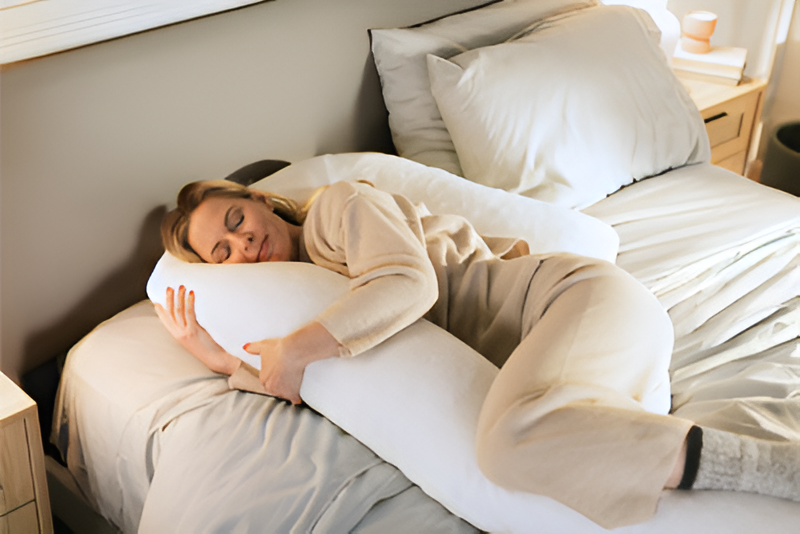
If your neck hurts when you wake up, your pillow may be the problem. The right cervical pillow keeps your head, neck, and spine in a straight line. This helps your muscles relax while you sleep. But the wrong pillow can push your head up or let it sink too low. That makes your neck work all night and leads to stiffness.
So I’ve written this guide to allow you to learn what a cervical pillow is, why neck pain happens, and how to choose a pillow that fits you. We share easy tips for back, side, and combo sleepers.
I also call out what to look for in a side sleeper pillow for neck pain, since side sleeping needs the most careful support. By the end, you’ll know how to test a pillow and how to care for it so you sleep better.
What Is a Cervical Pillow?
A cervical pillow is made to support the natural curve in your neck. Many have a gentle wave shape. The higher part holds your neck. The lower part cradles your head. These pillows can be made from memory foam, latex, or water/gel systems. A side sleeper pillow for neck pain often has shoulder cutouts so your spine stays level and prevents problems in the long run.
Good for people who:
- Wake up with neck or shoulder pain
- Work at a desk or look down at a phone a lot
- Switch between side and back sleeping
- Want better, longer sleep
Why Does Neck Pain Happen?
Neck pain can happen due to a lot of reasons. So, here are the most common causes:
Poor posture: Slouching or bending your head forward strains muscles and discs.
Injury: Fast stops in cars, sports hits, or falls can stress joints and ligaments.
Bad sleep setup: A pillow that is too high, too flat, or lumpy twists your neck.
A pillow that fits you can reduce strain. This is extra important if you need a side sleeper pillow for neck pain, because side sleeping creates a gap between your ear and shoulder that must be filled.
How a Cervical Pillow Helps
A good cervical pillow does two main jobs:
- Keeps your spine neutral. Your head, neck, and mid-back line up.
- Spreads pressure. It supports you evenly so one spot does not carry all the weight.
By sleep position:
Side sleepers: Choose a side sleeper pillow for neck pain with enough height to fill the ear‑to‑shoulder gap. Shoulder cutouts can help.
Back sleepers: Look for a gentle neck ridge and a lower center so your chin does not tilt down.
Combo sleepers: Try a pillow with two heights or adjustable layers so you can switch easily.
What to Look For When You Buy
1) Material
Memory foam: Soft contour that fits your shape and eases pressure.
Latex: Bouncy, cool, and supportive. Holds shape well.
Water or gel: Lets you tune feel and adds cooling.
Hybrids: Mix parts for airflow and fine control.
2) Shape & Design
Wave/contour: Higher under the neck, lower for the head.
Shoulder cutouts: Great for a side sleeper pillow for neck pain to keep your spine level.
Adjustable loft: Layers or fill you can add or remove.
3) Loft (Height)
Match the pillow height to your body and sleep style:
Side sleepers: Medium to high loft to bridge the ear‑to‑shoulder space.
Back sleepers: Low to medium loft to support the curve.
Combo sleepers: Medium or adjustable loft.
4) Firmness
Most people do best with medium‑firm. Too soft and you sink. Too firm and you get pressure points.
5) Cover & Care
Pick a breathable, washable cover (cotton, bamboo, or TENCEL™). A zip cover and a thin protector keep the core clean.
Fit by Sleeping Position (Focus on Side Sleepers)
Side Sleepers
Your face and chest should line up like they are on a flat shelf. A side sleeper pillow for neck pain should:
- Fill the ear‑to‑shoulder gap without bending your neck up or down
- Keep the bottom shoulder free (a shoulder cutout can help)
- Stay the same height all night (medium‑firm is best)
Back Sleepers
Choose a contour with a neck ridge and a low center. Your eyes should point straight up, not at your toes or the wall behind you.
Combo Sleepers
Try two-height designs or adjustable layers. Latex is great for quick response when you roll over.
Stomach Sleepers (Not Ideal)
Stomach sleeping twists your neck. If you must do it, use a very thin, soft pillow or even a folded towel to lower strain.
Conclusion
A good cervical pillow supports your neck’s natural curve so you can rest and heal overnight. Match the material, height, firmness, and shape to your body and sleep style.
If you sleep on your side, choose a side sleeper pillow for neck pain with the right loft and steady edge support. Keep it clean, protect it, and replace it on time. Do this, and better mornings will follow.


The carelessness of prosperity concerns can show genuinely badly designed as time goes on.
While resting, we will overall stay in bed any position we feel like, and wake up with neck strains and misery.
A cervical pillow is your saint, and adds an extra layer of help for the neck, so you stir all-new and dynamic!Cervical support pillow in like manner help in relieving beforehand existing neck and shoulder issues and anguish by offering additional assistance.
The pillow should adapt to oblige one's phenomenal shape, twists, and resting position and moderate any squeezing factor centers.Are cervical pillows help in decreasing neck pain?A cervical pillow for spondylitis with firm assistance and low temperature is amazing to diminish neck torture and improve rest quality.
Therefore, a cool and not extremely hard cervical pillow is seen as ideal and is proposed for phenomenal rest and neck assistance with distress.We acknowledge that there is a quick association between's anguish due to horrendous napping positions and some unsatisfactory pillows.
We are here to change the way wherein you rest.So keeping up your body's customary course of action and arranging is indispensable to residual neck and back torture free.

Shredded Memory Foam Pillow is the most recommended pillow for all types of sleepers such as side support sleepers, stomach support sleepers, and anti-allergy sleepers.
It finds all ways to make you sleep well.
A good sleep gives you a fresh mind for the next day’s tasks.
With this pillow, you get relief from all pressure point pain issues such as the head, neck, and shoulder.
This powers the pillow to give more noteworthy obstruction under the heaviest pieces of the head, and similarly bolster the lighter, more weight touchy neck zone.
It filled with 43% viscose of bamboo material, 56.4% of Polyester, and 6% Lycra.