

When shopping for a refurbished laptop, you’ll encounter two main options: certified and non-certified. Both offer a budget-friendly alternative to brand-new devices, but their differences in quality, reliability, and support can significantly impact your experience. Understanding these distinctions helps you choose a laptop that aligns with your needs for work, study, or personal use.
The Refurbishment Process
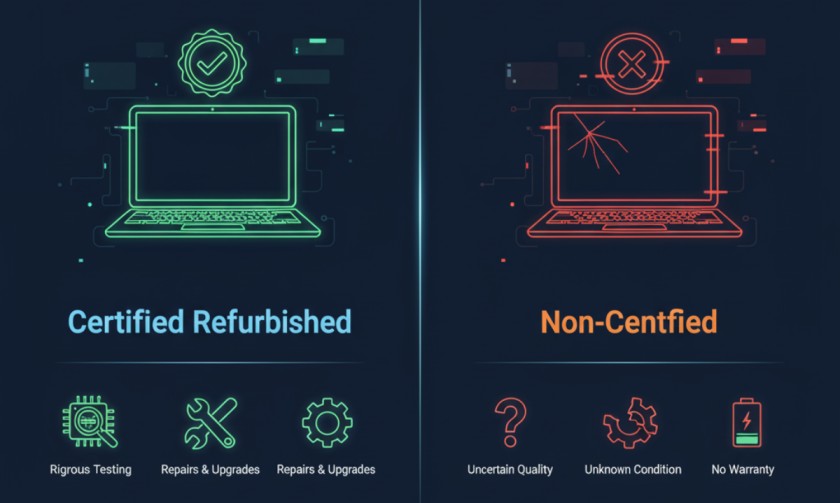
Certified refurbished laptops undergo a meticulous process overseen by manufacturers or authorized refurbishers. This involves comprehensive hardware inspections to identify and replace faulty components, fresh software installations to ensure a clean, malware-free operating system, and cosmetic repairs like fixing scratches or replacing screens and keyboards.
Rigorous battery and performance tests confirm the device operates at near-new standards. In contrast, non-certified laptops are typically refurbished by third-party sellers or independent technicians. Their process is often less thorough, with minimal testing that may only verify basic functionality. Cosmetic flaws like dents or scratches might persist, and hidden hardware issues could go unnoticed, increasing the risk of early failure.
Quality and Performance Standards
The quality assurance for certified refurbished laptops is a key differentiator. These devices are subjected to extensive testing, including processor stress tests, memory and storage evaluations, and battery health checks to ensure consistent performance under demanding conditions. This makes them reliable for multitasking or running professional applications.
Non-certified laptops, however, often receive only basic checks, such as powering on or running simple tasks. This limited testing can lead to unpredictable performance, with potential issues emerging over time. For users who rely on their laptops for critical tasks, certified devices offer greater dependability and peace of mind.
Warranty and Support Benefits
Warranty coverage is another area where certified refurbished laptops stand out. They typically come with a manufacturer-backed warranty, often spanning six months to a year, with options for extended coverage. This includes free repairs or replacements for hardware issues and access to official technical support.
Replacement parts are guaranteed to meet manufacturer standards. Non-certified laptops, on the other hand, may come with limited or no warranty, leaving buyers vulnerable to repair costs. Technical support is often minimal, and the quality of replacement parts can be questionable, adding uncertainty to the purchase.
Pricing and Long-Term Value
While certified refurbished laptops carry a slightly higher upfront cost due to their thorough refurbishment and warranty, they often prove more cost-effective over time. Their reliability reduces the likelihood of unexpected repair expenses. Non-certified laptops are cheaper initially but may require additional spending if issues arise. For those prioritizing long-term value, investing in a certified laptop minimizes disruptions and maximizes savings.
Environmental Considerations
Choosing a certified refurbished laptop also supports sustainability. These devices extend the lifecycle of electronics, reducing e-waste. Authorized refurbishers follow responsible standards, ensuring replaced components are disposed of safely. Non-certified refurbishment may lack such eco-friendly practices, contributing less to sustainable technology efforts.
- Check Out: Best Laptop Repair Service In Ahmedabad
Making the Right Choice
Certified refurbished laptops offer superior reliability, performance, and support, making them ideal for professionals, students, or anyone seeking a dependable device. Non-certified options may appeal to budget-conscious buyers for short-term use but require careful evaluation due to their risks. By opting for a certified laptop, you combine affordability with quality and sustainability, ensuring a smarter investment for your needs.