Introduction: The Rapid Evolution of EV Fast Charging
The electric vehicle revolution is accelerating globally, and with it comes an unprecedented demand for fast, reliable charging infrastructure. As EVs continue to achieve mainstream adoption, the ability to recharge quickly has transformed from a luxury to an absolute necessity. DC fast charging represents the pinnacle of charging technology, enabling drivers to add hundreds of miles of range in mere minutes rather than hours. For businesses, property owners, and municipalities, understanding this landscape is no longer optional—it's essential for remaining competitive in an increasingly electrified transportation ecosystem.
The market for EV fast charging is experiencing robust growth worldwide. In the United States alone, there were over 55,000 DC fast-charging ports as of mid-2025, with Tesla dominating the market share at approximately 55%. Other major networks like Electrify America, ChargePoint, and EVgo continue to expand their footprints, creating a more comprehensive charging network across the country. This expansion is further fueled by government initiatives like the NEVI program, which aims to create a more robust and reliable national charging infrastructure.
In this comprehensive guide, we'll explore everything you need to know about EV fast charging—from the fundamental technology behind it to the practical business considerations of implementation. We'll examine the key differences between AC and DC charging, compare major charging networks, and explain how technological advancements are making faster charging speeds possible. As a manufacturer at the forefront of this industry, Khons is committed to advancing charging technology through innovative, reliable solutions that meet the evolving needs of both current and future EV drivers.
Understanding EV Fast Charging: The Technical Fundamentals
What is DC Fast Charging?
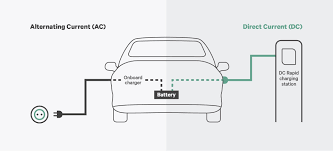
At its core, the difference between AC and DC charging boils down to one simple question: where does the conversion from alternating current (AC) to direct current (DC) occur? This conversion is necessary because electric vehicle batteries can only store and release DC power, while the electrical grid delivers AC power.
With AC charging (including Level 1 and Level 2 chargers), the conversion happens inside the vehicle using its built-in onboard charger. This component is limited in size and capacity, which explains why AC charging is relatively slow—typically taking several hours to fully charge an EV battery.
DC fast charging fundamentally changes this dynamic by moving the conversion outside the vehicle to the charging station itself. These sophisticated stations contain powerful rectifiers that convert AC grid power to DC before it ever reaches the vehicle. By bypassing the car's onboard charger and delivering DC power directly to the battery, DC chargers can operate at much higher power levels—typically ranging from 50 kW to 350 kW and beyond. This enables dramatically reduced charging times, allowing drivers to add 200-300 miles of range in just 30-60 minutes depending on their vehicle's capabilities and the charger's power output.
The Spectrum of DC Charging Speeds
Not all DC fast chargers are created equal. The market offers a range of power levels designed for different use cases:
- 50-150 kW Chargers: These represent the mainstream of fast charging today, commonly found at highway rest stops, shopping centers, and public charging stations. A 120 kW charger can typically bring an EV battery from 20% to 80% in approximately 30-40 minutes.
- 150-350 kW Chargers: This high-power tier is increasingly common along major highway corridors and is compatible with a growing number of EV models. These chargers can add up to 200 miles of range in just 15-30 minutes under ideal conditions.
- 350 kW+ Ultra-Fast Chargers: Representing the cutting edge of charging technology, these ultra-fast chargers are capable of delivering up to 480 kW in current commercial applications. Technologies like the ABB Terra 360 can theoretically deliver up to 360 kW and charge multiple vehicles simultaneously. The latest vehicles with 800-volt architecture, such as the Porsche Taycan, Hyundai Ioniq 5, and Kia EV6, can take full advantage of these high power levels.
AC vs DC Charging: A Comprehensive Comparison
To fully appreciate the advantages of DC fast charging, it's essential to understand how it compares to AC charging across several critical parameters. The following table breaks down these key differences:

Business Implications of AC vs DC Charging
For businesses considering implementing EV charging, the choice between AC and DC solutions involves several strategic considerations:
AC Charging Advantages for Businesses:
- Lower equipment and installation costs make AC charging more accessible for widespread deployment.
- Simpler electrical load management avoids the need for expensive grid upgrades in many cases.
- Universal compatibility with all EVs on the market, including electric two-wheelers and three-wheelers in many markets.
- Longer parking durations can increase foot traffic and customer spending at retail locations.
DC Fast Charging Business Value:
- Revenue generation potential through charging fees is significantly higher with DC fast chargers.
- Competitive advantage for locations along highway corridors or as a value-add for time-sensitive customers.
- Future-proofing investment as EV adoption increases and driver expectations evolve toward faster charging experiences.
- Fleet applications enable quick turnaround for commercial electric vehicles.
Khons DC Fast Charging Solutions: Engineering Excellence
At Khons, we've developed our DC fast charging solutions with a focus on reliability, compatibility, and future-proof design. Our chargers incorporate the latest technological advancements to deliver exceptional performance across diverse use cases and environments.
Key Features of Khons DC Fast Chargers:
- High Power Output Options: Our product lineup includes chargers ranging from 60kW to 240kW, allowing you to select the perfect solution for your specific application—from urban quick-charge stations to highway corridor powerhouses.
- Multi-Standard Compatibility: Khons chargers support CCS, CHAdeMO, and GB/T standards, ensuring broad vehicle compatibility across different markets and regions. This multi-standard approach helps future-proof your investment as EV technology continues to evolve.
- Smart Connectivity Features: With Wi-Fi/Bluetooth connectivity and support for OCPP 1.6J protocols, our chargers enable remote monitoring, diagnostics, and seamless integration with energy management systems.
- Robust Safety Protocols: We incorporate comprehensive protection systems including lightning protection, leakage protection, over-voltage and under-voltage protection, and advanced thermal management to ensure safe operation in diverse environmental conditions.
- Modular Design: The modular architecture of Khons chargers simplifies maintenance and enables potential future upgrades as technology advances, protecting your long-term investment.
Khons Commercial DC Fast Charger Specifications
For businesses considering commercial deployment, our flagship 240kW DC fast charger offers cutting-edge performance:
- Power Output: 240kW (scalable configuration)
- Efficiency: >94% peak efficiency
- Voltage Range: 400V-1000V (supporting both 400V and 800V vehicle architectures)
- Connectivity: Dual CCS-1 connectors or mixed connector configurations
- Certifications: CE, TUV, OCPP 1.6J compliance
- Display: OLED & LCD screen interface with multilingual support
- Payment Options: RFID, credit card, and mobile app payment integration
Strategic Implementation Guidance
Choosing the Right DC Fast Charger
Selecting the appropriate DC fast charging solution requires careful consideration of several factors:
Target Vehicles: Consider the charging capabilities of the EVs most likely to use your stations. While 400V architectures remain common, 800V vehicles are becoming increasingly prevalent and can benefit from higher-power chargers.
Power Availability: Assess your site's electrical capacity and the costs associated with potential upgrades. Higher-power chargers (150kW+) typically require 480V commercial service and significant transformer capacity.
Use Patterns: Analyze expected usage patterns—highway locations typically benefit from the fastest available charging to minimize stop times, while urban locations may prioritize cost-effective 50-150kW solutions.
Future Expansion: Consider modular systems that allow for power upgrades as demand increases and technology evolves.
The Khons Advantage
What sets Khons apart in the competitive DC fast charging market?
Proven Reliability: Our chargers are engineered for high uptime performance, with robust components designed to withstand continuous commercial operation.
Comprehensive Support: We offer end-to-end support from initial site assessment through installation, maintenance, and ongoing operation.
Competitive Pricing: By optimizing our manufacturing processes and supply chain, we deliver exceptional value without compromising on quality or performance.
Customization Options: We understand that every installation is unique, offering custom branding, housing options, and configuration flexibility to meet specific project requirements.
Find out all commercial ev chargers for business, please visit our commercial charging solutions page