


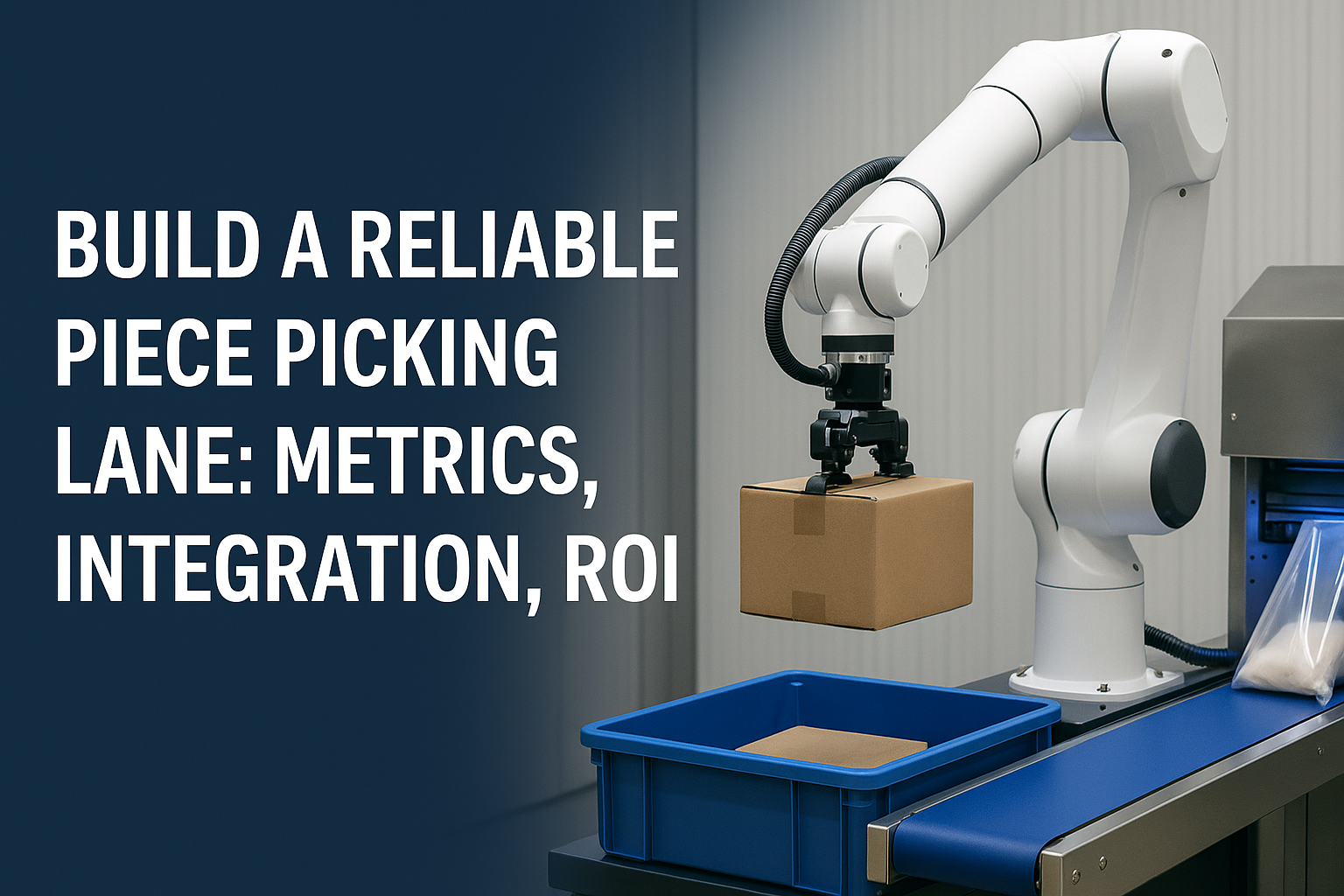
Fast, accurate fulfillment is now the baseline. To meet rising order volumes without adding headcount, many operations are shifting from manual stations to an automated piece picking lane anchored by a robotic piece picking system. When designed well, this lane delivers steady throughput, fewer errors, and a shorter path from order release to shipping label.
What a modern cell actually does
At the center of today's systems is an AI picking robot. Using depth cameras and trained vision models, it identifies each item in a tote, selects a stable grasp, and completes a precise transfer. In most layouts the arm works as a pick and place robot, handing the product to the next process step into a chute, a carton, or, increasingly, straight into packaging. Pair the cell with robotic bagging and you unlock direct-to-bag fulfillment: the robot drops the item into an open polybag, the bagger seals and labels it, and the parcel moves directly to sortation. Fewer touchpoints mean faster cycle times and more consistent presentation at weigh/scan.
Where value shows up first
Good warehouse automation picking is less about headline peak PPH and more about consistency you can plan around. Vision-confirmed picks lower mispicks and reships. Standardized hand-offs reduce rework. And when peaks hit or staffing dips, a stable automated lane protects promise dates without expanding floor space.
Run a pilot that reflects your reality
Before buying, validate performance on your floor with your inventory. A practical checklist:
- SKU coverage & accuracy: Include rigid boxes, soft mailers, glossy films, and clear clamshells. Track grasp success, regrips, and exception rates over multi-hour runs.
- Sustained throughput: Verify average picks per hour across a full shift under your lighting and tote presentation; peaks alone can mislead.
- Integration depth: Confirm native handshakes with WMS/WES, scanners, scales, and the bagger so confirmations and labels post without manual touch.
- Changeover & learning: New SKUs should take minutes, not days. Favor systems that improve grasp strategies over time.
- Uptime & service: MTBF/MTTR, spare-parts stocking, and response commitments matter as much as the robot's spec sheet.
- Operator workflow: Replenishment, exception recovery, and dashboards determine day-two success.
Choosing vendors with data not hype
Many teams search piecepicking vs osaro and similar comparisons when shortlisting. Use those as a prompt to run side-by-side trials with identical SKUs, fixtures, and metrics. Scorecards that weigh coverage, sustained PPH, integration effort, exception recovery, and support quality will reveal which warehouse picking robot truly fits your mix and targets.
Getting started (and scaling safely)
Begin with a focused lane single-line orders or your top movers so you can prove the numbers quickly. Once the cell holds steady, replicate horizontally and tighten upstream standards (slotting, tote fill, label placement) to multiply downstream gains.
A thoughtfully implemented robotic piece picking system anchored by an AI picking robot, integrated with robotic bagging, and designed for direct-to-bag fulfillment becomes a dependable pick-to-pack engine. Validate with real data, compare vendors on neutral ground, and scale what works. That's how warehouse automation picking turns into faster cycles, fewer errors, and promises kept day after day.