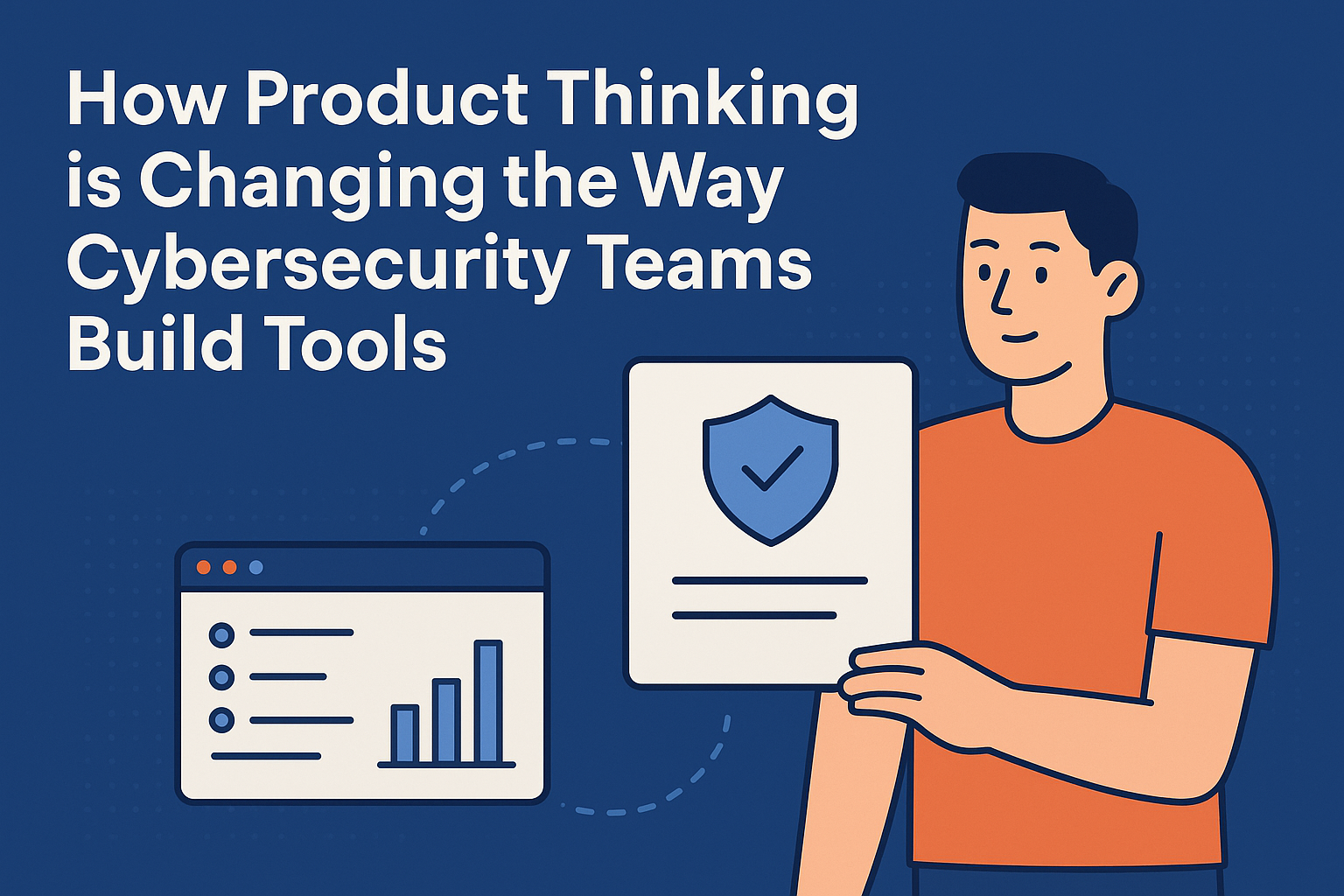
Cybersecurity has always been about protecting systems, preventing breaches, and staying one step ahead of attackers. But if you look around, you’ll see that even the best security tools sometimes don’t get used the way they should. It’s not always because the tools aren’t good enough; sometimes, it’s because they’re not built with the people using them in mind.
That’s where product thinking comes in. It’s an approach that puts the user experience at the center. It’s about designing tools that not only work well but actually make analysts’ lives easier.
When security teams start thinking like product creators, the whole game changes. They begin to see their internal systems as living products that can grow, improve, and evolve over time. And that mindset can completely transform how teams work, collaborate, and respond to threats.
Let’s talk about how this mindset shift helps cybersecurity teams build tools that people truly want to use.
What Product Thinking Really Means
Product thinking is simple. It’s all about understanding the people who use your tools, what problems they’re facing, and how your solution can make their day better.
In cybersecurity, the users are usually analysts, incident responders, and security engineers. They deal with constant alerts, complex dashboards, and data coming from every direction. If your tools don’t make that process easier, people end up frustrated, and work slows down.
So instead of just coding a script or dashboard that “gets the job done,” product thinking asks a few important questions first:
What is the real problem the user is facing?
How can we make their workflow smoother?
What’s the simplest version of this tool that delivers real value right now?
It’s not about building everything at once. It’s about building the right thing at the right time.
Why Cybersecurity Tools Need This Shift
Most security tools are designed from a technical point of view. Engineers focus on detection rates, algorithms, and automation. Those things are important, but if the tool is too complicated or hard to navigate, people will avoid it.
Product thinking brings empathy into the process. It reminds teams that at the end of the day, someone has to use that tool every single day under pressure.
When security tools are designed with that in mind, you start to see results like:
Better adoption among analysts
Less time wasted switching between systems
Fewer missed alerts due to cluttered interfaces
Happier teams who trust their tools
It’s not just about technology anymore; it’s about experience.
How to Bring Product Thinking Into a Cybersecurity Team
You don’t need a huge change overnight to start thinking like a product team. Small steps can make a big difference. Here’s how most successful teams start:
1. Talk to Your Users
This might sound obvious, but it’s often skipped. Sit down with the analysts who use your tools. Watch how they work. Ask what slows them down or confuses them. You’ll find pain points that you might have never noticed otherwise.
Once you really understand their day-to-day challenges, it becomes easier to build tools that actually help.
2. Start With Clear Goals
Every product has to solve a problem. Define exactly what success means before you start building. Maybe your goal is to reduce investigation time by 25% or make alert triage easier for new analysts. When your goals are clear, your development process becomes more focused.
3. Build Small, Test, and Improve
Don’t wait to release one big version. Build a smaller version that solves one major issue, let people use it, and then ask for feedback. That feedback is pure gold. It helps you shape what’s next instead of guessing what people want.
4. Collect Real Data
Keep track of how your tools are being used. Look at how many alerts are reviewed, how much time is saved, or how often people open certain features. Data helps you see what’s working and what’s not.
5. Keep Iterating
A good product is never really “done.” The same applies to security tools. Keep improving, adding features, or simplifying things when needed. Every round of feedback makes your tool stronger and more useful.
A Simple Example
Let’s say your team builds a small tool that automatically pulls logs from multiple systems into one place. At first, it’s just a basic script that saves analysts some time.
After a few weeks, you ask for feedback. People love the time savings but say the output is hard to read. So you add a clean interface where logs are color-coded by severity.
Next, users ask for filters to sort by date or event type. You add that too. Suddenly, what started as a small script turns into a go-to tool that everyone uses every day.
That’s what product thinking does. It takes something functional and turns it into something people depend on.
The Role of Collaboration
Cybersecurity is a team sport. Product thinking encourages collaboration across roles. Engineers, analysts, managers, and even UX designers should all have a voice in how a tool is built.
When everyone contributes, tools naturally become more balanced. Engineers ensure performance. Analysts ensure usability. Managers ensure the work aligns with company goals.
This collaboration also creates ownership. When people feel part of the process, they’re more likely to use the tools and promote them within the team.
How Product Thinking Helps in Cloud and Modern Workflows
As more companies move to the cloud, cybersecurity tools need to adapt quickly. Threats evolve fast, and teams are spread across locations. Cloud-based platforms make collaboration and iteration much easier.
That’s where flexible ecosystems like App in Snap
come in handy. They help teams bring everything together in one place, from project tracking to testing and integration. It’s the kind of environment where product-focused security work thrives.
When teams have a shared platform to manage workflows, they can easily test ideas, make quick improvements, and roll out updates without friction. That’s how modern cybersecurity stays efficient and ahead of new threats.
Common Challenges and How to Handle Them
Of course, every new mindset has hurdles. Product thinking in cybersecurity might face a few along the way:
1. Limited time
Security teams are always busy. But even small sessions to gather feedback or test a new feature can make a big impact.
2. Not enough UX expertise
If your team doesn’t have designers, start small. Clean layouts, clear text, and consistent naming go a long way.
3. Resistance to change
Some people prefer old systems. The best way to win them over is to show them real results — faster tasks, fewer errors, and smoother workflows.
4. Data privacy concerns
If you’re collecting feedback or usage data, make sure it’s anonymous and approved by compliance. Transparency helps everyone feel safe about it.
Once your team sees how product thinking helps them, adoption becomes easier.
Why This Approach Just Works
When you look at it closely, product thinking is really about empathy and communication. It asks you to walk in your user’s shoes before you build anything.
Security tools often get overlooked because they’re built to solve technical problems instead of human problems. But when you design with people in mind, the impact multiplies. Analysts feel supported. Engineers get clearer direction. And the organization ends up more secure.
It’s a smarter, more natural way of building tools that actually work for the people who need them most.
The Future of Cybersecurity Tools
The future is all about flexibility and usability. Tools will become more interactive, more adaptive, and more connected to the way real teams work. Artificial intelligence will play a role in reducing noise and helping analysts focus on what truly matters.
But no matter how advanced the technology gets, product thinking will remain the key to building tools that last. Because no matter how powerful the software, it still needs to make sense to the human behind the screen.
Teams that adopt this mindset now will stay ahead — not just in detecting threats, but in creating systems that empower their people every single day.
Final Thoughts
If you work in cybersecurity, start treating your internal tools like products. Talk to your team, test your ideas, measure the results, and keep improving. You don’t need a big budget or fancy setup to do this — just a willingness to listen and adapt.
The results will speak for themselves. You’ll build tools that people enjoy using, improve workflows, and strengthen your defenses without adding more complexity.
And with collaborative platforms like App in Snap, it’s even easier to organize projects, integrate systems, and move fast while keeping everything in one place.
The world of cybersecurity moves fast, but product thinking helps you move smarter. Because in the end, the best security tools aren’t just built they’re designed with care, tested with feedback, and improved with purpose.
AllianceTek offers Online Cloud Collaboration Tools services like SharePoint platform solutions to foster business team communication and share business operations information effectively.