





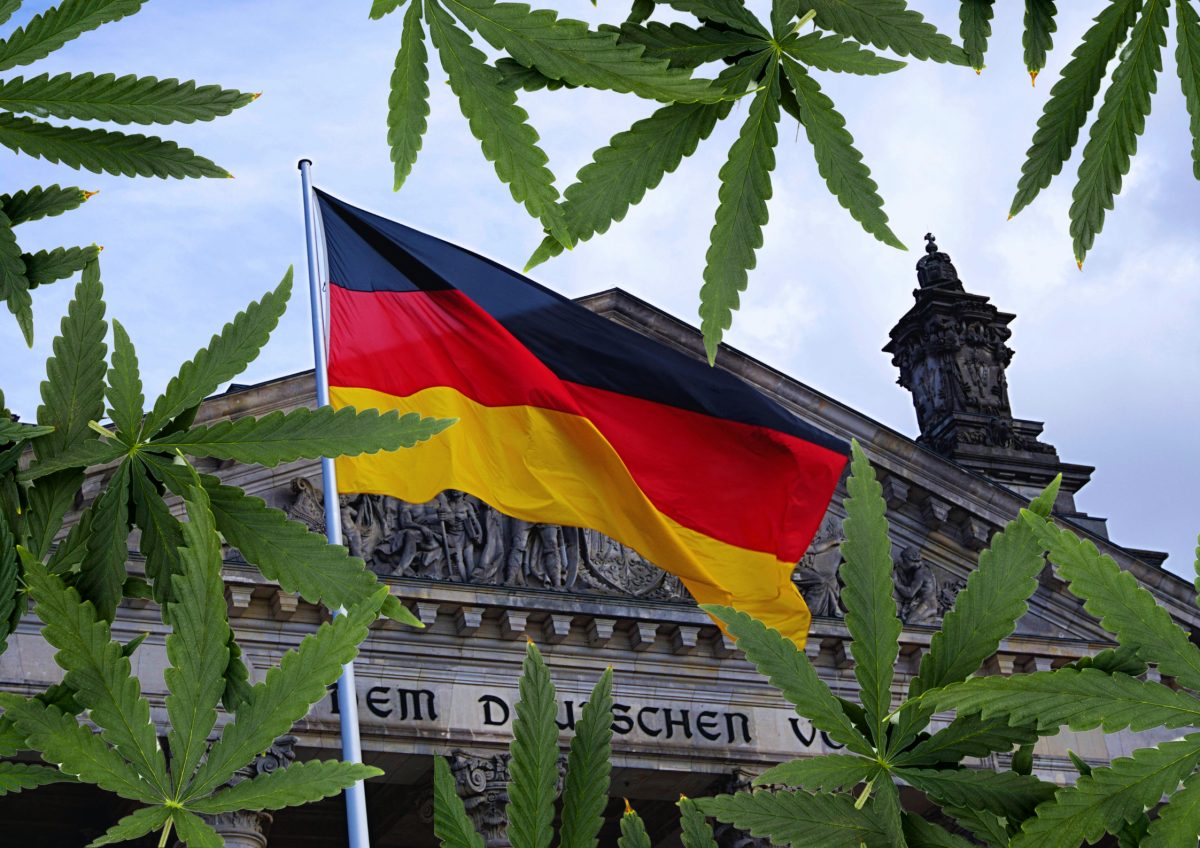
When Germany’s Cannabis Act took effect on April 1, 2024, it marked the first time a major European Union economy decriminalized limited recreational cannabis use for adults. The law allows adults to possess up to 25 grams publicly and 50 grams at home, grow up to three plants, and establish non-profit social clubs with membership limits of 500 people. Commercial sales remain prohibited under the current framework.
Germany’s move did more than change national policy. It sent ripples across Europe, forcing neighboring countries and EU institutions to rethink long-standing drug laws, medical cannabis systems, and trade dynamics. The next few years may determine whether Germany’s model becomes a beacon or a warning for cannabis reform across the continent.
The German Model: Cautious, Controlled, and Under Scrutiny
Germany designed its legalization approach as a cautious, phased experiment rather than an open market. Cannabis is no longer treated as a narcotic, but commercial sales remain restricted to home cultivation and non-profit clubs.
Critics argue that the model leaves gaps. Without commercial retail, many adult users may continue to rely on illegal sources. Others warn that normalization could outpace regulation.
Still, the early response is significant. Demand for medical cannabis and domestic product development has increased sharply since the law’s passage. The government plans to reassess the policy in 2025, which could bring changes to possession limits or tighter club regulations.
Europe Watches Closely: Pressure, Opportunity, Resistance
Germany’s legalization represents a turning point in European drug policy. As the EU’s largest economy and one of its political leaders, Germany’s choices carry influence far beyond its borders. Smaller countries may soon feel pressure to follow, particularly as concerns about the black market and public health grow.
Austria, for example, has already strengthened border enforcement to prevent cross-border cannabis flow. Meanwhile, reform advocates in France, Italy, and Spain increasingly cite Germany as proof that legalization can coexist with strong healthcare and safety standards.
Still, legal barriers remain. EU treaties and UN drug conventions technically limit full-scale legalization, leaving each member state to interpret the rules differently. Germany’s phased approach was designed to navigate this legal gray area, giving policymakers time to align national and international obligations.
Markets, Industry, and Innovation on the Horizon
Germany’s partial legalization opens new opportunities in cultivation, technology, and research. Analysts estimate that a regulated market could eventually reach more than 4 billion euros annually and support tens of thousands of jobs.
Although commercial retail is still banned, relaxed medical and industrial rules are encouraging investment. Companies are exploring cultivation partnerships, extraction labs, and testing services. This shift could also benefit established seed specialists like Herbies Seeds, whose genetics and expertise may find a growing market among European cultivators and researchers.
Germany’s second phase, expected to introduce pilot commercial sales in selected regions by late 2025, could further reshape the European market. If successful, it may help undercut illegal trade and provide a model for sustainable legalization. However, political timing is crucial, as future elections could delay or reverse the rollout.
Political Winds and Potential Reversals
Legalization in Germany is far from settled. Conservative parties have already promised to revise or roll back parts of the Cannabis Act if they return to power. Some state governments have also imposed stricter public-use rules. Bavaria, for instance, has banned cannabis consumption at festivals and beer gardens.
This regional patchwork suggests that implementation will vary widely. Federal officials hope that consistent education and public health programs will prevent confusion and reduce illegal sales, but enforcement remains complex.
What This Means for Europe’s Cannabis Landscape
Germany’s legalization may trigger a domino effect in European cannabis policy. Nations that already favor reform, such as the Czech Republic, Switzerland, Portugal, and the Netherlands, are watching closely. Cross-border coordination will soon become one of the European Union’s main challenges, especially as cannabis products move between countries with different laws.
At the same time, the wellness and medical sectors are likely to expand. The legal market could become a hub for CBD-based products, nutraceuticals, and wellness-oriented cannabis innovations. This aligns with Europe’s growing interest in natural medicine and plant-based therapies.
Still, reform will not progress evenly. Some countries, especially in Eastern and Southern Europe, continue to resist legalization for cultural or political reasons. Yet Germany’s example has changed the debate. What once seemed radical is now part of mainstream policy discussion.
A New Chapter for Europe
Germany’s decision to legalize adult cannabis use is more than a domestic policy shift. It is a test of whether Europe can reconcile public health priorities, economic potential, and social freedom. The approach remains cautious, rooted in regulation rather than commercialization, but it has already reshaped how the continent talks about cannabis.
As other nations observe Germany’s first steps and challenges, they will decide whether to adopt, adapt, or resist its model. The future of cannabis in Europe depends not only on laws but on the willingness of societies to see the plant as more than a vice as a regulated, responsible part of modern life.
If Germany’s experiment succeeds, it could mark the beginning of a broader European transformation. If it falters, it will still have opened the conversation that prohibition kept closed for decades. Either way, the door to reform is now open, and Europe is watching what happens next.
Written by:

While people are excited about this new event taking place, health experts are still in doubt whether or not this is right.
This process of nationwide legalization was first introduced on April 13, 2017, and then finally was passed by the House of Commons in November as Cannabis Act (Bill C-45)
Now, let’s see what to expect and what not, from cannabis legalization in Canada.
Things that will remain as they were even after Nationwide Legalization
Canadians will have to be careful in certain areas.
According to the law, people can make their edibles.

Anurag Rathod is an Editor of Appclonescript.com, who is passionate for app-based startup solutions and on-demand business ideas.
Medical cannabis is legal in 37 states, and if the trend continues, all 50 states in the near future.
With most of the United States population supportive of legalizing marijuana recreationally at the national level, there is simply no further reason for the federal government to continue prohibition, especially as its reasons for it, high risk of abuse with no medicinal value, is scientifically incorrect.
With that said, here are some marijuana facts for anyone still on the fence to reconsider legalization:
Nobody has ever died from an overdose of tetrahydrocannabinol, or THC.
According to Chief Medical Correspondent for CNN, Dr. Sanjay Gupta, in his essay, “Why I Changed My Mind about Weed,” we have been “systematically misled.” Only around 10 percent of users develop the dependence on it.