

In 2025, the pace of technological change shows no signs of slowing. Businesses that fail to keep up risk losing competitive advantage, while those embracing innovation gain operational efficiency, customer loyalty, and market leadership. Emerging technologies are reshaping industries from finance and healthcare to manufacturing and logistics, creating opportunities for growth, cost savings, and enhanced customer experiences. Understanding and leveraging these trends is no longer optional—it’s essential for survival.
The current business environment demands agility and foresight. Digital transformation has moved beyond basic automation to advanced solutions like AI-driven analytics, blockchain for transparency, and immersive experiences powered by AR and VR. Companies that strategically adopt these technologies can respond faster to market shifts, streamline operations, and create new revenue streams. In this blog, we explore the most impactful new technology trends businesses cannot afford to ignore in 2025.
Artificial Intelligence and Machine Learning
Artificial Intelligence (AI) and Machine Learning (ML) are no longer futuristic concepts—they are business essentials. In 2025, AI-powered tools can optimize operations, enhance customer experiences, and provide predictive insights that guide decision-making. For instance, AI algorithms help companies anticipate consumer behavior, detect fraud, and automate complex tasks, reducing costs and increasing efficiency.
ML models also enable personalized marketing and advanced product recommendations, improving customer satisfaction and loyalty. From supply chain optimization to human resources analytics, AI is embedded across business functions. Companies that leverage AI effectively gain a competitive edge by transforming data into actionable intelligence and making decisions faster than ever before.
Extended Reality (AR & VR) in Business
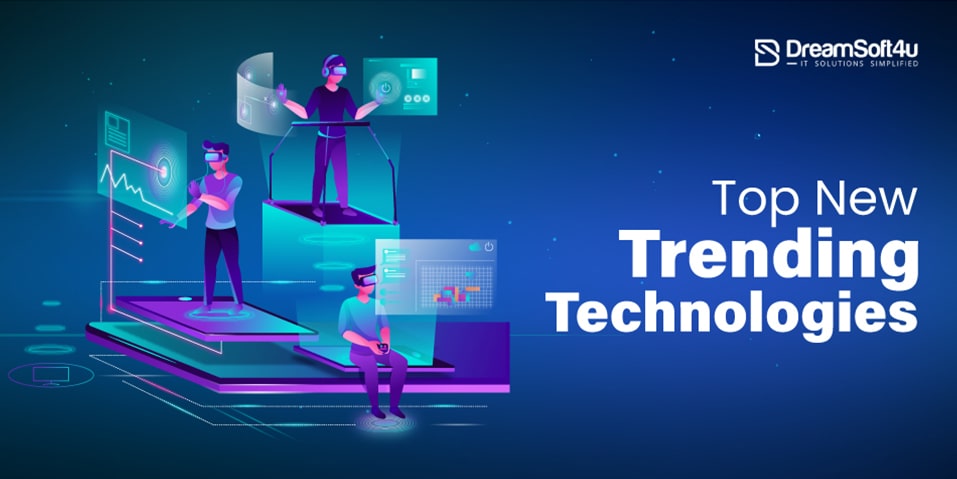
Extended Reality technologies—Augmented Reality (AR) and Virtual Reality (VR)—are redefining how businesses interact with customers and employees. In retail, AR enables virtual try-ons and product visualizations, enhancing the shopping experience. VR is transforming training and simulation, providing immersive learning without costly physical resources or risks.
Beyond customer engagement, AR and VR support remote collaboration in design, engineering, and project management. Virtual environments facilitate real-time interaction across geographies, improving efficiency and innovation. Companies that invest in these technologies can deliver more engaging experiences, boost productivity, and reduce operational costs.
Blockchain Beyond Cryptocurrency
Blockchain technology has matured well beyond cryptocurrency. In 2025, businesses are using blockchain to enhance transparency, security, and trust in supply chains, finance, and contract management. Immutable ledgers allow organizations to track products from origin to customer, prevent fraud, and ensure compliance with regulations.
Smart contracts powered by blockchain automatically execute agreements based on predefined conditions, streamlining processes and reducing the need for intermediaries. For industries dealing with sensitive data or complex logistics, blockchain provides a competitive advantage by increasing operational efficiency and building customer confidence.
Internet of Things (IoT) and Smart Connectivity
The Internet of Things (IoT) continues to transform how businesses operate. Connected devices provide real-time data on equipment, products, and customer behavior, enabling smarter decisions and predictive maintenance. For example, manufacturers can monitor machinery performance to reduce downtime, while retailers gain insights into inventory and shopper patterns.
IoT also drives sustainability by optimizing energy use and reducing waste. Smart sensors in buildings, transportation systems, and production lines enhance efficiency while lowering operational costs. Businesses leveraging IoT gain actionable intelligence, operational resilience, and a strategic advantage in a data-driven world.
Cybersecurity and Data Privacy
As businesses adopt advanced digital tools, cybersecurity and data privacy remain critical concerns. In 2025, sophisticated threats like AI-powered attacks and ransomware require proactive defense strategies. Companies must implement multi-layered security protocols, real-time monitoring, and AI-driven threat detection to protect sensitive data.
Compliance with privacy regulations is equally essential. Businesses that demonstrate robust cybersecurity and ethical data practices build trust with customers and partners. In a hyperconnected world, investing in cybersecurity is not just protective—it’s a strategic move that ensures business continuity and reputation management.
Cloud Computing and Edge Technology
Cloud computing continues to transform IT infrastructure by offering scalable, flexible, and cost-effective solutions. Businesses can store vast amounts of data, run complex applications, and access advanced analytics without heavy on-premises investments. Hybrid cloud models allow seamless integration between public and private environments, enhancing efficiency.
Edge computing is complementing the cloud by processing data closer to the source, reducing latency and improving real-time decision-making. For sectors like healthcare, logistics, and manufacturing, edge technology enables faster responses and better operational control. Combining cloud and edge computing empowers businesses to innovate faster and respond dynamically to changing market demands.
Automation and Robotics
Automation and robotics are increasingly essential for operational efficiency in 2025. In manufacturing, robotic systems handle repetitive tasks with precision and consistency, improving productivity while reducing errors. In the service sector, AI-powered chatbots and automated workflows streamline customer support and internal processes.
Collaborative robots, or “cobots,” are working alongside humans to enhance productivity without replacing the workforce. By embracing automation strategically, businesses can reduce costs, improve quality, and focus human resources on high-value activities, driving growth and innovation in a competitive environment.
Conclusion: Embracing the Future of Business Technology
The technology trends of 2025—AI, AR/VR, blockchain, IoT, cybersecurity, cloud computing, and automation—are reshaping how businesses operate, compete, and grow. Ignoring these innovations can leave companies lagging behind, while proactive adoption offers efficiency, resilience, and new revenue opportunities.
Businesses that embrace these technologies strategically are better positioned to meet customer expectations, optimize operations, and navigate an increasingly complex market. Staying informed and agile in adopting emerging trends is no longer a choice—it’s a necessity for sustainable success in the next era of business.