

The ISO 42001 certification is most suitable for professionals who have a background in security and risk management, as these areas are crucial for effectively leading audits of security management systems.
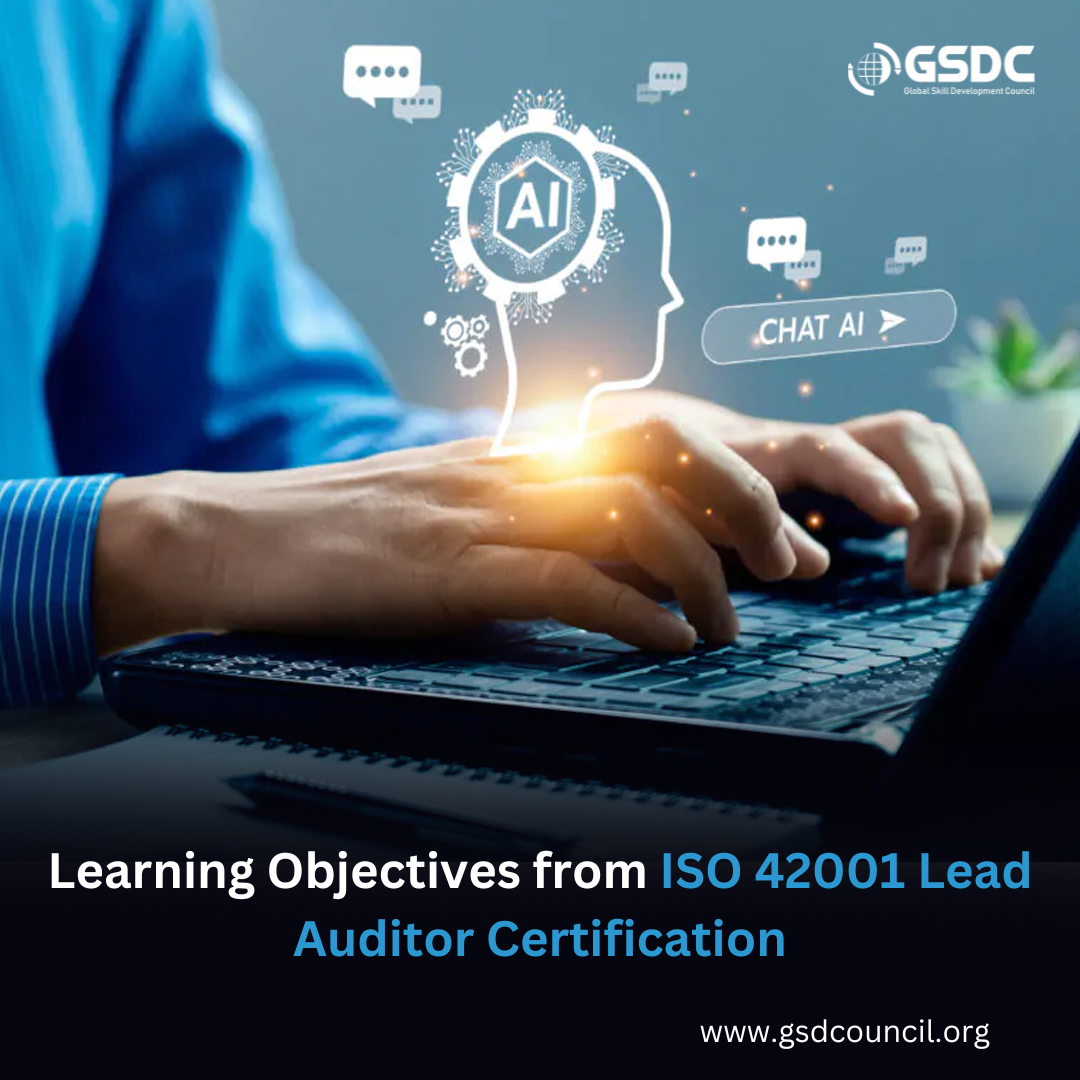
Here's a step-by-step learning objective analysis of the ISO/IEC 42001:2023 Lead Auditor course ideal for Artificial Intelligence Management Systems (AIMS) auditors.
1. Be familiar with the AIMS standard and context
Explain the fundamental concepts and principles of an AIMS, including structure, terminology, and the business advantage of an AI management system.
Define the role of AI-governance, ethical AI usage, risk-based approach, transparency, traceability and reliability of AI systems.
2. Render ISO/IEC 42001 requirements from an auditor's perspective
Render the clauses and mandatory requirements of ISO/IEC 42001:2023 for an AIMS (e.g., organization context, leadership, planning, support, operation, performance evaluation, improvement).
Learn audit criteria and evidence for each requirement how to effectively evaluate conformance and non-conformance.
3. Practice audit principles, processes and best practice
Establish auditing fundamentals such as principles, ethics, auditor's role and responsibility, audit planning, gathering evidence, audit reporting and follow-up.
Utilize risk-based auditing techniques (compatible with e.g., ISO/IEC 19011), select audit teams, determine audit scope/objectives, plan audit activity and check resources.
4. Carry out, report and close an AIMS audit
Develop a programme for first-party, second-party and third-party audits of AIMS like initiation, planning, on-site audit, review of documents, reporting of non-conformity and corrective action.
Develop and submit audit reports, develop reports of non-conformity, recommend corrective action, verify follow-up for effectiveness, and close audit projects.
5. Administer an AIMS audit programme and ongoing improvement
Oversee an audit programme life cycle: plan audits, resource management, monitor audit performance, review audit results, and promote continuous improvement of the AI management system.
Use findings from audits to shape management review, improve AI governance, risk management, transparency and strength of AI systems within the organization.
6. Use real-life case-studies and practical scenarios
Participate in hands-on exercises illustrating how to audit a real AI management system: role-plays, team workshops, case studies on non-conformities, risk assessment, audit team leadership.
Develop the confidence to lead audit teams, manage complex AI-driven processes, and decide if AI systems comply with ethical, regulatory and operational requirements.
For more information, visit: https://www.gsdcouncil.org/certified-iso-42001-lead-auditor
Also Visit: https://www.gsdcouncil.org/certified-iso-42001-lead-implementer