



In recent years, the eCommerce landscape has undergone a massive transformation. The rise of artificial intelligence (AI) and machine learning has significantly changed how online businesses interact with their customers. Among the most transformative applications of AI in this sector is conversational AI, which is rapidly becoming a cornerstone of modern eCommerce strategies. By integrating conversational AI, businesses can enhance customer engagement, improve sales conversion rates, and streamline operations.
This article explores the impact, benefits, and future potential of conversational AI ecommerce, examining how this technology is reshaping the online shopping experience.
Understanding Conversational AI in eCommerce
At its core, conversational AI refers to technologies that allow machines to engage in human-like interactions through natural language processing (NLP) and machine learning algorithms. These AI-driven systems can understand customer queries, provide relevant responses, and even predict user intentions. In eCommerce, this means that virtual assistants, chatbots, and voice assistants can simulate meaningful conversations with shoppers, delivering personalized support and product recommendations.
Unlike traditional rule-based chatbots, which operate on predefined scripts, conversational AI can handle complex interactions, learn from previous conversations, and adapt responses based on user behavior. This level of sophistication enables eCommerce platforms to offer a seamless, 24/7 customer experience that feels more personal and engaging.
Key Features of Conversational AI in eCommerce
Several features make conversational AI indispensable for modern eCommerce platforms:
Natural Language Understanding (NLU):
NLU enables the AI to comprehend user intent, even when queries are phrased in different ways. This allows customers to communicate naturally without worrying about specific keywords or commands.
Contextual Awareness:
Conversational AI can remember previous interactions and provide relevant suggestions. For example, if a customer asked about a specific product earlier, the AI can recall this during future conversations.
Multi-Channel Support:
AI-driven assistants can operate across websites, mobile apps, social media platforms, and messaging apps, ensuring consistent support across all customer touchpoints.
Personalized Recommendations:
Leveraging AI analytics, these systems can suggest products based on a user’s browsing history, purchase patterns, and preferences, increasing the likelihood of conversions.
Automated Transactions:
Some conversational AI systems can handle the entire shopping journey, from product discovery to checkout, reducing friction and boosting sales.
The Benefits of Conversational AI for eCommerce Businesses
Integrating conversational AI into an eCommerce platform offers a wide array of advantages that go beyond traditional customer support.
1. Enhanced Customer Experience
Customer experience is a critical differentiator in online retail. Conversational AI ensures that shoppers receive immediate responses to their inquiries, eliminating the frustration of long wait times. AI-powered systems can provide personalized guidance, helping customers find the right products, answer questions about specifications, and even resolve post-purchase issues.
For instance, AI chatbots can greet returning customers by name, remind them of previous purchases, and suggest complementary items, creating a highly tailored shopping experience that fosters loyalty.
2. Increased Conversion Rates
One of the most compelling benefits of conversational AI ecommerce is its impact on conversion rates. By providing instant assistance and personalized product recommendations, AI can reduce cart abandonment rates and drive more completed purchases. Research shows that businesses that deploy AI-driven conversational tools experience significantly higher engagement rates, which directly translates to increased sales.
Additionally, conversational AI can identify when a customer seems hesitant or confused and proactively offer incentives, such as discounts or promotions, nudging them toward a purchase.
3. Cost Reduction and Operational Efficiency
Hiring and training customer support representatives can be expensive. Conversational AI helps reduce operational costs by automating routine inquiries and repetitive tasks. This allows human agents to focus on complex, high-value interactions that require empathy and problem-solving skills.
Moreover, AI systems are scalable. During peak shopping seasons or flash sales, conversational AI can manage large volumes of customer interactions without additional staffing, ensuring consistent service quality.
4. 24/7 Availability
Unlike human agents, AI chatbots never sleep. This round-the-clock availability ensures that customers can interact with the brand at any time, regardless of time zones or business hours. This is particularly valuable for global eCommerce platforms that serve diverse markets across multiple regions.
5. Data-Driven Insights
Conversational AI doesn’t just interact with customers—it collects and analyzes data from these interactions. This data provides valuable insights into customer preferences, pain points, and purchasing behavior. Businesses can use this information to refine marketing strategies, optimize product offerings, and improve the overall customer journey.
Applications of Conversational AI in eCommerce
Conversational AI can be applied in various areas of eCommerce, transforming the way businesses operate and interact with customers.
1. Virtual Shopping Assistants
Virtual shopping assistants act as AI-powered sales representatives. They guide customers through the shopping process, provide product recommendations, and answer questions about availability, pricing, and specifications. These assistants can even suggest items based on current trends or seasonal promotions.
2. Customer Support Chatbots
Customer support is one of the most common applications of conversational AI. AI-driven chatbots can handle a wide range of tasks, including order tracking, returns and exchanges, payment issues, and troubleshooting. By providing instant support, these bots reduce wait times and improve overall customer satisfaction.
3. Voice Commerce
With the growing adoption of smart speakers and voice-activated devices, voice commerce is becoming increasingly relevant. Conversational AI enables customers to search for products, place orders, and track shipments using voice commands, offering a hands-free, convenient shopping experience.
4. Personalized Marketing Campaigns
Conversational AI can help eCommerce businesses deliver personalized marketing messages. By analyzing user behavior and engagement patterns, AI systems can recommend targeted promotions, discounts, and new product launches to individual customers, increasing the effectiveness of marketing campaigns.
5. Post-Purchase Engagement
Customer engagement doesn’t end at checkout. Conversational AI can be used for post-purchase interactions, such as sending reminders for product usage, suggesting complementary products, and soliciting feedback. This strengthens customer relationships and encourages repeat purchases.
Implementing Conversational AI in Your eCommerce Strategy
Successfully integrating conversational AI into an eCommerce platform requires careful planning and execution. Here are key steps to consider:
1. Define Objectives
Identify the primary goals for implementing conversational AI. Are you aiming to improve customer support, increase sales, reduce operational costs, or all of the above? Clear objectives will guide the development and deployment of the AI system.
2. Choose the Right Technology
Select a conversational AI platform that aligns with your business needs. Consider factors such as natural language processing capabilities, integration options, scalability, and analytics features.
3. Design Conversational Flows
Develop intuitive and user-friendly conversational flows. Focus on making interactions as natural as possible, and ensure that the AI can handle various customer intents and fallback scenarios.
4. Integrate Across Channels
For maximum impact, deploy conversational AI across multiple channels, including your website, mobile app, social media, and messaging platforms. This ensures consistent engagement and support across all touchpoints.
5. Continuously Train and Improve
Conversational AI systems learn from interactions, but they require ongoing training and optimization. Regularly analyze performance metrics, gather user feedback, and update the AI to handle new queries and improve accuracy.
Challenges and Considerations
While conversational AI offers numerous benefits, businesses should also be aware of potential challenges:
Complexity in Implementation:
Building and integrating a sophisticated AI system can be technically challenging and may require significant investment.
Maintaining Natural Interactions:
AI must handle conversations in a human-like manner. Poorly designed interactions can frustrate customers and harm brand perception.
Data Privacy Concerns:
Conversational AI systems collect and process customer data, raising privacy and compliance considerations. Businesses must adhere to regulations such as GDPR and CCPA.
Balancing AI and Human Support:
While AI can automate many tasks, human intervention is still necessary for complex or sensitive issues. Striking the right balance is crucial for customer satisfaction.
Future Trends in Conversational AI eCommerce
The future of conversational AI ecommerce is promising, with several trends likely to shape the landscape:
1. Advanced Personalization
As AI algorithms become more sophisticated, personalized shopping experiences will become even more precise, predicting user needs before they express them.
2. Omnichannel Integration
Seamless integration across multiple platforms and devices will become standard, allowing customers to transition smoothly between web, mobile, social, and voice channels.
3. Emotional AI
Future conversational AI systems may be capable of recognizing and responding to human emotions, providing empathetic support that enhances the overall shopping experience.
4. Voice-First Shopping
Voice commerce is expected to grow significantly, with conversational AI playing a central role in enabling natural and intuitive voice-based transactions.
5. AI-Powered Insights
Beyond customer interactions, AI will increasingly provide predictive analytics for inventory management, demand forecasting, and marketing strategy optimization, making it an indispensable tool for eCommerce businesses.
Conclusion
Conversational AI is revolutionizing the eCommerce industry by transforming how businesses interact with customers. From personalized shopping experiences to 24/7 customer support, AI-driven conversations enhance engagement, increase conversions, and streamline operations. Implementing conversational AI ecommerce solutions is no longer a luxury—it is becoming a necessity for businesses looking to remain competitive in the rapidly evolving online marketplace.
As technology continues to advance, conversational AI will play an even more central role in shaping the future of eCommerce, offering unparalleled opportunities for businesses to connect with their customers, understand their needs, and drive sustainable growth. Embracing this technology today is a strategic investment in the future of retail.

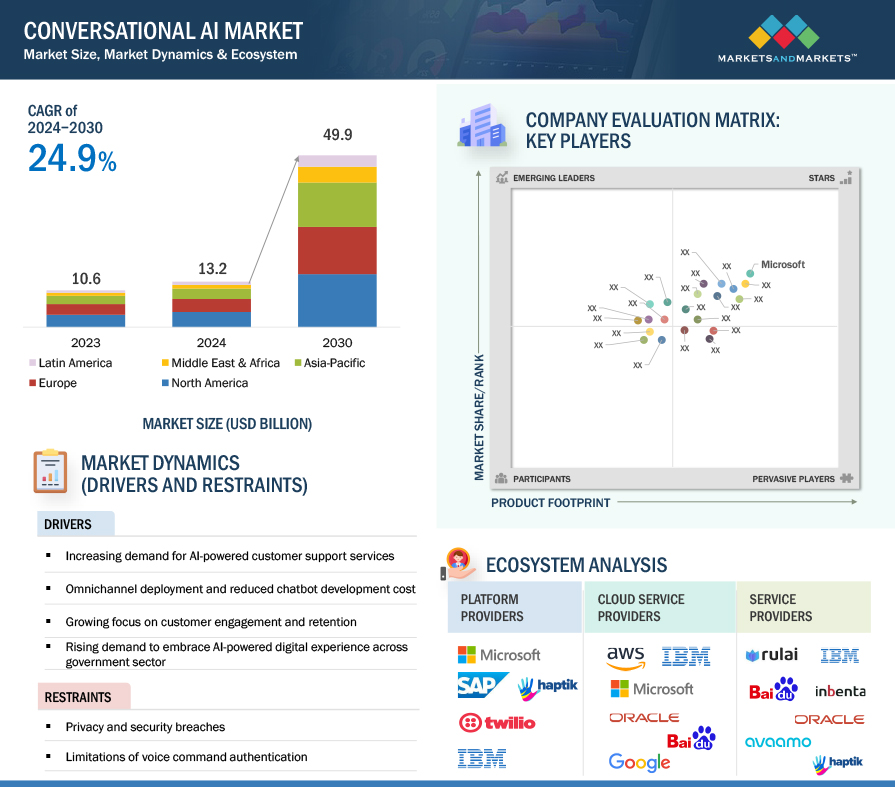


Conversational AI Market report published by Value Market Research, which studies the future outlook of the market.
It includes the size, share, growth, trends, key players, segments and regional analysis in detail during the study year 2020-2027.The research report also covers the comprehensive profiles of the key players in the market and an in-depth view of the competitive landscape worldwide.
The major players in the conversational ai market include Amazon Web Services, Inc., Microsoft, Oracle, IBM, Google LLC, SAP ERP, Baidu, Inc., Nuance, Artificial Solutions, Haptik and Creative Virtual.
This section consists of a holistic view of the competitive landscape that includes various strategic developments such as key mergers & acquisitions, future capacities, partnerships, financial overviews, collaborations, new product developments, new product launches, and other developments.Get more information on "Global Conversational AI Market Research Report" by requesting FREE Sample Copy at https://www.valuemarketresearch.com/contact/conversational-ai-market/download-sampleMarket DynamicsAt the time of omni-channel communication, conversational AI has created an interface that allows personalized customer experience.
The Conversational AI market is mainly driven by the massive demand for AI-enabled services such as chatbots and virtual assistants for various use cases.
The technological advancement and innovations in the field of artificial intelligence are the driving factor for the growth of the market.