


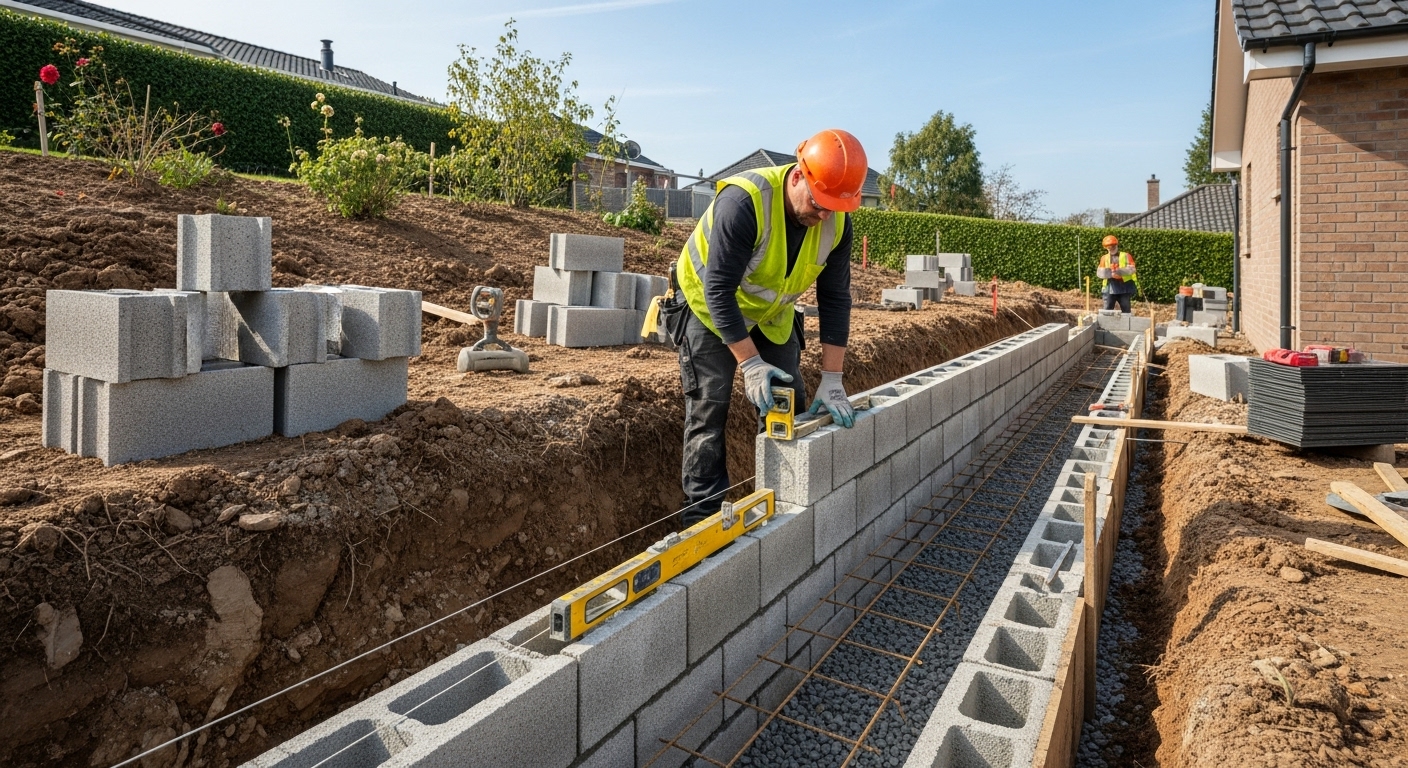
Retaining walls are a common feature in both residential and commercial landscapes. They are also used practically to hold back soil and prevent erosion, as well as adding some attractiveness outdoors. Building a wall comes to mind, whether you are doing it to add structural support to a home or garden, to make a leveled surface where there is a slope in the yard, or to create an attractive landscaping feature.
The construction of a retaining wall may cost quite a different amount, as it depends on material, labor, wall height, design intricacy, and site factors. On average, homeowners may spend more than 3000 and less than 9000 dollars to have a professionally constructed retaining wall, but this could range by even more than 20000 dollars in larger or engineered walls. For bigger projects, many contractors recommend quantity takeoff and cost estimating early in the planning stage to get accurate estimates of materials, labor, and budget before construction begins.
Average Cost of a Retaining Wall
Across the country, an average retaining wall will set you back anywhere between $20 and $50 a square foot, including material and labor. Smaller walls less than 3 feet tall might be on the lower side of the scale, but taller and reinforced walls, as well as those with drainage systems, are more expensive.
- Low end: $1,000 – $3,000 (basic DIY or small projects)
- Mid-range: $3,000 – $9,000 (average professional installation)
- High end: $10,000 – $20,000+ (large, engineered walls or premium finishes)
Cost by Material Type
The material you choose plays the largest role in determining cost. The following is a summary of typical retaining wall material:
1. Concrete Block Walls
- Cost: 15 -35 dollars a square foot
- Pros: Strong, multi-purpose; it can be made stronger
- Cons: First-time installation must be done by an expert
Concrete blocks (a.k.a. CMU or cinder blocks) are among the most common as they are sturdy, fairly affordable, and can be used in both minor and major walls.
2. Poured Concrete Walls
- Cost: 20-55 dollars per square foot
- Pros: So powerful, modern look
- Cons: Labor is more expensive, and needs highly trained contractors
In poured concrete walls, the process is long-lasting and best suited to carry the structure, but they are also costly because they require formwork and labor.
3. Stone Walls
- Cost: 25- 75 dollars a square foot
- Pros: Look natural, durable, value of the property increases
- Cons: Labor-intensive, the materials are heavy and hence expensive
Natural stone walls are functional and serve as ornamental barriers, and are thus integrated in high-end landscaping projects.
4. Brick Walls
- Cost: $20 and $45 per square foot
- Pros: Bulky, big, and chunky
- Cons: Labor-intensive and not suitable for tall walls
Brick is decorative rather than structural, allowing it to better suit low-height walls.
5. Wood Walls
- Cost: 15$-30$ / square foot
- Pros: Affordable, speed of installation, and rustic appearance
- Cons: Shorter lifespan (10-20 years), susceptible to rot, pests
Wood retaining walls typically cost less to install than stone and concrete are composed of, although they are labor-intensive, and have a shorter lifespan than other options.
6. Gabion Walls
- Cost: 10 to 40 dollars per square foot
- Pros: Environmentally friendly, durable, with a flexible design
- Cons: Rustic look will not suit every landscape
Gabions are strong and sustainable with wire cages that are filled with rocks or recycled material.
Other Cost Factors

Besides the type of material to construct a retaining wall, other factors influence the prices of such a wall:
1. Wall Height
Walls less than 3 feet do not cost much.
Taller walls (more than 4 feet) may need some engineering, reinforcement, and may need to be permitted, which and dramatically drive costs up.
2. Labor
Depending on the size of the house, labor set to the job usually costs between $50 to $75 an hour or $10 to $30 per square foot. The stone, brick, and reinforced concrete walls will require skilled masons or contractors.
3. Site Preparation
If the area involves excavation, grading, and removal of soil, it adds a rough range between 500 to 5,000 dollars, depending on the complexity of the site. Rough or hilly terrains are cumbersome to construct in.
4. Drainage Systems
It is vital to have the right drainage to avoid damage to the walls. Installation of pipes, gravel backfill, and weep holes may add approximately $20 to 50$ per linear foot.
5. Engineering and Permits
Permits and engineering plans are required by many municipalities for walls greater than 4 feet tall. Fees may be as low as $300 to $2,000.
6. Finishing And Design
To decorate with veneers, to light, and to landscape around the wall adds to the price, but to the attractiveness and market resale value.
DIY vs. Professional Installation
Other homeowners would prefer to construct the retaining wall on their own, particularly for small structures not more than 3 feet in height.
DIY Costs
- Materials: $10 per sq ft $25 per sq ft
- Other tools, gravel, and drainage supplies could increase the cost by $500 -$1000
DIY is money-saving, but it is accompanied by risks. Improper installation can cause the walls to collapse, drain inefficiency, or incur expensive repairs in the future.
Professional Installation
When a contractor is hired, structural integrity, particularly of taller walls or load-bearing walls, can be guaranteed. Although professional work is a little bit costly upfront, it tends to be of longer endurance and adheres to local regulations.
Ways to Save Money on Retaining Walls
- Choose cost-effective materials: Wood or concrete blocks are the ones that are typically economical when compared to stone or bricks.
- Height: The wall will be under 4 feet, and that can help to eliminate engineering and permit expenses.
- Build in phases: In a situation where you require several walls, your best resort is to phase the project to extend the cost.
- Invite competitive quotes: This will ensure that one gets the best price by comparing the quotes of the contractors.
- Apply your own DIY finishes: Do the landscaping, painting, or sealing yourself.
Are Retaining Walls Worth the Investment?

Retaining walls are more than just a function, as they can drastically enhance the look and the value of your property. A structural wall prevents soil erosion, secures your ground, and can be used outdoors. The cost of placing retaining walls may be steep, particularly with large projects, but certain projects have a significant ROI by boosting curb appeal and protecting against damage caused by erosion or drainage problems.
Conclusion
The prices vary with the materials used to construct a retaining wall, the size of the wall, the worker, and the location of the wall. Whereas a basic wall using wood can be purchased for tens of thousands of dollars, a huge wall made out of engineered stone or concrete could cost well over 20,000 dollars. On average, it will cost homeowners between 20 to 50 dollars per square foot for professional installation.
When buying a retaining wall, it is not just all about money but prophetic value, durability, and safety. Regardless of whether your preference is a lower-cost alternative or a high-end design, it is useful to be aware of the aspects that influence the price so that you plan accordingly and obtain the desired outcome for your space.
FAQs
What is the average cost to build a retaining wall?
The cost of the average varies between $20-$50 per square foot, depending on material, wall size, design complexity, and labor.
Which material is the most cost-effective for retaining walls?
Concrete blocks and pressure-treated timber are usually the cheapest and best, although stone and brick will give your hideaway a high-end appearance, at a higher cost.
Does the height of the retaining wall affect the cost?
It is correct that higher walls consume more materials, reinforcement, and sometimes the approval of an engineer under such a consideration, which highly imposes a cost.