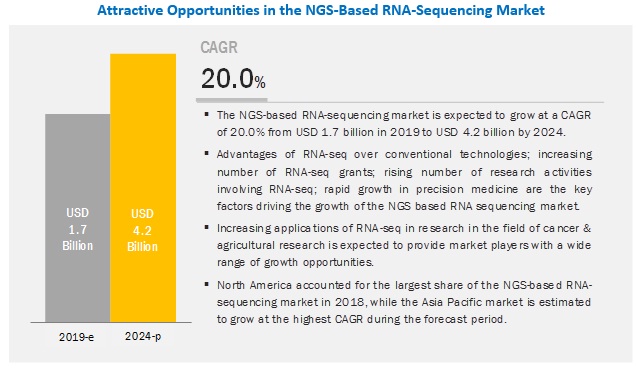
The NGS-Based RNA Sequencing Market is undergoing a transformative surge, revolutionizing molecular biology and personalized medicine. Valued at USD 2.9 billion in 2023, the market is projected to skyrocket to USD 12.1 billion by 2032, registering a robust CAGR of 17.1% during 2024–2032. This unprecedented growth underscores the pivotal role of next-generation sequencing (NGS) technologies in advancing gene expression profiling, disease diagnostics, and drug development.
RNA sequencing (RNA-Seq) powered by NGS has become a cornerstone of transcriptomic studies, enabling high-throughput and precise analysis of gene expression. The technology’s ability to detect rare transcripts, splice variants, and fusion genes is fueling its adoption across biotechnology, clinical research, and pharmaceutical applications.
Explore Key Trends in the Market: Request Your Sample Report: https://www.snsinsider.com/sample-request/4554
Key Drivers Steering the Market Forward
Rise of Precision Medicine and Personalized Therapies
The global push toward precision medicine has amplified the demand for high-resolution genomic data. NGS-based RNA sequencing allows clinicians and researchers to identify patient-specific mutations and gene expression patterns, enabling tailored therapeutic interventions. Its utility in oncology for profiling tumor heterogeneity is particularly noteworthy, positioning RNA-Seq as a vital diagnostic tool in cancer genomics.
Expanding Transcriptomic Research in Biotechnology
The surge in biotechnology and pharmaceutical R&D spending has intensified the use of RNA sequencing for drug target discovery and validation. Researchers leverage NGS platforms to investigate the dynamic nature of RNA, uncovering potential biomarkers for complex diseases such as neurodegenerative disorders and autoimmune conditions.
Technological Advancements in Sequencing Platforms
Continuous innovation in sequencing chemistries, data analytics, and bioinformatics pipelines has improved accuracy, reduced sequencing costs, and expanded throughput capacity. Companies like Illumina, Thermo Fisher Scientific, and Oxford Nanopore Technologies are leading the way with novel sequencing solutions, propelling the market to new heights.
Growing Investments in Genomic Infrastructure
Governmental and private investments in genomic research centers and biobank initiatives are accelerating the adoption of NGS technologies. Projects such as the Human Cell Atlas and national genome sequencing programs are boosting RNA-Seq’s global footprint.
Key Restraints Limiting Market Expansion
While the future of the NGS-based RNA sequencing market looks promising, several factors could hinder its momentum.
High Capital Costs: Despite falling per-base sequencing costs, the initial investment in NGS platforms and computational infrastructure remains substantial.
Complex Data Interpretation: RNA-Seq generates vast datasets that require sophisticated bioinformatics tools and expertise, often posing challenges for smaller laboratories.
Ethical and Regulatory Constraints: Data privacy concerns and regulatory complexities surrounding genomic data usage can slow clinical adoption.
Emerging Opportunities Shaping the Future
Integration of Artificial Intelligence (AI) in RNA-Seq Analysis
The convergence of AI and NGS data analytics is opening new frontiers in predictive genomics. AI-driven algorithms can identify hidden patterns in gene expression datasets, expediting biomarker discovery and accelerating precision diagnostics.
Expansion into Clinical Diagnostics and Infectious Disease Research
RNA sequencing is gaining traction in infectious disease surveillance, including pathogen detection and variant monitoring. The success of RNA-Seq in COVID-19 genomic tracking has demonstrated its potential for real-time epidemiology and clinical diagnostics.
Adoption of Cloud-Based Genomic Data Management
The shift toward cloud computing for sequencing data storage and analysis is streamlining workflows, enabling scalability, and reducing operational burdens for research organizations and hospitals.
Challenges to Overcome
The market still faces notable challenges, including:
Data Standardization Issues: Lack of standardized protocols for RNA sequencing workflows can lead to inconsistencies in results.
Shortage of Skilled Bioinformaticians: The growing complexity of sequencing data analysis calls for skilled professionals, a gap that persists globally.
Regulatory Ambiguities: As clinical RNA sequencing becomes mainstream, the need for harmonized regulatory frameworks across regions grows urgent.
Market Segmentation Analysis
The NGS-based RNA Sequencing Market can be segmented as follows:
By Product & Services:
Sample Preparation, Platforms & Consumables, Services, Data Analysis
By Technology:
Sequencing by Synthesis, Ion Semiconductor Sequencing, Single-Molecule Real-Time (SMRT) Sequencing, Nanopore Sequencing
By Application:
Expression Profiling Analysis, Small RNA Sequencing, Variant Calling and Transcriptome Assembly, De Novo Transcriptome, Epigenetics
By End User:
Research and Academia, Hospitals and Clinics, Pharmaceutical and Biotechnology Companies, Others
This detailed segmentation highlights the wide application range—from gene expression profiling in laboratories to clinical diagnostics in hospitals—showcasing RNA-Seq’s adaptability across end-user sectors.
Heightened Market Interest: Our Complete Report Delivers Extensive Analysis and Trends: https://www.snsinsider.com/reports/ngs-based-rna-sequencing-market-4554
Regional Insights: North America Leads, Asia Pacific Surges Ahead
North America dominates the global NGS-based RNA sequencing market, driven by a strong presence of key players such as Illumina, Thermo Fisher Scientific, and Agilent Technologies. The region benefits from advanced healthcare infrastructure, government funding for genomic research, and a high adoption rate of sequencing technologies.
Europe follows closely, with countries like Germany, the UK, and France investing heavily in personalized medicine initiatives. The continent’s emphasis on research collaborations between academic institutions and biotech firms further strengthens its market position.
Asia Pacific is expected to witness the fastest growth over the forecast period. Rapid technological adoption, increasing genomics research funding in China, Japan, and India, and a growing focus on precision healthcare contribute to the region’s expanding market share.
Meanwhile, Latin America and the Middle East & Africa are emerging as promising markets due to rising healthcare investments and genomic awareness campaigns.
Competitive Landscape: Innovation at the Core
The competitive ecosystem of the NGS-based RNA Sequencing Market is shaped by a blend of established giants and innovative biotech startups. Key players include:
Illumina, Inc., Thermo Fisher Scientific, Pacific Biosciences, Qiagen N.V., Oxford Nanopore Technologies, Agilent Technologies, Roche Sequencing Solutions, PerkinElmer, BGI Genomics, Eurofins Genomics, Bio-Rad Laboratories, Takara Bio USA, Nugen Technologies, CD Genomics, Genewiz, Macrogen, Inc., Novogene Corporation, Strand Life Sciences, BaseClear, and Zymo Research.
These companies are actively engaging in strategic collaborations, mergers, and product innovations to enhance sequencing accuracy, throughput, and affordability. For instance, partnerships between sequencing technology developers and cloud analytics providers are fostering integrated genomic solutions that simplify data interpretation.
Conclusion: A Genomic Revolution in Progress
The NGS-based RNA Sequencing Market is at the forefront of a genomics revolution that is redefining biomedical research and clinical diagnostics. With rapid technological advancements, the integration of AI and big data analytics, and expanding global research collaborations, RNA sequencing is poised to become an indispensable tool in understanding gene expression and disease mechanisms.
As the market moves toward USD 12.1 billion by 2032, its trajectory signifies not only technological progress but also a fundamental shift toward data-driven, precision healthcare—ushering in a new era of genomic discovery and medical innovation.