


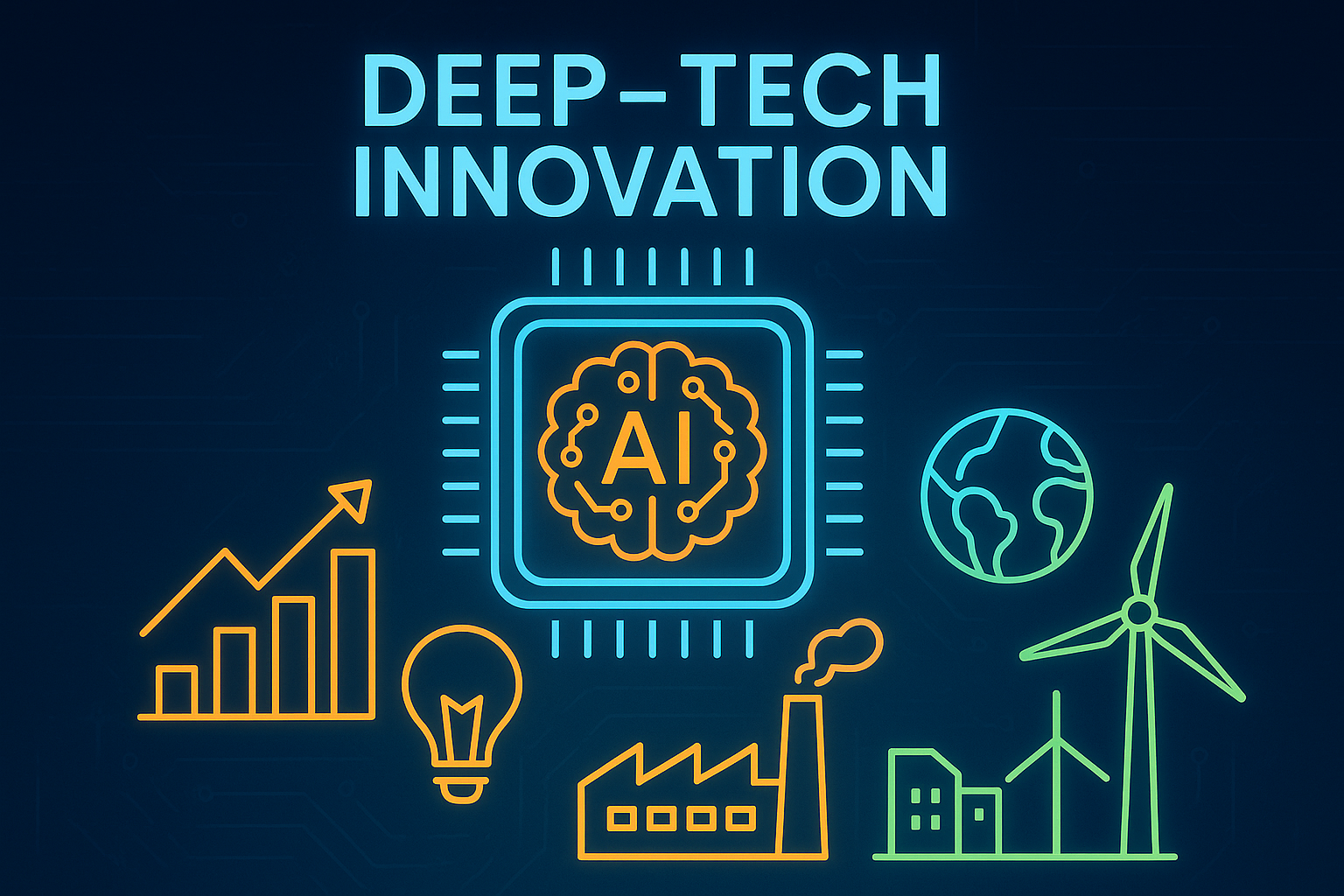
Technology is no longer just an industry; it is the force that shapes global progress. As societies evolve and industries become increasingly interconnected, a powerful shift is taking place — the world is moving from traditional tech to deep-tech innovation.
Deep-tech, driven by scientific breakthroughs and engineered intelligence, is solving problems that were once considered too complex, too expensive, or simply impossible. From artificial intelligence to CleanTech, this transformative sector is redefining the future of humanity.
This article explores why deep-tech innovation is rapidly becoming the world’s most influential engine of economic growth, environmental sustainability, and human advancement.
What Makes Deep-Tech Different?
Deep-tech stands apart from mainstream technology. While regular tech focuses on incremental improvements, deep-tech aims to solve fundamental challenges through science, research, and long-term innovation.
It includes fields such as:
Artificial Intelligence and Machine Learning
Robotics and autonomous systems
CleanTech and climate technologies
Environmental intelligence
Space technology
Advanced materials and nanotechnology
Quantum computing
Computer vision and analytics
These technologies are designed for impact, not just convenience. They address issues like climate change, industrial safety, environmental degradation, and global health challenges.
Deep-tech pushes boundaries. It doesn’t ask how to improve — it asks how to reinvent.
AI: The Brain of the Deep-Tech Era
Artificial Intelligence is at the heart of deep-tech innovation. Advanced algorithms now analyze massive datasets, detect patterns, optimize processes, and make predictions with remarkable accuracy.
AI’s influence spans across sectors:
✔ Healthcare
AI-powered diagnostic tools help detect diseases sooner and more accurately.
✔ Manufacturing
Computer vision identifies defects, increases safety, and reduces waste.
✔ Energy
AI predicts energy consumption and optimizes renewable energy distribution.
✔ Transportation
Autonomous vehicles and smart traffic systems increase efficiency.
✔ Business & Industry
Predictive analytics save billions by forecasting demand, risks, and failures.
What makes modern AI truly powerful is its shift toward ethical, human-centered intelligence. Instead of replacing people, AI now enhances decision-making, safety, and productivity.
The future belongs to AI systems that operate transparently, evolve responsibly, and complement human capabilities.
CleanTech: Building a Sustainable Planet Through Technology
Climate concerns are now at the center of global discussion. Rising temperatures, pollution, and resource depletion have forced countries and corporations to rethink how they operate. This has led to an explosive rise in CleanTech innovation.
CleanTech includes:
Renewable energy systems
Electric mobility and battery optimization
Smart waste management
Water purification and recycling
Carbon capture technologies
Energy-efficient automation
AI-driven climate prediction
These technologies are helping nations transition toward a net-zero future, where environmental protection and economic growth work together instead of competing.
CleanTech is not just a market — it is a movement that will define the next century.
Why Ethical Innovation Matters More Than Ever
Rapid technological expansion brings risks — bias in algorithms, misuse of data, over-reliance on automation, and environmental strain. Ethical innovation ensures that deep-tech grows in the right direction.
Ethical deep-tech includes:
✔ Transparency
Systems that explain how decisions are made.
✔ Fairness
Algorithms free of harmful bias.
✔ Accountability
Clear responsibility for outcomes.
✔ Sustainability
Tech that protects natural resources and future generations.
✔ Human-Centered Design
Solutions built around real human needs.
When ethical principles guide innovation, technology becomes a force for good — building trust, safety, and long-term value.
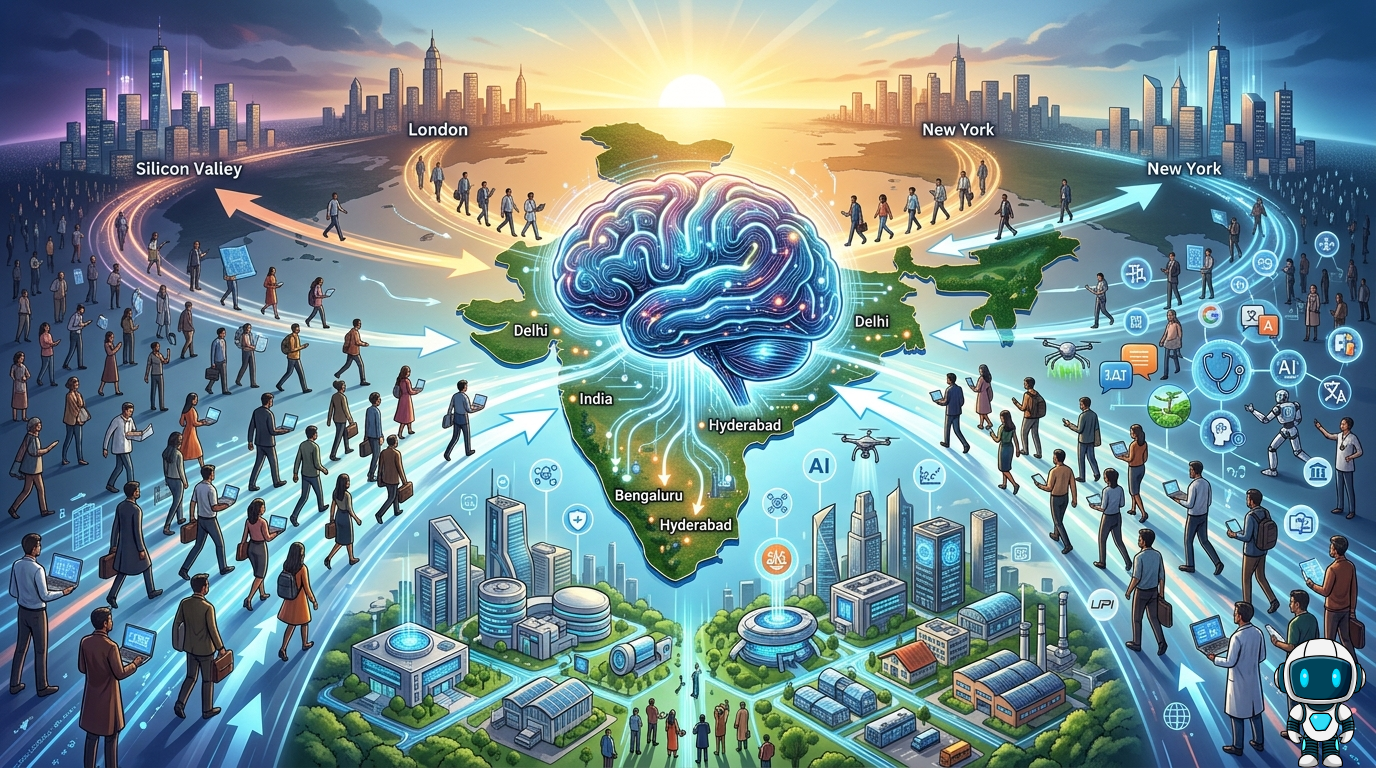
The Global Deep-Tech Ecosystem Is Expanding Rapidly
Countries around the world are recognizing the economic power of deep-tech. Governments, universities, and private investors are building ecosystems that support breakthrough innovation.
Europe
Leading the world in robotics, clean energy solutions, and AI regulations that promote responsible technology.
United States
Driving progress in automation, biotech, aerospace, and AI-powered industries.
Asia
Rapidly scaling deep-tech sectors, including advanced manufacturing, AI research, semiconductors, and smart-city solutions.
Middle East
Emerging as a hub for renewable energy, autonomous systems, and future-focused urban planning.
These regions are not competing — they are collaborating. The global deep-tech economy is built on partnerships, shared research, and cross-border innovation frameworks.
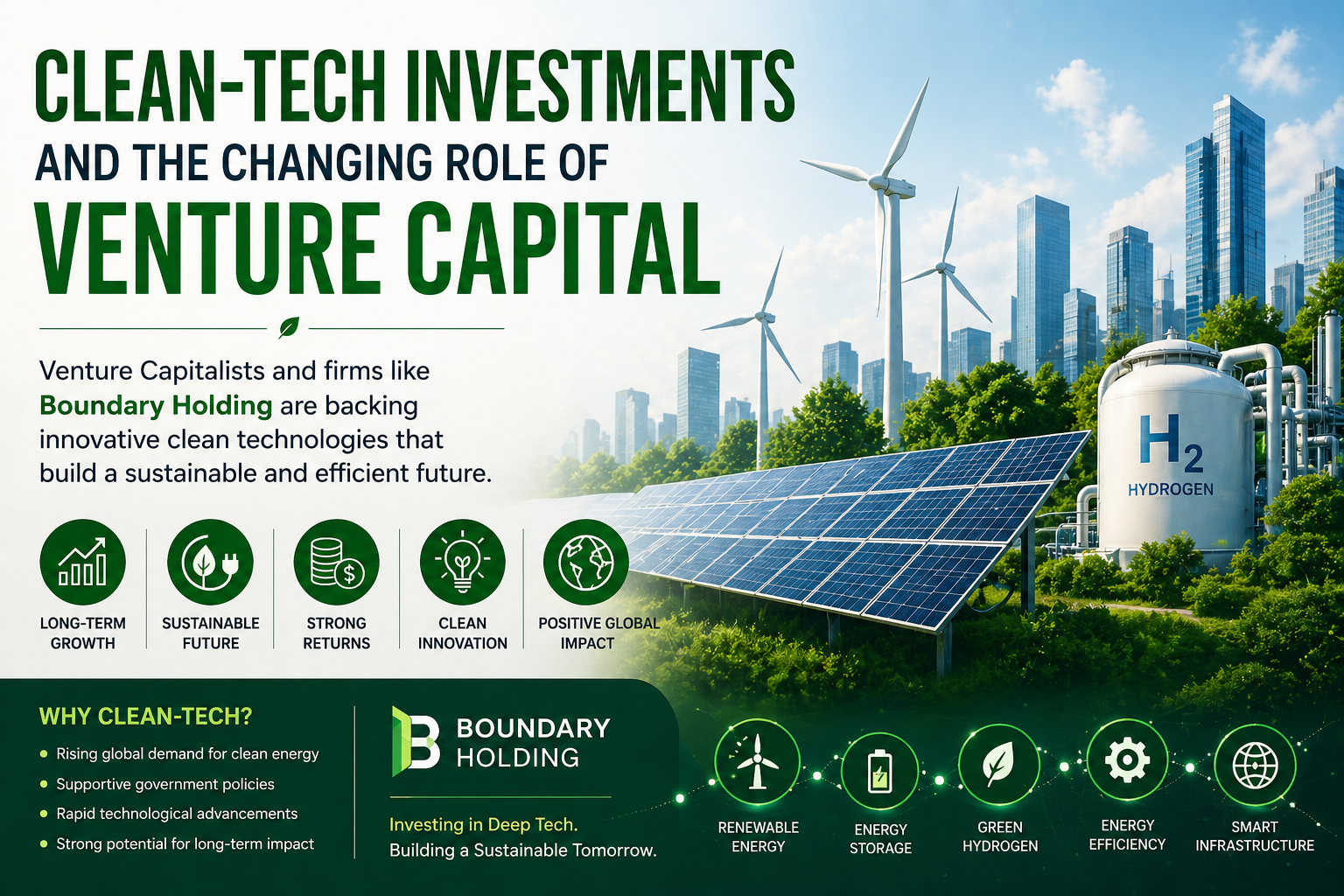
How Investors Are Fueling the Deep-Tech Revolution
Deep-tech projects require patience, capital, and a deep understanding of science and engineering. Investors today are shifting their strategies to support:
Long-term research and development
Ethical AI development
Renewable energy and CleanTech growth
Industrial automation and robotics
Data intelligence for safety and sustainability
Unlike traditional tech funding focused on fast scaling, deep-tech funding prioritizes long-term impact and purpose-driven innovation.
The result? Startups that deliver real-world solutions with measurable, sustainable outcomes.
Why Deep-Tech Will Define the Next 50 Years
Deep-tech innovation is not a temporary trend. It is the foundation of future economics, sustainability, and global progress.
Here’s why:
1. It solves real problems
Climate change, industrial hazards, pollution, health crises — deep-tech directly addresses global needs.
2. It creates high-value industries
Sectors powered by AI, robotics, and CleanTech have long-term demand and growth potential.
3. It drives green transformation
Clean energy, smart cities, and sustainable tech are becoming global priorities.
4. It enhances human capabilities
Technology is no longer about replacement — it’s about collaboration.
5. It ensures long-term resilience
Deep-tech creates systems that adapt, learn, and evolve over time.
The next industrial revolution will not be powered by apps — it will be powered by intelligent, sustainable, deep-tech systems.
The Human Side of Technological Transformation
While deep-tech solves technical challenges, its biggest impact is on people. It enhances:
Healthcare accessibility
Safety in industrial operations
Quality of life in urban environments
Environmental protection
Workforce productivity
Global connectivity
Innovation becomes meaningful only when it improves human life. That is why the deep-tech movement is strongly rooted in ethics, empathy, and sustainability.
Conclusion: The Future Is Deep, Digital, and Sustainable
The world is entering a new era — one where technology does not just disrupt industries but reshapes humanity’s path forward. Deep-tech innovation is emerging as the most powerful driver of global transformation.
AI is becoming more ethical.
CleanTech is becoming more accessible.
Automation is becoming safer.
And innovation itself is becoming more responsible.
The future belongs to countries, companies, and creators who embrace purpose-driven technology, where intelligence meets sustainability, and progress meets responsibility.
Deep-tech is not just the future of innovation —
it is the future of the world.


Artificial Intelligence has been the go-to technology for companies and enterprises in recent years.
The adoption of AI by enterprises all around the world has grown by 270% in the last four years as artificial intelligence can improve the business process and garner more ROIs.Greater ROIs is the main reason why more than 1/3rd of the companies worldwide are using Artificial Intelligence in a full-blown manner.
As it happens with every technology, the increase in usage of AI has led to several misconceptions about the technology.
There are beliefs that there are only a handful of skilled AI researchers and companies.
Therefore, your organization needs to employ only those to make the most of the technology.
Although, these statements aren't right as Artificial Intelligence is widely accepted and implemented by several experts around the world.Thus, to shred all your misbeliefs about AI technology, let us dug down deep and find out the top 7 myths about Artificial Intelligence.