Have you ever felt a sharp pain or discomfort when sipping a hot coffee or biting into ice cream? That unpleasant twinge could be a sign of tooth sensitivity, a common dental problem affecting millions. At Maruti Dental Clinic, we often meet patients who experience sudden sensitivity without knowing the underlying reasons. Understanding why it happens can help you prevent it and protect your enamel.
What is Tooth Sensitivity?
Tooth sensitivity (or dentin hypersensitivity) occurs when the inner layer of the tooth (dentin) becomes exposed. Normally, your teeth are protected by a hard outer layer of enamel and a layer of cementum covering the root. When these protective layers wear away, heat, cold, sweet, or acidic foods can stimulate the nerves inside your tooth, causing discomfort or pain.
Common Reasons for Tooth Sensitivity
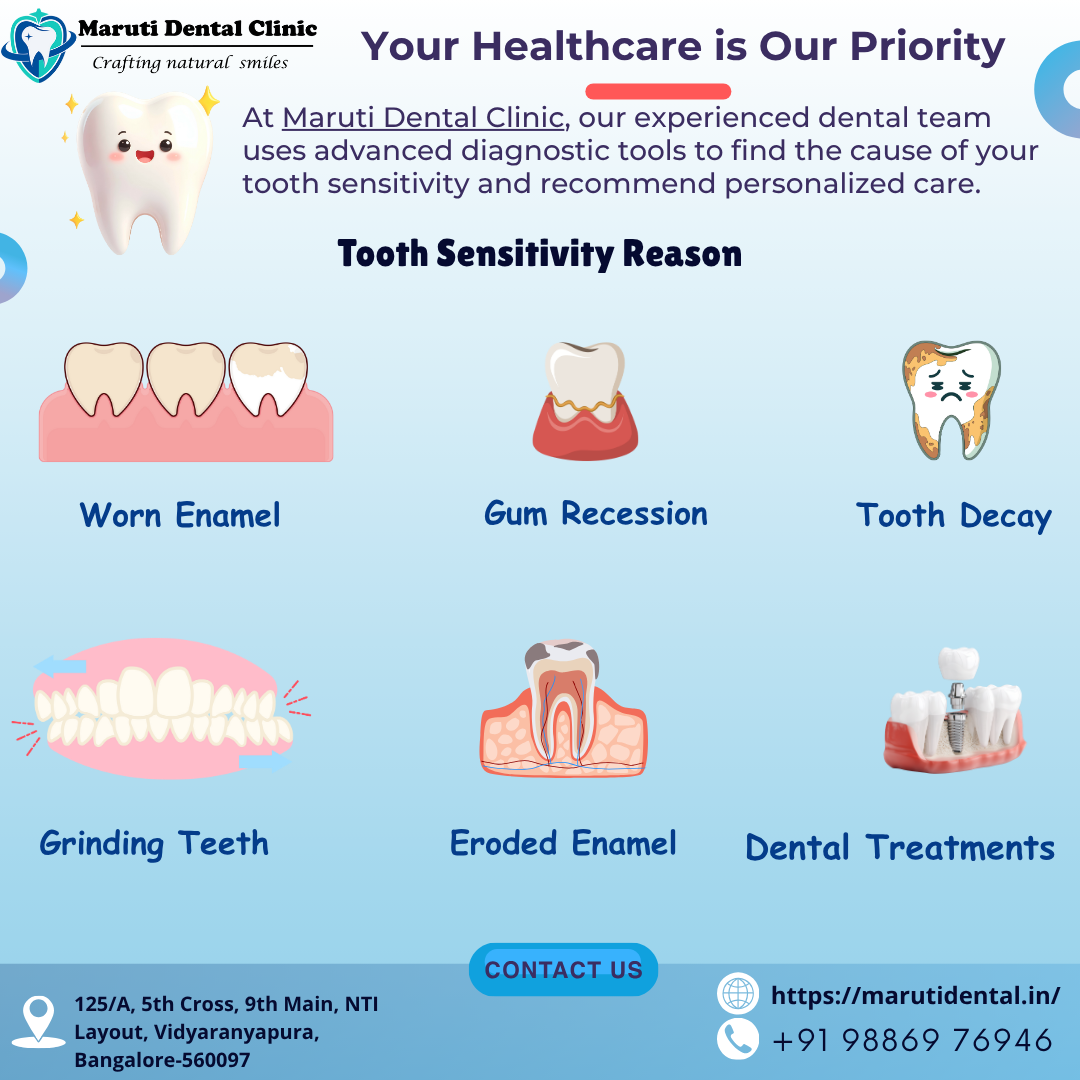
1. Worn Enamel:
Brushing too hard or using a hard-bristled toothbrush can wear away the enamel. Over time, this exposes the dentin and leads to sensitivity.
2. Gum Recession:
Gum disease or aggressive brushing can cause gums to pull away from teeth, exposing the root surface (cementum), which is not as well-protected as enamel.
3. Tooth Decay or Cavities:
Cavities near the gum line or cracks in the tooth can directly expose the nerve endings inside.
4. Grinding or Clenching Teeth (Bruxism):
Many people grind their teeth unconsciously during sleep or stress, which can thin out the enamel layer.
5. Acidic Foods and Beverages:
Frequent consumption of acidic drinks (like soda, citrus, or wine) erodes enamel faster and makes teeth more sensitive.
6. Recent Dental Treatments:
Procedures like whitening, scaling, or fillings can temporarily increase tooth sensitivity. This usually subsides within a few days.
How to Prevent Teeth Sensitivity
• Brush gently using a soft-bristled toothbrush.
• Use desensitizing toothpaste recommended by your dentist.
• Avoid acidic foods and limit sugary drinks.
• Maintain regular dental checkups to catch issues early.
• Use a night guard if you grind your teeth during sleep.
• Avoid over-whitening products that can strip enamel.
Treatment Options at Maruti Dental Clinic
At Maruti Dental Clinic, we customize treatment based on the root cause of your sensitivity:
1. Fluoride Varnish Application:
Strengthens enamel and reduces nerve transmission.
2. Desensitizing Gel Treatment:
Blocks nerve pathways to reduce discomfort.
3. Bonding or Sealants:
For exposed root surfaces, sealing with a resin helps cover the sensitive areas.
4. Gum Grafting:
For gum recession cases, we can restore the lost gum tissue to protect tooth roots.
5. Root Canal Treatment:
For severe, persistent sensitivity due to nerve damage, root canal therapy eliminates the source of pain.
When to See a Dentist
If your tooth sensitivity lasts more than a few days or gets worse, it’s time to consult a dental professional. Self-treatment can help temporarily, but only a dentist can identify the true cause.
At Maruti Dental Clinic, our experienced dental team uses advanced diagnostic tools to find the cause of your tooth sensitivity and recommend personalized care — helping you eat, drink, and smile comfortably again.
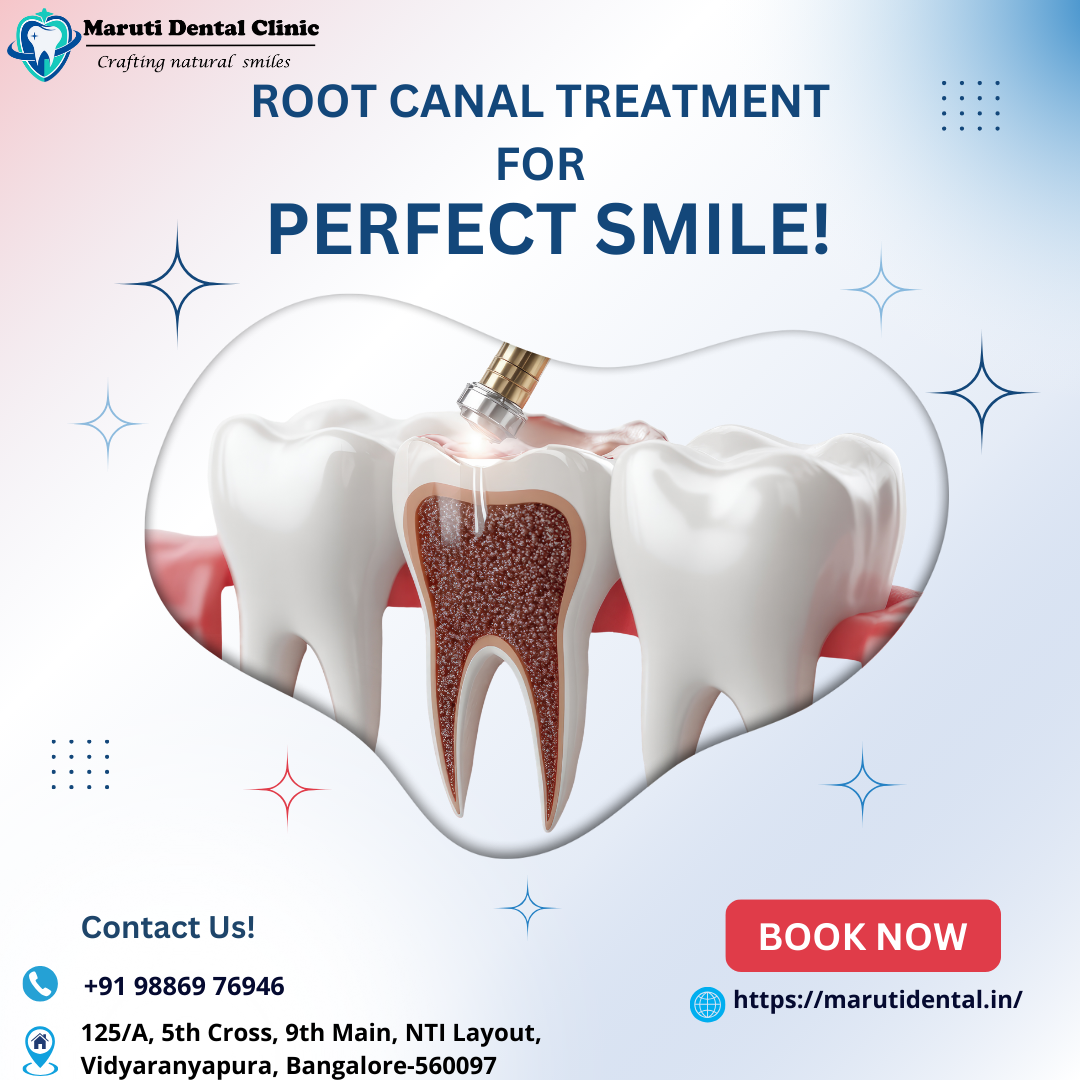



Decayed teeth cause a lot of pain and can be the reason behind plenty of lost work hours.
Here are 5 tell-tale signs you need root canal treatment.