


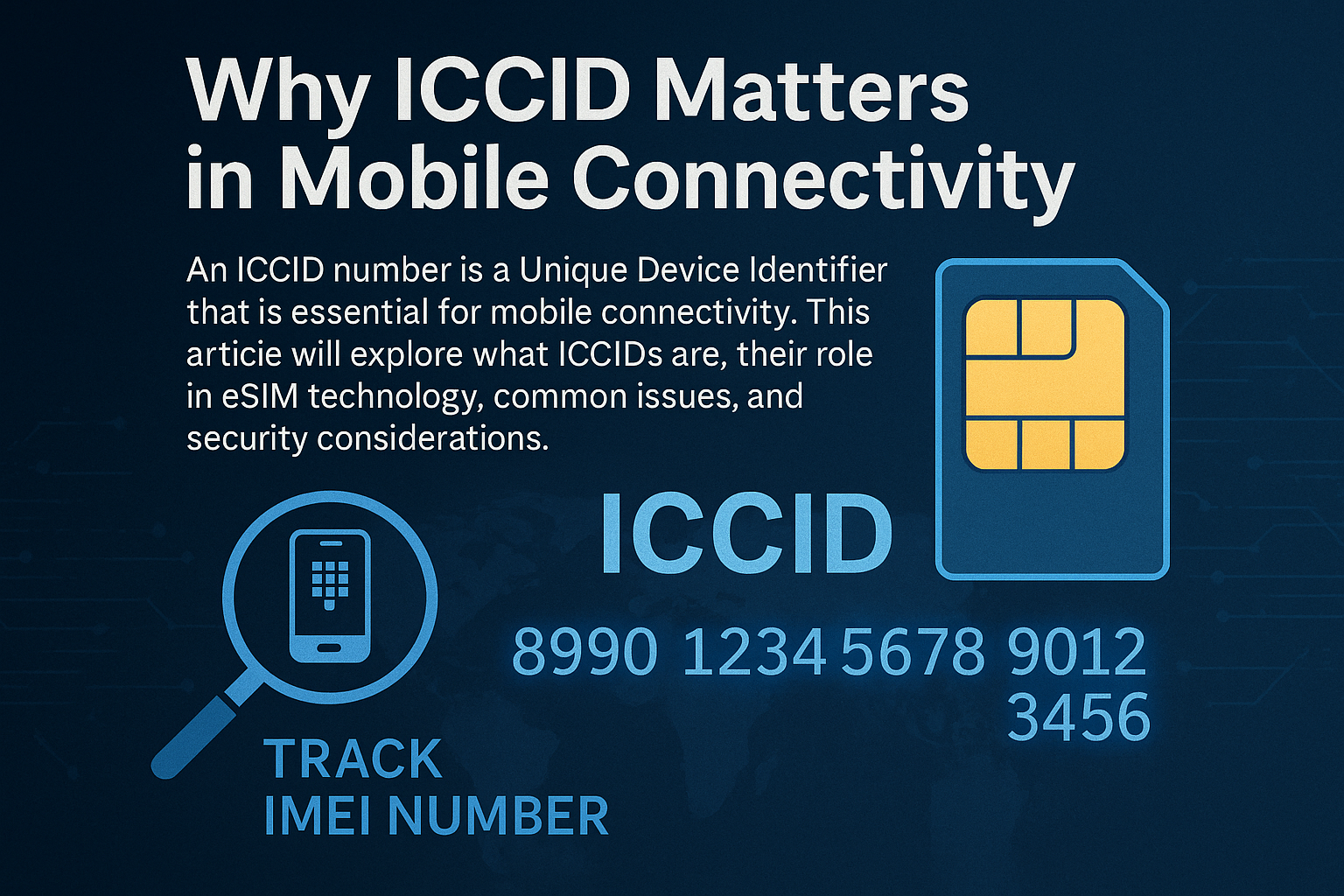
Mobile connectivity today depends on a variety of hidden but essential systems that help networks verify devices and establish secure communication. One of the most important of these systems is the iccid number, a globally recognized identifier assigned to every SIM card and eSIM profile. This long string of digits acts as the foundation for SIM-based authentication, enabling carriers to confirm your identity, activate your mobile plan, and ensure your device connects smoothly across regions and networks. Although most users rarely think about this number, it plays a critical role during SIM activation, switching devices, or transitioning to eSIM. As the mobile industry moves toward digital solutions, understanding the ICCID helps users navigate issues more confidently and maintain reliable, secure connectivity in an increasingly digital environment.
ICCID and SIM Security
The ICCID is not only a technical identifier—it also plays a major role in protecting your mobile identity and preventing unauthorized access. Telecom operators use the ICCID to authenticate SIM legitimacy and block fraudulent attempts.
1. Authentication Layer
Before your SIM connects to a network, the carrier checks whether your ICCID is registered and valid.
2. Protection Against SIM Swap Attacks
SIM swap scams often target IMSI numbers, but ICCID cross-verification adds an extra security layer. Irregular ICCIDs can trigger security reviews.
3. Secure eSIM Provisioning
eSIMs use encrypted ICCID-based activation, helping secure the transfer of digital SIM profiles.
4. Fraud Activity Detection
Carriers monitor ICCID-related patterns to detect abnormal behavior such as rapid SIM swaps or repeated failed activation attempts.
Because the ICCID is treated as a Unique Device Identifier for the SIM itself, it plays a central role in preventing impersonation and maintaining secure mobile connections.


Be it directly or indirectly, the internet has affected our lives in a number of ways.
From deciding where to eat to where to shop, 70% of the customers visit a store based on information found online.
But do you know how to make people aware of your local business?Why Local Search Matters For Small Business