


The Silent Slowdown Inside Fast-Growing Businesses
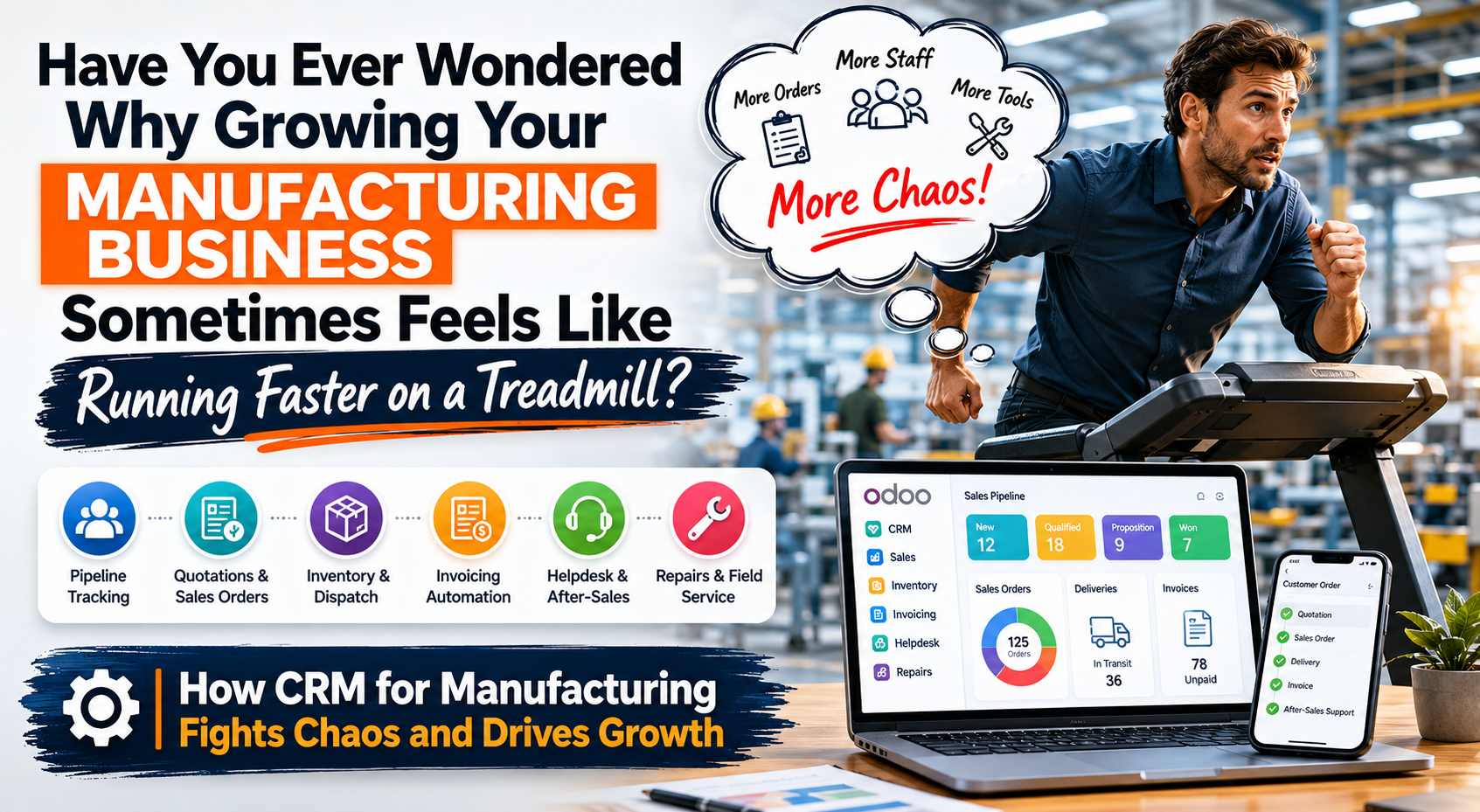
Growth always starts with excitement like - more leads, more conversations, more orders. But here’s the twist: the very moment a business grows, its internal rhythm starts to break.
- Customer interactions move at one speed.
- Sales teams operate at another.
- Stock readiness runs on its own timeline.
- Billing waits for confirmation from someone in between.
No one sees this as a “problem” because individually, each team functions well.
But collectively? They’re running a relay race where the baton transfer isn't smooth.
That’s when subtle symptoms appear:
- Leads respond at midnight, but the system updates the next morning.
- Sales executives promise delivery, but the stock team updates availability at the end of the day.
- Invoicing waits for approvals that should have triggered automatically.
- Finished goods stock stays accurate, but not predictive.
The result? Everything moves… just a little slower than it should.
And that’s the real insight: Growth doesn’t collapse because of inefficiency, it slows down because information stops traveling at the speed of decisions.
What Happens When Sales Speed Outruns Operational Visibility
When teams operate on different clocks, the business feels a subtle, compounding drag effect, something that isn’t damaging, but quietly expensive.
- Conversions slow even when leads increase
A well-known mid-market study showed that companies responding within 30 minutes improved conversion likelihood by up to 38%, simply because they reached the customer before competitors did.
But most teams don’t slow down due to lack of skill, they slow down because they lack instant access to stock readiness, past customer behavior, or pricing logic.
- Deals close, but fulfilment hesitates
Imagine this: A salesperson commits a delivery date confidently, only to find out later that half the batch is still in final QC.
Nothing is “wrong”, it’s just timing. But those few extra days of rescheduling change the entire customer experience.
- Invoicing gets unintentionally delayed
Not because someone is inefficient, but because:
- fulfilment confirmation arrives late
- stock dispatch update comes manually
- customer changes took time to sync
- approval cycles vary by department
This shifts revenue recognition by 3–5 days every month, which is huge across a year.
- Finished goods remain static, not strategic
Most companies have a stock dashboard. Very few have a stock intelligence system.
The difference?
Strategic businesses ask:
- “Which SKUs will run out next week?”
- “What can we commit within 48 hours?”
- “Where is idle stock blocking cash flow?”
- “Which customers reorder the fastest-moving items?”
This shift alone can improve stock optimization by 12–22%.
The bigger point: There’s always scope for improvement, even if a business already uses an advanced system.
Because real advantage comes from how the system is connected, not just which system is used.
The Numbers Don’t Lie: How Unified Workflows Transform Performance
Across manufacturing, electronics, FMCG, healthcare, and construction, one pattern keeps repeating:
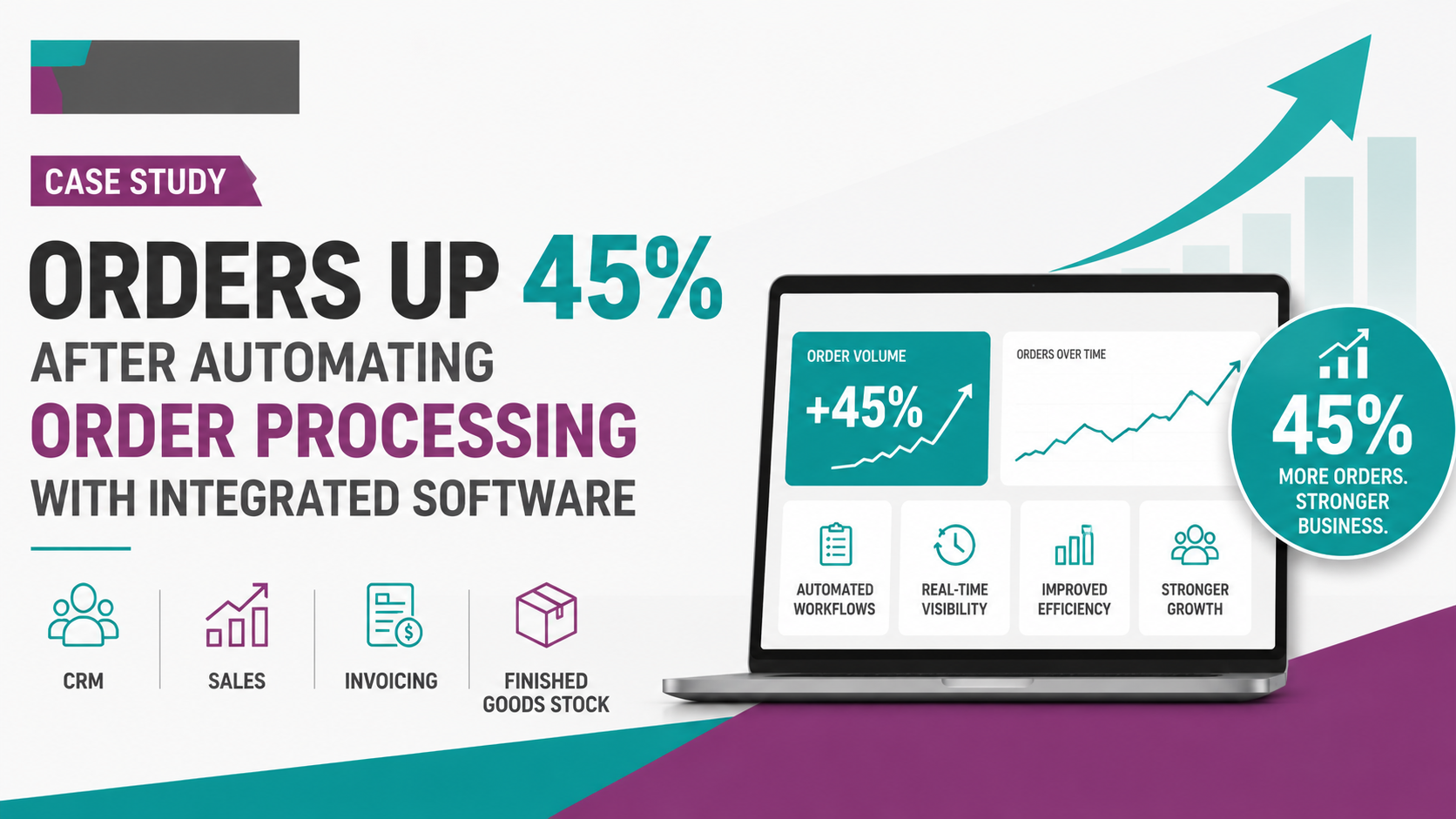
Businesses that unify CRM + Sales + Invoicing + Stock witness measurable outcomes like:
- 20–30% faster sales cycle
- 30–45% improvement in invoice processing speed
- 10–18% higher repeat business due to fulfilment reliability
- 12–22% better stock accuracy and dispatch readiness
- 15–25% stronger cash flow cycles
And here’s the nuance many leaders miss:
These numbers aren’t “software improvements.” They’re workflow improvements.
When teams share the same rhythm, decisions become quicker, forecasting becomes sharper, and customers feel the difference instantly.
The Four Engines Behind High-Velocity Customer-to-Cash Cycles
Every high-performing business eventually discovers the same truth:
You don’t grow by adding more tools. You grow by synchronizing the ones you already have.
Here are the four engines that make it possible:
1. Customer Engagement That Feeds Sales Automatically
Every interaction be it website visit, call, WhatsApp message, quotation request all should enrich the CRM without manual input.
The salesperson shouldn’t spend time searching for details. The system should serve them.
This alone:
- cuts qualification time
- improves sales confidence
- speeds up first response
- delivers higher customer satisfaction
2. Sales Orders Powered by Real-Time Finished Goods Visibility
The best sales teams are not the ones who sell the most. They’re the ones who commit realistically and deliver consistently.
When quotations show:
- real-time stock
- near-future availability
- delivery-ready items
- expected replenishment dates
…the entire sales journey accelerates.
Real-world improvement? Businesses report 20–25% fewer delivery escalations simply by linking sales with live stock.
3. Invoicing Triggered by Sales Milestones (Not Manual Follow-Ups)
Invoicing should be the fastest part of the process, not the slowest.
Automated triggers can fire invoices based on:
- dispatch confirmation
- partial fulfilment
- goods readiness
- milestone completion
- customer approval
This alone tightens the cash cycle by 25% or more.
4. Finished Goods Stock Becomes Predictive, Not Passive
This is where mature operations unlock their biggest advantage.
Instead of “What stock do we have today?” the system should answer:
- “What will we run out of tomorrow?”
- “Which fast-movers need priority production?”
- “Which customers will reorder soon?”
- “What can be shipped immediately for higher customer delight?”
This drives better planning, better forecasting, and better customer commitments without additional overhead.
If you want to transform how your business manages leads, customer engagement, quotations, invoicing, and delivery readiness without changing your current tools, we can help you design a unified workflow blueprint that aligns everything end-to-end.
We focus on:
- Faster conversions
- Predictable stock-driven fulfilment
- Consistent customer experience
- Shorter cash cycles
- Scalable workflows that grow with you
You can connect with us by dropping a line at sales@apagen.com or make a call on +91 9971800665.