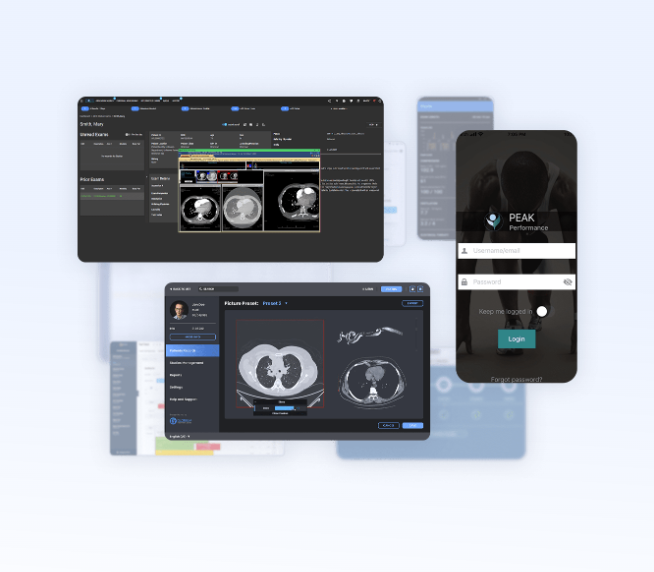
In the modern healthcare ecosystem, medical imaging plays a crucial role in patient diagnosis, treatment planning, and follow-up. Imaging modalities such as X-rays, MRI, CT scans, and ultrasounds generate vast amounts of data that must be efficiently stored, managed, and accessed. To optimize workflow, improve patient outcomes, and ensure data security, integrating Medical Imaging Software Development with electronic health records (EHR) and picture archiving and communication systems (PACS) has become essential.
This article explores the importance of integration, the challenges involved, and best practices to implement seamless connectivity between medical imaging software, EHR, and PACS systems.
The Importance of Integrating Medical Imaging Software with EHR and PACS
1. Streamlined Clinical Workflow
Medical imaging integration eliminates the need for manual data entry and reduces duplicate tests. When imaging software is connected to EHR and PACS systems, clinicians can access patient imaging data directly from the patient’s electronic record. This facilitates faster decision-making, improves diagnostic accuracy, and reduces operational delays.
2. Improved Patient Care
With seamless integration, healthcare providers can correlate imaging data with patient history, lab results, and other clinical information. This comprehensive view enables better diagnosis and personalized treatment plans, ultimately enhancing patient care.
3. Regulatory Compliance
Integration ensures that all patient data is stored and accessed in compliance with healthcare regulations such as HIPAA. Secure data transmission between systems reduces the risk of breaches and ensures that sensitive imaging information remains protected.
4. Cost Efficiency
By linking medical imaging software with EHR and PACS, healthcare facilities can optimize storage, reduce redundancies, and minimize unnecessary imaging procedures, leading to significant cost savings over time.
Key Challenges in Integration
Integrating medical imaging software with EHR and PACS systems is not without challenges. Healthcare organizations must address the following issues:
1. Data Standardization
Imaging and EHR systems often use different formats for storing and transmitting data. DICOM (Digital Imaging and Communications in Medicine) is the standard for imaging data, whereas EHRs use HL7 or FHIR standards. Ensuring compatibility between these standards is crucial for seamless integration.
2. System Interoperability
Healthcare IT infrastructures may include multiple EHR and PACS vendors, each with unique protocols and interfaces. Achieving interoperability requires robust middleware solutions and adherence to standardized APIs.
3. Data Security and Privacy
Integrating systems increases the risk of data breaches if not properly managed. Secure data transmission, encryption, and access control mechanisms are essential to maintain HIPAA compliance and protect patient privacy.
4. Scalability
Healthcare facilities generate increasing volumes of imaging data. Integration solutions must be scalable to handle growing storage and processing requirements without compromising performance.
Best Practices for Integrating Medical Imaging Software with EHR and PACS
1. Adopt Standardized Protocols
Using standards like DICOM for imaging and HL7/FHIR for patient data ensures interoperability between systems. Standardized protocols simplify data exchange, reduce errors, and make future system upgrades easier.
2. Implement Robust Middleware Solutions
Middleware acts as a bridge between medical imaging software, EHR, and PACS systems. It translates data formats, handles message queuing, and manages workflows efficiently. Selecting a middleware solution that supports scalable and secure data integration is critical.
3. Prioritize Security Measures
To ensure secure integration:
Use encrypted data transmission protocols (e.g., TLS/SSL).
Implement role-based access control (RBAC) for all systems.
Regularly audit system access logs to detect unauthorized activity.
Ensure that all third-party software adheres to HIPAA compliance requirements.
4. Test Integration Thoroughly
Before deploying integration in a live environment, conduct extensive testing using real-world scenarios. Testing should cover data accuracy, workflow continuity, and system performance under load. Early identification of potential issues can prevent costly downtime and patient care disruptions.
5. Optimize Workflow Automation
Automation reduces manual intervention and speeds up imaging workflows. For example, integrating PACS with EHR can automate image routing to the appropriate specialist, flag abnormal results for urgent review, and generate structured reports automatically.
6. Ensure User-Friendly Interfaces
Even the most technically sound integration can fail if end-users find it cumbersome. Design interfaces that allow clinicians to access imaging data easily within the EHR, with intuitive navigation and quick retrieval of relevant studies.
7. Provide Training and Support
Staff training is essential to maximize the benefits of integration. Healthcare providers should receive ongoing support to address technical issues, system updates, and workflow optimization.
8. Plan for Future Expansion
Healthcare technology evolves rapidly, with AI-driven diagnostics, telemedicine, and cloud storage becoming integral parts of imaging workflows. Integration strategies should be flexible to accommodate new tools, devices, and software modules without major system overhauls.
Leveraging Cloud Technologies for Integration
Cloud-based solutions are increasingly used in Medical Imaging Software Development to simplify integration with EHR and PACS. Benefits of cloud adoption include:
Centralized Data Access: Clinicians can access imaging data from any location securely.
Scalability: Cloud storage easily accommodates growing imaging data volumes.
Disaster Recovery: Cloud systems offer automatic backups and redundancy to prevent data loss.
AI and Analytics: Cloud platforms provide computing power for advanced imaging analysis and predictive modeling.
However, implementing cloud-based integration requires careful consideration of security, latency, and compliance with local regulations.
Case Studies in Successful Integration
Case Study 1: Large Hospital Network
A multi-hospital network implemented an integrated solution connecting its PACS, EHR, and specialized medical imaging software. The result was a 40% reduction in duplicate imaging tests, improved report turnaround time, and enhanced diagnostic collaboration among specialists.
Case Study 2: Radiology Clinic
A radiology clinic adopted cloud-based integration to connect imaging modalities with its EHR system. Clinicians could access patient images remotely, enabling tele-radiology consultations. This improved patient satisfaction and expanded service offerings to rural areas.
Future Trends in Medical Imaging Integration
AI-Powered Image Analysis: Integration with AI algorithms for automated image interpretation and anomaly detection will become a standard feature.
FHIR-Based Interoperability: Fast Healthcare Interoperability Resources (FHIR) will simplify integration and improve real-time data exchange.
Telemedicine and Remote Diagnostics: Seamless access to imaging data will support virtual consultations and remote patient monitoring.
Personalized Medicine: Integrated systems will allow combining imaging data with genetic, clinical, and lifestyle data to create individualized treatment plans.
Conclusion
Integrating Medical Imaging Software Development with EHR and PACS systems is no longer optional; it is a necessity for modern healthcare organizations aiming to improve diagnostic accuracy, streamline workflow, and enhance patient care. While challenges such as data standardization, system interoperability, and security must be addressed, adopting best practices ensures a smooth and efficient integration process.
By leveraging standardized protocols, middleware solutions, robust security measures, and cloud technologies, healthcare providers can create a seamless imaging ecosystem that benefits both clinicians and patients. Looking ahead, advancements in AI, FHIR interoperability, and telemedicine will continue to shape the future of medical imaging integration, making it an essential component of next-generation healthcare solutions.
Medical imaging software that is seamlessly integrated with EHR and PACS systems not only improves operational efficiency but also lays the foundation for advanced diagnostics, personalized medicine, and better patient outcomes.


Medical Imaging Software Market Research Report: Information by Software Type (Integrated & Stand-Alone), Imaging Type (2D, 3D, & 4D), Modality (CT & MRI), Application (Neurology & Cardiology), & End User (Clinics & Hospitals) — Global Forecast till 2027Market SnapshotThe latest report by Market Research Future (MRFR) suggests that the medical imaging software market is poised to expand significantly over the coming years, and was worth USD 2.66 billion in 2017.
The advanced image rendered by this software is utilized for enhancing the patient care, in addition to improving the operating productivity by helping the doctors and other healthcare professionals gain more knowledge regarding the condition of the patient.With the rising trend of electronic health records for storing, distributing and managing the patient health information with the help of medical images, the market for medical imaging software is gaining immense traction at a global level.
This statement holds true since medical imaging software is used in hospitals and clinics, for keeping track of the patient, based on which the appropriate solutions can be provided to the patientsTo illustrate, Philips had launched its range of innovations within the field of radiology that allowed precision diagnosis along with improved productivity, in November 2018.
In addition, the developments in 3D/4D platforms as well as multimodality imaging platforms are projected to act as catalysts in the growth of the market in the following time frame.Request Free Sample Copy at: https://www.marketresearchfuture.com/sample_request/7622 Market SegmentationThe global medical imaging software market has been segmented on the basis of software type, imaging type, modality, application, and end user.In terms of the software type, the market can be broken down into integrated software and stand-alone software.Depending on the imaging type, the market can be considered for 2D imaging, 3D imaging, and 4D imaging.Modality-wise, the market caters to Computed Tomography (CT), MRI (Magnetic Resonance Imaging), radiography, photoacoustic imaging, nuclear medicine, echocardiography, ultrasound, thermography, and others.The applications covered in the report are neurology, cardiology, oncology, musculoskeletal, dental, obstetrics & gynecology, urology & nephrology, and others.The market, based on end user, covers the segments like clinics & hospitals, diagnostic centers, research laboratories, and others.Regional InsightThe global market for medical imaging software is spread across the key regions of the Americas, Asia Pacific, Europe, and the Middle East & Africa.Leading the global medical imaging software market, the Americas controls the biggest share in the overall market due to the lofty budgets assigned for conducting clinical research and development (R) by both governments along with public and private organizations within the medical imaging sector as well as the growing adoption of sophisticated technologies.
As per the World Health Organization (WHO), over 20% of the entire population in the United States (U.S.) is set to be more than 65 years or over by 2030.
Citing a reference, the European Research Council (ERC) is known for granting massive funds in order to advance the technology as well as scientific research that take place in the European Union (EU).