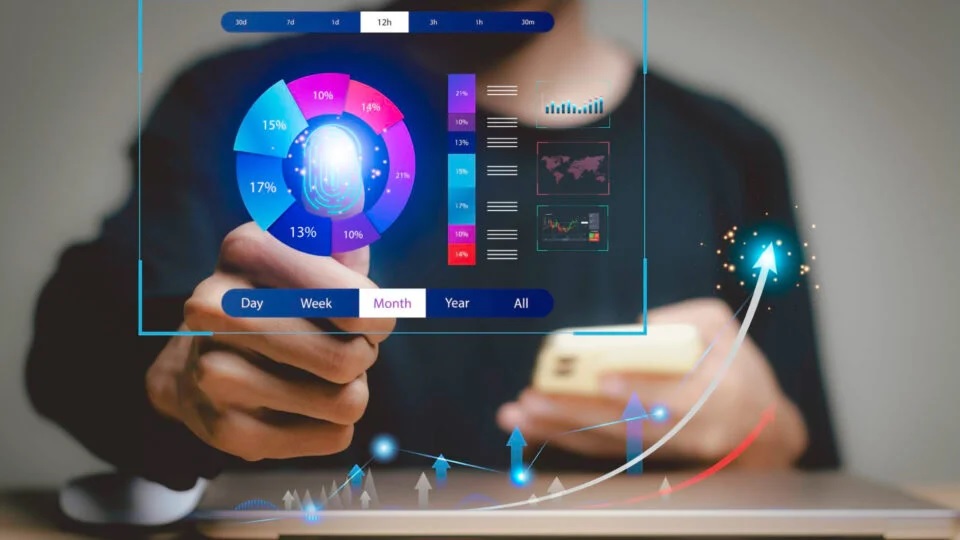
Augmented reality is gaining a strong place in market research because global brands have exhausted conventional methods. In other words, they are in urgent need of novel ways to understand consumer behavior. AR helps market researchers create immersive testing environments that are natural and engaging for respondent groups.
Today, companies like IKEA, L’Oréal, and Nike can use AR to collect insights from customers before launching any new products. Such use cases will show the world how AR can turn traditional research into a richer, data-driven process. This post will discuss AR’s role in market research.
How AR is Enhancing Market Research Experiences
The following four sections elaborate on how embracing AR methods allows for enriched MR experiences.
1. AR and Enhanced Product Testing
AR is making a remarkable impact in product prototyping and testing. It lets users visualize the item in real, physical environments. For instance, a shopper can place a virtual sofa in their living room or try a lipstick shade out on a mobile device. Tools like IKEA Place and L’Oréal’s Modiface let brands gather reactions based on realistic product interactions. As a result, they reduce testing costs and give in-house teams faster access to useful feedback.
AR also helps professional researchers understand how customers interact with products at different stages. In sales, the virtual product demo makes it easy for people to rotate, adjust, and explore features. Similarly, selecting paints before a home décor revamp through virtual camera tours is possible. These examples demonstrate how to get deeper behavioral data for augmented analytics solutions, surpassing the result of a simple online survey or static image review.
2. Enhancing In-Store and On-Site Research
Many retail environments now employ AR to study shopper behavior. For example, Walmart uses AR-based simulations in employee training and testing of store layouts. Essentially, considering virtual navigation through aisles or responses to new product placements, researchers can observe how users would go about it. The related insights allow teams to capture emotion, attention, and purchase intent more accurately.
AR also helps create consistency in the testing environment. Rather than multiple in-store experiments, market research teams can recreate the same virtual environment for each participant. Consequently, researchers will improve overall data quality and reduce operational challenges due to multiple experiment setups.
3. AR for Interactive Surveys and Feedback
Another use for AR-MR integration is interactive surveys. Instead of responding to typical questions, survey participants interact with 3D objects and leave feedback in real time. Platforms like Qualtrics and SurveyMonkey are tinkering with AR extensions to boost engagement. Furthermore, these interactions help modern market researchers capture more honest and spontaneous responses.
Besides, companies benefit from richer data because AR-based tools can track movement, eye focus, and interaction time. That helps create a broader picture of how consumers evaluate new concepts.
4. Real-Time Insights for Concept Testing
AR primarily accelerates the process of concept testing by allowing teams to easily launch and adjust prototypes. First, a brand can upload a virtual package design. Later, it will invite users to view it at home. So, instant feedback arrives. This approach effectively speeds up decision-making. Therefore, beauty, electronics, and automotive brands can use AR-based testing to evaluate colors, sizes, and form factors long before production.
Additionally, AR helps test marketing materials, such as posters, in-store displays, and advertisements. For A/B testing, the researchers can analyze how a customer responds when these materials are placed into multiple simulated environments, such as a mall or store shelf.
Conclusion
As wearable technology, smartphones, and AR glasses become more universally available, the market research industry will embrace augmented experiences and analytics for insight capture. Brands will be using AR to simulate product trials and test customer journeys. Doing so will let them collect insights directly from real-world contexts.
Contextual insights will make reporting and brainstorming more reliable. So, they will modernize problem-solving and decrease the cost of traditional field studies or real-world tests.
In short, augmented reality is more than a hype. It is becoming integral to the work of market research because it lets teams analyze consumer behavior in ways that feel natural, immersive, and very responsive. Enterprises’ sales and relationship management outcomes rely on behavioral insights. That is why AR-MR integration requires immediate adoption across many industries.