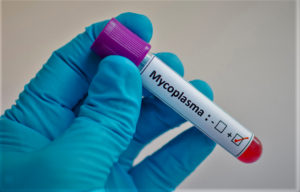
San Francisco, 11 December 2025: The Report Mycoplasma Testing Market (2025 - 2033) Size, Share & Trends Analysis By Product (Instruments, Services), By Technology (PCR, ELISA, Direct Assay, Enzymatic Methods), By Application (Cell Line Testing, Virus Testing), By End Use, By Region, And Segment Forecasts
The global mycoplasma testing market size is expected to reach USD 2.81 billion by 2033, registering a CAGR of 11.94% from 2025 to 2033, according to a new report by Grand View Research, Inc. The major factors driving the expansion of market includes growing demand for mycoplasma testing in biomanufacturing, emerging economies, and growing pharmaceutical outsourcing. Additionally, the market's overall growth is driven by rising cell-line contamination and innovation & research in biological sciences.
Growing number of government initiatives to support pharmaceutical and biotechnology companies is also driving the market growth. The U.S. FDA proposed to remove a test for detecting mycoplasma within in vitro living cell cultures, as it can help identify only a single test method. These changes in biologics regulations are anticipated to improve specificity and sensitivity in mycoplasma detection tests, leading to introduction of new technologies in the industry. This is expected to create immense opportunities for key players in new product development.
The rates of M. pneumoniae positivity sharply decreased during the COVID-19 pandemic outbreak at the end of 2019. This was a result of the COVID-19 pandemic's stringent regulations, which successfully stopped the spread of M. pneumonia. However, it is anticipated that M. pneumonia will expand even more throughout the research period following the relaxation of COVID-19 limits, which will have a positive impact on the mycoplasma testing market's growth.
Increasing investments in R&D have contributed significantly to the market’s revenue growth. With rising healthcare expenditure, research activities in the life sciences industry are increasing significantly. The adoption of new technologies for drug discovery & development and innovations in cell culture technologies are driving the demand for mycoplasma tests. The high risk of cell culture contamination remains the primary factor expected to drive the mycoplasma testing market over the forecast period
Mycoplasma is estimated to contaminate around 15%-35% of all continuous cell cultures around the world. Out of over 190 known species of mycoplasma, only eight species are responsible for more than 95% of cell culture contamination. Poor cultural practices, aerosols, dust, and cross-contamination as a result of faulty or broken laminar flow are some of the factors responsible for an increase in the number of cell culture contamination events. Such factors are likely to drive the market demand for mycoplasma testing solutions.
The rising investments in research and development (R&D) across the life sciences sector are a significant market driver. Pharmaceutical companies are actively channeling substantial resources into biopharmaceutical and biosimilar development, which requires stringent contamination control. For instance, Bristol-Myers Squibb has invested heavily in the production of investigational medicines to support its expanding portfolio of clinical trials.
Request sample report of Mycoplasma Testing Market@ https://www.grandviewresearch.com/industry-analysis/mycoplasma-testing-market/request/rs1
The biopharmaceutical and related markets have not been significantly impacted by the COVID-19 pandemic when compared to other industries. According to a study published in May 2022, there is a correlation between mycoplasma testing numbers and COVID-19-related Non-Pharmaceutical Interventions (NPIs). This study analyzed the incidence of M. pneumonia after the implementation of COVID-19 NPIs. This survey showed that there has been a decrease in M. pneumoniae detection during the pandemic, and a reduction was observed globally between March 2020 and March 2021. The reduction is majorly due to restricted transmission of M. pneumonia, resulting in a significant reduction in M. pneumoniae infections across the globe.
As biopharmaceutical and vaccine production scales up, manufacturers require reliable mycoplasma testing solutions to ensure the purity, safety, and regulatory compliance of their products. Consequently, the need for advanced testing kits has intensified. Moreover, as more biologics advance through clinical development, maintaining uncontaminated cell cultures becomes critical, thereby increasing the demand for rigorous mycoplasma testing. Ongoing innovations in detection technologies are also expected to yield faster, more sensitive, and cost-effective testing methods that align with the growing requirements of the pharmaceutical industry.
The rising global emphasis on public health preparedness and the expanding demand for vaccines are expected to drive strong market growth. Supporting this trend, leading pharmaceutical companies continue to invest heavily in biomanufacturing infrastructure. For example, in October 2025, Merck & Co., Inc. announced the start of construction on a USD 3 billion, 400,000-square-foot pharmaceutical manufacturing facility at its Elkton, Virginia site. This major investment underscores the industry’s commitment to expanding vaccine and biologics production capacity to meet global demand.
Increasing R&D investments by key companies and rising research costs are likely to encourage firms to adopt highly efficient tools. For instance, in April 2024, Merck announced an investment exceeding USD 338 million to construct a new Life Science Center in Darmstadt, Germany. Expected to become operational by 2025, the facility will strengthen Merck’s R&D capabilities in life sciences, pharmaceuticals, and biotechnology, with a focus on digitalization, automation, and sustainability. The project aims to foster global scientific collaboration, create around 500 new jobs, and accelerate innovation across the biopharmaceutical value chain. Furthermore, in July 2023, Merck invested approximately USD 25.85 million (EUR 23 million) in Kansas, U.S., to expand the production of cell culture media-a key input in biologics manufacturing that directly supports contamination-free cell growth and testing reliability.
Rising government initiatives to support biotechnology and pharmaceutical companies is driving the market. The FDA proposed to exclude a test for detecting mycoplasma within in vitro living cell cultures, as it can help identify only a single test method. Such changes in biologics regulations are expected to improve sensitivity and specificity in mycoplasma detection tests, evolving new technologies in the industry. This change is expected to create huge opportunities for major market players. According to Saudi Arabia’s Vision 2033, its government is promoting the growth of the pharmaceutical industry, as only 30% of its medication requirements are produced locally. Empire State Development funded USD 300,000 to Bionique to help upgrade lab equipment in its Testing Laboratories. The company’s project, worth USD 1.5 million, includes the development of advanced technology for mycoplasma testing in labs.