






As a travel agency, your business is built on the magic of exploration and the promise of unforgettable experiences. You are the trusted advisor who turns a client's dream vacation into a perfectly orchestrated reality. Traditionally, your expertise was shared across a desk and through a brochure. But in today's digital world, the journey begins long before a client walks through your door. It starts with a Google search, an inspiring Instagram post, and a scroll through travel blogs. To navigate this new landscape and capture the imagination of modern travelers, a sophisticated digital marketing strategy is no longer an option—it is your most essential navigational tool.
The Digital Itinerary: Significance of Website Design
Your website is your digital storefront, your portfolio, and your 24/7 sales consultant. For a potential client in Gurgaon dreaming of a European getaway, your website is the first stop on their journey. A dated, slow, or confusing website can make your agency seem outdated and unreliable, sending them directly to an Online Travel Agency (OTA).
A high-impact travel agency website must be designed to sell the dream:
Inspiring Visual Storytelling: Your website should be a window to the world. Invest in breathtaking, high-resolution photography and videography of the destinations and experiences you offer. Feature client testimonials and trip highlights to build social proof and desire.
Seamless User Experience (UX): The site must be intuitive and easy to navigate. Users should be able to effortlessly search for packages by destination, travel type (adventure, luxury, family), or budget. A clear, simple "Inquire Now" or "Get a Free Quote" button is crucial for converting interest into a lead.
Mobile-First is Non-Negotiable: The modern traveler plans on the go. Your website must be fully responsive and offer a flawless experience on all devices, especially smartphones.
Navigating the Search Landscape: SEO & GEO Keywords
A beautiful website is your foundation, but Search Engine Optimization (SEO) is the compass that guides travelers to you. Your SEO strategy must be as targeted and well-planned as a custom itinerary. As an expert in Generative Engine Optimization (GEO), I advise focusing on building topical authority that answers the complex questions travelers are asking.
Think like your ideal client. What are they typing into the search bar?
Destination & Intent-Specific: Target long-tail keywords that define the trip: "honeymoon packages in Switzerland," "adventure travel in Costa Rica," or "family-friendly resorts in Bali."
Problem/Solution Keywords: Capture clients who have a specific need: "best travel agency for visa assistance," "last-minute cruise deals from Mumbai," or "customized Europe tour planner."
Generative Engine Optimization (GEO): The future of search is conversational. Create content that serves as a definitive resource. A blog post answering "What is the best 10-day itinerary for a first-time trip to Japan?" or "How to travel Southeast Asia on a budget?" is far more likely to be featured in AI-driven search results, positioning you as an expert authority.
Social media is your digital campfire, a place to build a community of travel enthusiasts, share inspiring content, and showcase your agency's personality.
Instagram & Pinterest: These visual platforms are your primary stage. Post stunning destination photos, client travel photos (with permission!), and Reels showcasing unique experiences. Use Pinterest to create inspirational boards for different travel themes, like "Dreamy Honeymoon Destinations" or "Adventure Travel Bucket List."
Facebook: Excellent for community building and targeted advertising. Share client testimonials, run polls ("Which destination should we feature next?"), and use Facebook Ads to target users based on their interests (e.g., "scuba diving," "luxury travel") and life events (e.g., "newly engaged").
Precision Targeting and Nurturing the Journey
Digital advertising allows you to move beyond passive waiting and actively reach potential travelers at the perfect moment. Platforms like Google Ads and Facebook Ads enable you to show your inspiring packages to users who have recently searched for flights to Bali or have shown an interest in European history.
However, attracting a lead is just the beginning. Customer engagement is what nurtures that initial inquiry into a confirmed booking and, ultimately, a loyal client.
Build an Email List: Use email marketing to stay in touch with past and potential clients. Send out newsletters with exclusive travel deals, destination spotlights, and expert travel tips. This keeps your agency top-of-mind for their next adventure.
Responsive and Personalized Service: The travel industry is built on relationships. Respond to inquiries promptly and with a personalized touch. A quick, helpful, and enthusiastic response can be the deciding factor that wins a client's trust and business.
In conclusion, for a travel agency to thrive in the modern era, it must master both the art of travel planning and the science of digital marketing. A comprehensive strategy—combining a world-class website, intelligent SEO, vibrant social media, and a genuine focus on customer relationships—is the blueprint for not just selling trips, but for building a beloved and profitable travel brand.
Of course, managing these diverse digital channels while also crafting perfect itineraries and servicing clients can be overwhelming. This is where a strategic partnership can provide a significant advantage. For agencies looking to build a powerful digital presence and focus on what they do best—creating unforgettable journeys—expert help is available. SEOSpidy Web Solution, a premier Internet Marketing Company, offers bespoke strategies for the travel and hospitality industry. As a leading website designer Noida, they possess the expertise to build a stunning, high-performance digital platform that will inspire wanderlust and drive the bookings you need to succeed.


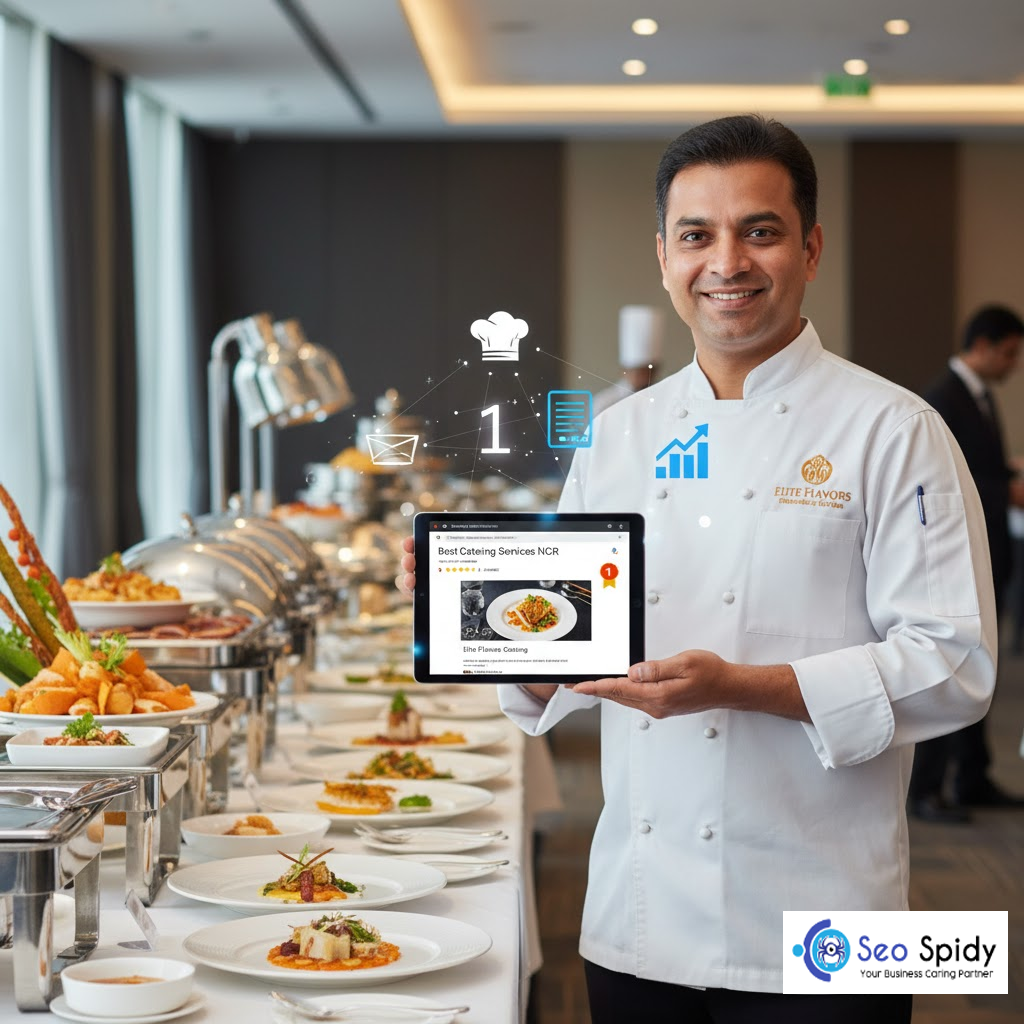

Looking to rank your Travel website on google and boost your business growth?
We are one of the best Travel SEO company in USA/India.
hire our Travel SEO expert now!

Shop our custom logo tents for your business or next event.
We provide free designs and have a variety of custom tent packages for every budget.Features:4 Sided Roof & Valance Fully Printed With Unlimited GraphicsDye Sublimation Printing On A 600D PolyesterFire retardant, Water Resistant And UV Coated4 Sided Velcro loop added to the inside of Valance edge (Easy to connect full walls)Deluxe - 40mm Hexagonal Aluminium Frame2 Years WarrantyAvailable Sizes: 10x10 Canopy Tents Packages10x15 Canopy Tents Packages10x20 Canopy Tents Packages Contact Us:Address: 125 TownPark Drive, #300,, KENNESAW, GA 30144Phone No.
: 1-888-972-3040E-mail: sales@starlinetents.com / info@starlinetents.comWebsite: https://www.starlinetents.com/

Market Analysis and Insights:- Middle East and Africa Pulp Moulding Machines MarketMiddle East & Africa Pulp Moulding Machines Market By Type (Rotary Pulp Moulding Machine and Reciprocating Pulp Moulding Machine), Machine Type (Automatic, Semi-Automatic and Manual), Pulp-Type(Thick Wall, Transfer, Thermoformed and Processed), Capacity Type (in Units Per Hour)(Less Than 1500, 1501 to 3500, 3501 to 5500 and Above 5500), Application (Trays, Boxes & Containers, Disposable Pulp Tableware, Finery Pack, Cardboard Lids Drink Carrier And Others), End-Users (Food And Beverages, Electrical & Electronics, Automotive, Healthcare, Consumer Goods, Cosmetics & Personal Care, and Others), Country (Saudi Arabia, U.A.E, South Africa, Egypt, Israel and Rest of Middle East and Africa), Market Trends and Forecast to 2027 Market Analysis and Insights: Middle East and Africa Pulp Moulding Machines MarketPulp moulding machines market is expected to gain market growth in the forecast period of 2020 to 2027.
Increasing demand of pulp moulded products as the substitute to various toxic and non-biodegrade packaging products such as expanded polystyrene is the growing factor for this market.Middle East & Africa region is growing as moulded pulp products are cheaper as compare to other packaging materials.Get More Insight About the Middle East and Africa Pulp Moulding Machines Market, Request Sample @ https://www.databridgemarketresearch.com/request-a-sample/?dbmr=middle-east-and-africa-pulp-moulding-machines-market This Pulp Moulding Machines Market report provides details of market share, new developments, and product pipeline analysis, impact of domestic and localised market players, analyses opportunities in terms of emerging revenue pockets, changes in market regulations, product approvals, strategic decisions, product launches, geographic expansions, and technological innovations in the market.
The growth among segments helps you analyse niche pockets of growth and strategies to approach the market and determine your core application areas and the difference in your target markets.On the basis of type, the market is segmented into rotary pulp moulding machine, and reciprocating pulp moulding machine.
In Middle East & Africa, automatic machine is dominating in Saudi Arabia as automatic machine can be easily operated with less man power which reduces the labor cost and increases the production capacity.Pulp Moulding Machines Market Country Level AnalysisMiddle East & Africa pulp moulding machines market is analysed and market size information is provided by country, type, machine type, pulp type, capacity type, application and end-users as referenced above.Know More About this Report @ https://www.databridgemarketresearch.com/reports/middle-east-and-africa-pulp-moulding-machines-market The countries covered in the pulp moulding machines market report are Saudi Arabia, U.A.E, South Africa, Egypt, Israel, Rest of Middle East and AfricaIn Middle East & Africa pulp moulding machines market, Saudi Arabia is dominating due to high availability of raw material in the region.Competitive Landscape and Pulp Moulding Machines Market Share AnalysisMiddle East & Africa pulp moulding machines market competitive landscape provides details by competitor.
Details included are company overview, company financials, revenue generated, market potential, investment in research and development, new market initiatives, global presence, production sites and facilities, company strengths and weaknesses, product launch, clinical trials pipelines, brand analysis, product approvals, patents, product width and breadth, application dominance, technology lifeline curve.
The above data points provided are only related to the company’s focus related to Middle East & Africa pulp moulding machines market.The major players covered in the report are Qingdao Perfect Equipment & Parts Co.,Ltd., SODALTECH, BeSure Technology Co., Ltd, Henan Qinyang Shunfu Paper Machinery Co., LTD, Beston Machinery in South Africa, Hunan, Shuanghuan Fiber Molding Machinery Co., Ltd, Quanzhou Far East Environmental Protection Equipment Co., Ltd, Anyang General International Co., Ltd., HGHY PULP MOLDING PACK CO., LTD, Inmaco Solutions BV, Southern Pulp Machinery (Pty) Ltd, DKM Machine Manufacturing Inc, Xiangtan ZH Pulp Moulded Co.,Ltd., Jinan Wanyou Packaging Machinery Factory, Longkou Hongrun Packing Machinery Co., Ltd., Eurasia Light Industry Equipment Manufacture Co.,Ltd.