





Long before dinosaurs walked the Earth, sharks were already ruling the oceans. These ancient predators survived mass extinctions, climate shifts, and planetary chaos — but they didn’t always look like the sharks we know today. So what did the first sharks really look like, and how did they become such perfect survivors?
The first sharks appeared over 450 million years ago and looked very different from modern sharks. They had softer skeletons, unusual body shapes, and primitive teeth, but many of their core features laid the foundation for today’s ocean predators.
1. When the First Sharks Appeared
The earliest sharks emerged during the Silurian Period, more than 450 million years ago. This makes them older than trees, dinosaurs, and even many insects.
At this time, oceans were filled with strange life forms, and sharks were among the first true predators. Their early success came from speed, flexibility, and adaptability — traits that still define sharks today.
2. Skeletons Made of Cartilage
Unlike most fish, early sharks had cartilage skeletons, not bone. This made them:
Lighter
More flexible
Faster in water
Even the first sharks relied on cartilage, giving them an edge over slower, heavier animals. This feature remains unchanged in modern sharks.
3. What Their Bodies Looked Like
Early sharks didn’t all have the sleek torpedo shape we recognize today. Some had:
Eel-like bodies
Wide, flat heads
Extra fins or spikes
Long, narrow tails
One famous ancient shark, Cladoselache, had a slim body and smooth skin, lacking the heavy scales seen in modern species. It was built for speed rather than brute strength.
4. Teeth Were Strange and Primitive
The first sharks had very different teeth. Instead of razor-sharp rows, many had:
Flat grinding teeth
Hooked or forked shapes
Weak attachment to the jaw
Their teeth were constantly replaced, even back then — a trait that allowed sharks to keep feeding efficiently as their teeth wore down or broke.
5. Some Had Spines and Armor
Not all early sharks were smooth swimmers. Some species developed:
Sharp dorsal spines
Bony plates
Defensive spikes near fins
These features helped protect them from larger predators and competitors. Over time, many sharks abandoned heavy armor in favor of speed and agility.
6. Sensory Systems Were Already Advanced
Even the earliest sharks had surprisingly advanced senses. They could:
Detect vibrations in water
Sense movement from far distances
Track prey using primitive electroreception
This early sensory advantage made them deadly hunters long before modern marine ecosystems existed.
7. How Evolution Refined Their Shape
Over millions of years, sharks gradually evolved into more efficient predators. Natural selection favored:
Streamlined bodies
Stronger jaws
Faster swimming ability
Better hunting precision
By the time dinosaurs appeared, sharks already had many of the features we recognize today.
Conclusion
The first sharks may have looked strange compared to modern species, but they were already perfectly designed for survival. Their cartilage skeletons, replaceable teeth, sharp senses, and adaptability allowed them to dominate ancient oceans. These early designs were so effective that sharks barely needed to change — making them one of the greatest evolutionary success stories on Earth.
FAQs
When did the first sharks appear?
The first sharks appeared over 450 million years ago, during the Silurian Period.
Did early sharks look like modern sharks?
Not exactly. Many had eel-like bodies, unusual fins, and different teeth, but key features remained the same.
Why didn’t early sharks have bones?
Cartilage made them lighter and more flexible, improving speed and survival.
Did ancient sharks have teeth?
Yes, but their teeth were more primitive and varied widely in shape.
Why have sharks changed so little?
Their original design was already extremely effective, requiring minimal evolutionary change.



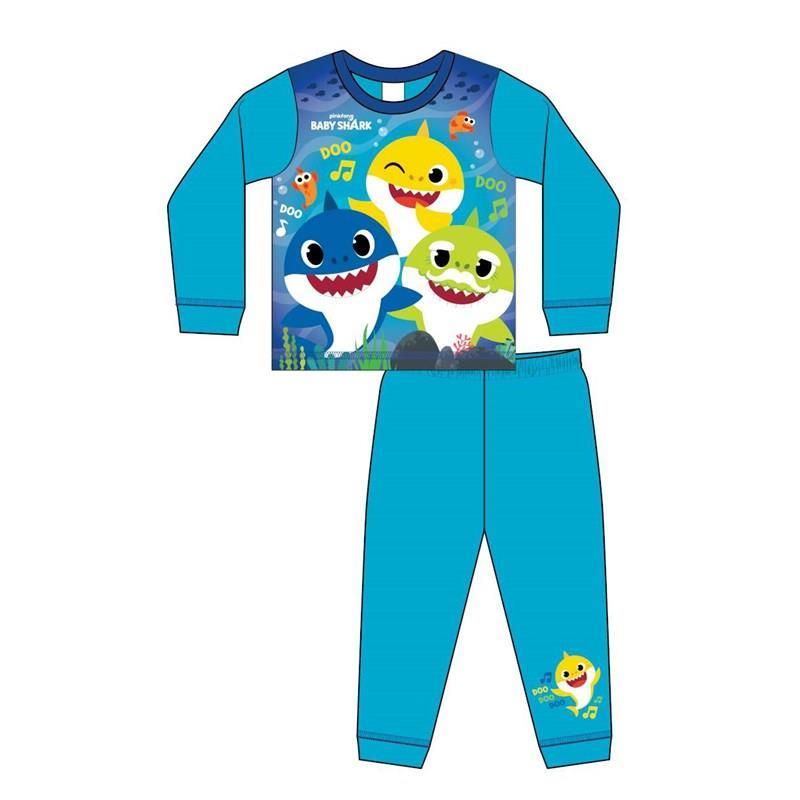
Baby Shark Boys Pyjamas Pjs Ages 18 Months To 4 YearsOne of the biggest Internet crazes of the last year, Baby Shark has taken the world by storm, and your little Baby Shark fan can spend their bedtime with their favourite sharks with these awesome Baby Shark pyjamas, which feature an elasticated waist, for comfort.Size Guide12-18 Months > Child height approx 80- 86cm18-24 Months > Child height approx 86-92 cm2-3 Years > Child height approx 92-98 cm3-4 Years > Child height approx 98-104 cm4-5 Years > Child height approx 104-110 cmBUY WITH CONFIDENCEUK STOCKFAST & FREE DISPATCH