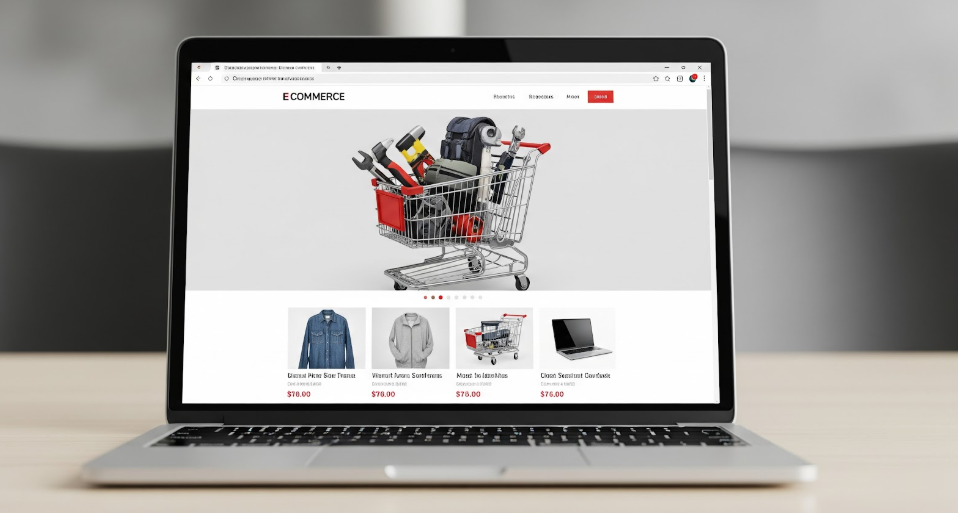
I've been around the block a few times when it comes to e-commerce platforms, and I'll tell you straight—if you're still running on a monolithic system, you're probably feeling the pain. Those rigid architectures that seemed like a good idea five years ago? They're starting to show their age, and not in a good way.
Let me walk you through what's happening in the world of composable commerce, particularly with a platform called commercetools that's been making some serious waves.
The Monolithic Problem We All Know Too Well
Here's the thing about traditional e-commerce platforms: they're like those old mainframe systems our parents used to talk about. Everything's bundled together—your storefront, your backend, your checkout process, your inventory management. Sure, it works, but try to change one piece without affecting everything else. It's like trying to replace the engine in your car while you're driving down the highway.
The real headache comes when you want to innovate quickly. Your marketing team wants to test a new checkout flow? That's a three-month development cycle. Want to add a new sales channel? Better hope your platform supports it natively, or you're in for a world of custom coding and integration nightmares.
Enter Composable Commerce
Composable commerce flips this whole model on its head. Instead of one big system doing everything, you're working with independent, specialized services that talk to each other through APIs. Think of it like building with LEGO blocks instead of carving everything out of a single piece of marble.
The best composable commerce software commercetools, has emerged as a leader in this space, and for good reason. Built on what folks call MACH architecture—that's Microservices, API-first, Cloud-native, and Headless—it gives you the flexibility to pick and choose the components that actually make sense for your business.
What Makes commercetools Different
I've worked with enough platforms to know that buzzwords are cheap. What matters is whether something actually delivers. commercetools separates your frontend from your backend completely. That means your developers can use whatever technology makes sense for your customer-facing applications—whether that's a website, mobile app, voice assistant, or something that hasn't been invented yet.
The platform provides extensive APIs covering everything from cart management to product catalogs, inventory, payments, and shipping. You're not locked into their way of doing things; you're working with building blocks you can assemble however you need.
Their Merchant Center gives your business users a central place to manage products, inventory, customers, and orders without needing to bug the development team for every little change. That's a huge time-saver right there.
Real Business Benefits
Let's talk about what this means for your bottom line. First, there's time to market. When you can develop and deploy new features independently without worrying about breaking other parts of your system, you move faster. Period.
Scalability is another big one. With cloud-native infrastructure, you can handle traffic spikes during peak shopping seasons without breaking a sweat. And you're only paying for what you use, which can significantly reduce your total cost of ownership compared to those enterprise licenses that cost an arm and a leg.
The best composable commerce software commercetools, also supports multiple languages, currencies, and regions out of the box. If global expansion is in your future, you're not rebuilding your entire platform for each new market.
The Migration Question
I know what you're thinking: "This sounds great, but we've got years of investment in our current platform." That's a legitimate concern. Moving from a monolithic system like Salesforce Commerce Cloud to a composable architecture isn't something you do over a weekend.
But here's the reality—staying on a platform that's holding you back has costs too. Every missed opportunity, every delayed feature, every clunky customer experience adds up. The question isn't whether to migrate, it's when and how.
This is where working with a knowledgeable consulting and IT services firm becomes critical. They can assess your current setup, understand your business requirements, and create a migration strategy that minimizes disruption. Maybe you move everything at once, or maybe you take a phased approach, gradually shifting capabilities to your new composable stack while maintaining continuity.
Making the Decision
Look, I'm not going to tell you that composable commerce is right for every business in every situation. But if you're dealing with a legacy monolithic platform that's limiting your scalability, slowing your innovation, or driving up operational costs, it's worth a serious look.
The key is getting expert guidance. A competent consulting partner can help you understand whether platforms like commercetools align with your specific needs, create a realistic implementation roadmap, and ensure you're set up for long-term success.
The e-commerce landscape is evolving fast. The platforms that win are the ones that can adapt quickly, deliver exceptional customer experiences across every touchpoint, and scale efficiently as business grows. Composable commerce with commercetools offers a path to get there—but you don't have to walk it alone.




commercetools, a leader in next-generation commerce software, launched The commercetools Accelerator, an offering to help retailers and brands launch enterprise commerce initiatives in weeks versus months.
For more info visit: https://synergytop.com/blog/commercetools-launches-accelerator-set-up-a-pwa-enabled-modern-commerce-storefront-in-weeks/