

Sidewalks do more than guide footsteps—they quietly shape first impressions, define curb appeal, and influence how welcoming your home feels from the street. Whether you’re building a new walkway or replacing an aging one, choosing between modern and traditional sidewalk styles can feel surprisingly complex. Each approach carries its own personality, materials, and long-term implications for maintenance and home value.
In this in-depth guide, we’ll break down everything you need to know to confidently choose the right sidewalk style for your home. We’ll compare design aesthetics, materials, durability, maintenance, cost considerations, and how each style complements different types of homes and neighborhoods. By the end, you’ll have a clear understanding of which sidewalk style aligns best with your vision, budget, and lifestyle.
Why Sidewalk Style Matters More Than You Think
A sidewalk isn’t just a functional necessity—it’s an architectural feature. The right design can:
- Enhance curb appeal instantly
- Increase perceived home value
- Improve safety and accessibility
- Create visual harmony between your home and landscape
On the flip side, the wrong sidewalk style can clash with your home’s architecture, look dated, or even detract from resale appeal. That’s why taking the time to choose between modern vs. traditional sidewalk designs is well worth the effort.
Defining Modern Sidewalk Design
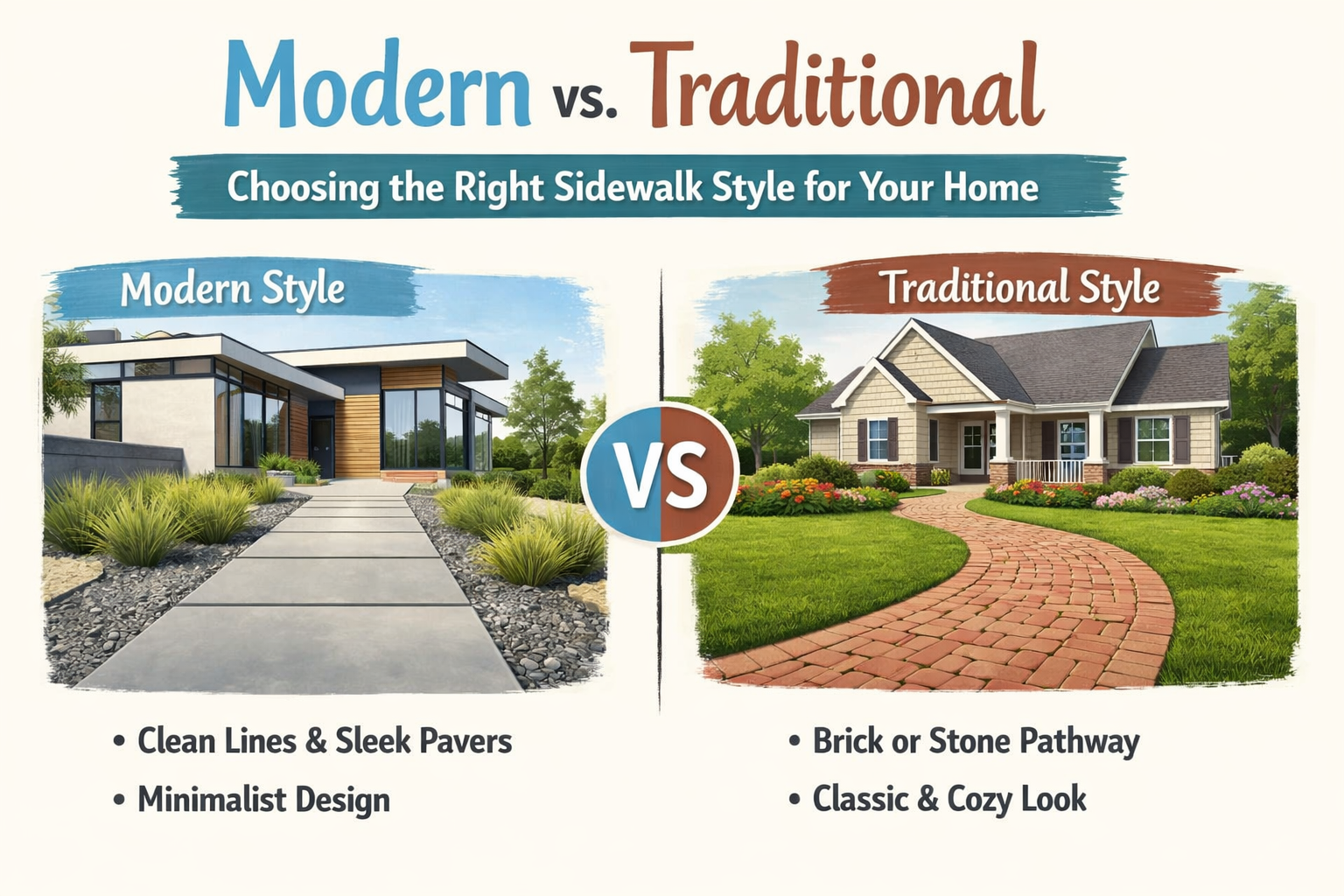
Modern sidewalk styles are rooted in simplicity, clean lines, and minimalism. They often emphasize geometry, subtle textures, and neutral color palettes.
Key Characteristics of Modern Sidewalks
- Straight lines and sharp edges
- Minimal decorative elements
- Neutral or monochromatic colors (gray, charcoal, white, beige)
- Focus on function and form working together
Modern sidewalks are especially popular in newer developments, urban homes, and properties with contemporary architecture.
Defining Traditional Sidewalk Design
Traditional sidewalks take inspiration from classic craftsmanship and timeless design. They often feel warmer, more detailed, and more visually expressive.
Key Characteristics of Traditional Sidewalks
- Curved or flowing pathways
- Decorative patterns or borders
- Earthy, warm tones
- Textures that evoke natural materials or historic styles
These sidewalks are common in older neighborhoods, colonial-style homes, craftsman houses, and properties that emphasize charm and heritage.
Popular Materials for Modern Sidewalks
Material choice plays a huge role in defining a sidewalk’s look and performance. Modern designs typically favor materials that support clean aesthetics and durability.
Poured Concrete with a Smooth Finish
Smooth poured concrete is a staple of modern sidewalk design. It’s sleek, cost-effective, and highly customizable in terms of shape and color.
Why homeowners love it:
- Affordable and durable
- Low maintenance
- Ideal for minimalist designs
Exposed Aggregate Concrete
This style exposes small stones within the concrete for subtle texture while maintaining a contemporary feel.
Benefits include:
- Improved slip resistance
- Visual interest without being busy
- Long lifespan
Large Concrete Pavers
Oversized pavers with tight joints are a hallmark of modern design.
Modern appeal highlights:
- Clean geometry
- Easy replacement if damaged
- Works well with modern landscaping
Popular Materials for Traditional Sidewalks
Traditional sidewalks lean into materials that feel established, textured, and timeless.
Brick Walkways
Brick sidewalks are a classic choice that never truly goes out of style.
Why brick remains popular:
- Warm, inviting appearance
- Complements historic and traditional homes
- Can last decades with proper care
Natural Stone
Materials like flagstone, slate, or bluestone add elegance and individuality.
Traditional advantages:
- Unique patterns and color variations
- High-end, artisanal look
- Strong connection to nature
Stamped Concrete
Stamped concrete mimics brick, stone, or cobblestone at a lower cost.
Why homeowners choose it:
- Traditional look without premium material prices
- Versatile pattern options
- Strong and long-lasting
Aesthetic Impact: Clean Minimalism vs. Timeless Charm
Modern Sidewalk Aesthetics
Modern sidewalks make a statement through restraint. They don’t shout—they whisper sophistication.
They work best when:
- The home has flat roofs or sharp architectural lines
- Landscaping is structured and minimal
- The goal is a polished, contemporary look
Traditional Sidewalk Aesthetics
Traditional sidewalks tell a story. They feel familiar, welcoming, and lived-in.
They shine when:
- The home features gables, columns, or decorative trim
- Landscaping is lush and organic
- You want warmth and character over sleekness
How Architecture Should Influence Your Choice
One of the biggest mistakes homeowners make is choosing a sidewalk style that doesn’t match the house.
Homes That Pair Well with Modern Sidewalks
- Contemporary and modern homes
- Mid-century modern architecture
- Minimalist or industrial designs
- New construction with clean lines
Homes That Pair Well with Traditional Sidewalks
- Colonial and Georgian homes
- Craftsman and bungalow styles
- Farmhouses and cottages
- Historic or older properties
Matching your sidewalk style to your home’s architecture creates visual harmony and boosts curb appeal dramatically.
Durability and Longevity: Which Style Lasts Longer?
Both modern and traditional sidewalks can be extremely durable—but longevity depends more on materials and installation quality than style alone.
Modern Sidewalk Durability
- Concrete-based designs are highly durable
- Resistant to heavy foot traffic
- Less prone to shifting if properly installed
Traditional Sidewalk Durability
- Brick and stone can last for generations
- Individual units can shift over time
- Easier to repair small sections without replacing the entire sidewalk
In general, both styles can last 25–50 years or more with proper installation and maintenance.
Maintenance Requirements Compared
Maintenance is where many homeowners feel the difference between modern and traditional sidewalks most clearly.
Modern Sidewalk Maintenance
- Simple cleaning with water and mild detergent
- Occasional sealing (depending on finish)
- Fewer joints mean fewer weeds
Traditional Sidewalk Maintenance
- Periodic weed control between joints
- Possible re-leveling over time
- Sealing brick or stone to prevent staining
If low maintenance is a top priority, modern sidewalks usually have the edge.
Cost Considerations: Upfront vs. Long-Term Value
Budget often plays a deciding role when choosing a sidewalk style.
Typical Cost Range for Modern Sidewalks
- Smooth concrete: Lower upfront cost
- Exposed aggregate or pavers: Moderate cost
- Generally faster installation
Typical Cost Range for Traditional Sidewalks
- Brick and natural stone: Higher upfront cost
- Stamped concrete: Mid-range alternative
- Longer installation time due to detail work
While traditional sidewalks may cost more initially, they often add significant aesthetic value, especially in established neighborhoods.
Climate and Weather: A Crucial Factor
Your local climate should heavily influence your decision.
Modern Sidewalks in Harsh Climates
- Concrete performs well in freeze-thaw cycles when properly installed
- Minimal joints reduce water infiltration
Traditional Sidewalks in Harsh Climates
- Individual bricks or stones allow for movement
- Easier to repair frost-related damage
- Better drainage between joints
In areas with extreme temperature changes, traditional sidewalks can sometimes offer greater flexibility and easier repairs.
Accessibility and Safety Considerations
Sidewalks should be safe and accessible for everyone.
Modern Sidewalk Accessibility
- Smooth, even surfaces
- Ideal for strollers, wheelchairs, and mobility aids
- Fewer tripping hazards
Traditional Sidewalk Accessibility
- Textured surfaces provide traction
- Potential unevenness over time
- May require more frequent leveling
If accessibility is a top concern, modern sidewalks typically provide a more consistent walking surface.
Environmental Impact and Sustainability
Homeowners increasingly care about eco-friendly design choices.
Modern Sidewalk Sustainability
- Can use recycled concrete aggregates
- Permeable concrete options available
- Reduced material waste
Traditional Sidewalk Sustainability
- Brick and stone are natural materials
- Long lifespan reduces replacement frequency
- Permeable joints allow water infiltration
Both styles can be environmentally responsible when designed thoughtfully.
Neighborhood Aesthetics and Resale Value
Your sidewalk doesn’t exist in isolation—it’s part of a larger visual environment.
When Modern Sidewalks Boost Value
- In newer developments
- In urban or contemporary neighborhoods
- When consistency with nearby homes exists
When Traditional Sidewalks Boost Value
- In historic districts
- In established residential areas
- When charm and character are prized
Choosing a sidewalk style that fits your neighborhood can positively influence resale value and buyer perception.
Mixing Modern and Traditional: Is It Possible?
Absolutely. Many homeowners successfully blend elements from both styles.
Smart Ways to Mix Styles
- Modern concrete with traditional brick borders
- Clean lines paired with warm, natural textures
- Neutral palettes with subtle decorative accents
The key is balance. When done intentionally, a hybrid sidewalk design can feel both timeless and fresh.
Common Mistakes to Avoid
Before making a final decision, steer clear of these pitfalls:
- Choosing style over functionality
- Ignoring long-term maintenance needs
- Not considering climate and soil conditions
- Failing to match the home’s architecture
- Cutting corners on installation quality
Avoiding these mistakes ensures your sidewalk remains beautiful and functional for decades.
How to Decide: A Simple Checklist
Ask yourself these questions:
- Does my home lean more modern or traditional?
- How much maintenance am I willing to handle?
- What’s my realistic budget?
- How important is accessibility?
- What sidewalk styles dominate my neighborhood?
Your answers will usually point clearly toward the right choice.
Conclusion: Choosing the Sidewalk Style That Truly Fits Your Home
When it comes to modern vs. traditional sidewalk styles, there’s no universal right or wrong choice—only what works best for your home, lifestyle, and environment. Modern sidewalks offer clean lines, low maintenance, and contemporary appeal, while traditional sidewalks bring warmth, character, and timeless charm. Consulting professionals like https://www.bellevueconcretepros.com/
can help you evaluate design options, materials, and finishes that complement your property.
By carefully considering architecture, materials, maintenance, climate, and neighborhood context, you can choose a sidewalk style that not only looks great today but continues to add value and beauty for years to come. A well-designed sidewalk isn’t just a path—it’s an invitation, a statement, and a lasting investment in your home.