




Efficient Liposome Preparation: Genizer Liposome Production Solutions
Liposomes are artificially synthesized vesicles composed of phospholipids and cholesterol that mimic the cellular membrane system, with typical particle sizes ranging from 50–200 nm, adjustable according to preparation methods. They can encapsulate both hydrophilic and hydrophobic active ingredients for targeted delivery, making them ideal carriers for anticancer drugs, gene therapy, and vaccine formulations. Liposomes exhibit excellent biocompatibility and can be functionally modified to extend their capabilities in drug delivery.

Phospholipid bilayer liposomes for gene delivery
In recent years, liposomes have become one of the fastest-growing dosage forms. Known in the industry as “high-end complex injectables,” their unique advantages also require dedicated production equipment and process customization. A critical factor in liposome production is particle size control, which ensures batch-to-batch consistency and optimal drug delivery performance.
Currently, the main methods for reducing liposome particle size include ultrasonication, shearing, high-pressure homogenization (HPH), and extrusion. Genizer primarily focuses on shearing, extrusion, and HPH technologies, covering laboratory research through industrial-scale production.
Liposome Particle Size Reduction Technologies
1. Shearing
Shearing forces are generated as samples pass through narrow gaps between rotors at high speed, refining the particle size. Excessive energy may damage the lipid membrane, so shearing is often used as a pretreatment or for customized liposomes, such as passive drug-loaded liposomes or multilamellar vesicles.
2. High-Pressure Homogenization (HPH)
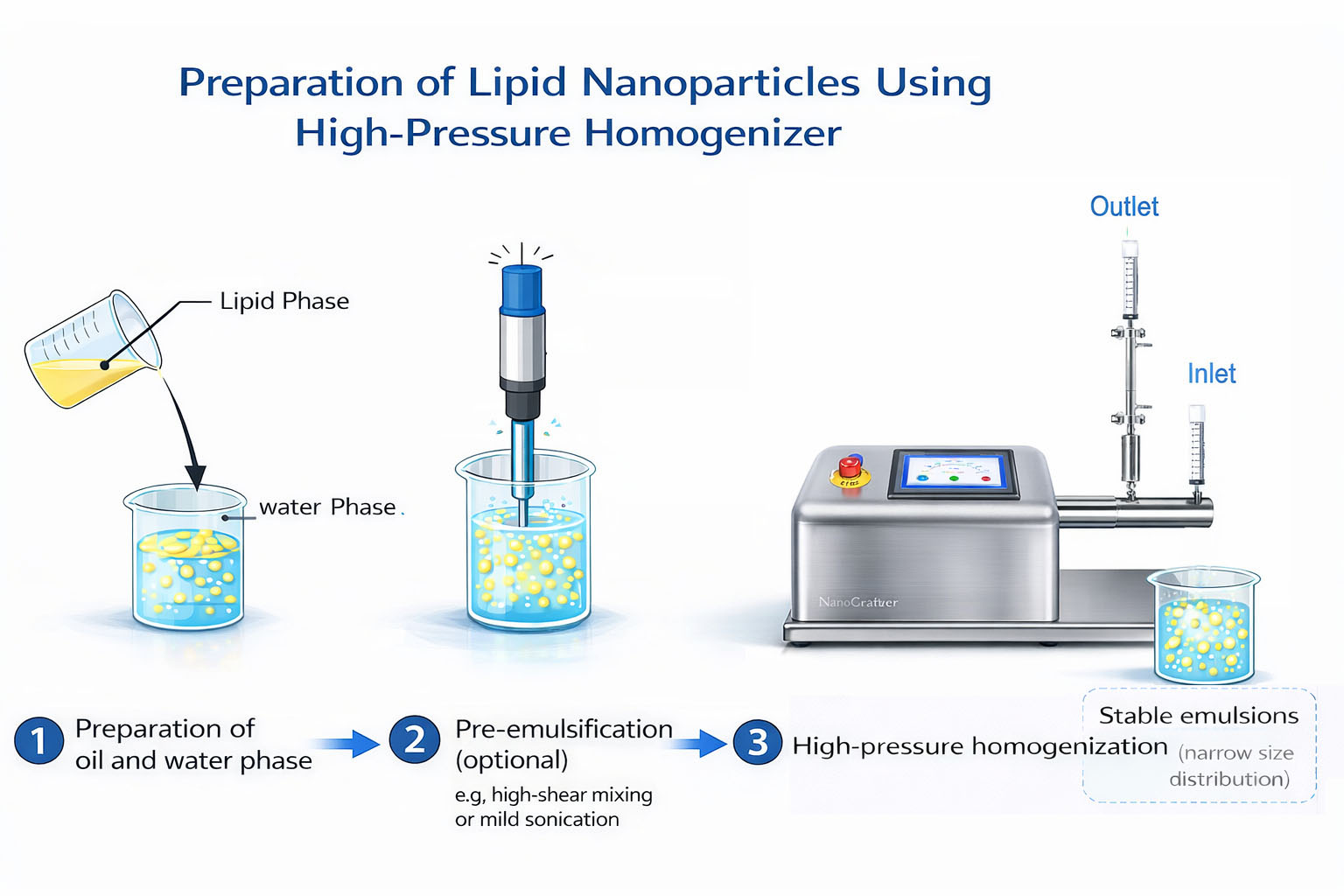
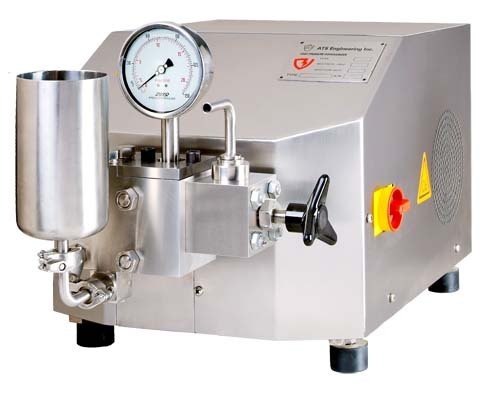
High-Pressure Homogenization (HPH) is a widely used and reliable method for controlling liposome particle size. As samples pass through the high-pressure interaction chamber, they undergo shear, impact, and turbulence, which rapidly reduce particle size, improve encapsulation efficiency, and ensure batch consistency and stability across both lab-scale and industrial-scale production.
3. Extrusion
Liposome Extrusion Mechanism

Schematic representation of the liposome extrusion process, illustrating how liposomes pass through membranes to achieve controlled particle size.
Extrusion pushes liposomes through a membrane above the phospholipid phase transition temperature, using the pore size and shear forces to control particle size. Optimizing temperature, pressure, and membrane selection can achieve narrow PDI ranges of 0.01–0.03. Extrusion can use single-layer gradient membranes or multi-layer stacked membranes.
Liposome Extrusion Size Distribution
liposome extrusion size distribution particle size uniformity lipid nanoparticle

Liposome size distribution after repeated extrusion passages, demonstrating uniform particle size and narrow PDI for high-quality lipid nanoparticles.
Genizer Liposome Production Equipment
1. Hand Driven Liposome Extruder: Ideal for small-scale laboratory operations, processing 0.1mL–2.5 mL
2. Pneumatic Liposome Extrusion System: Medium-scale continuous production, processing 10mL -10 L
3. High-Pressure Sanitary Pump with Online Liposome Extrusion System: Scalable from lab to industrial scale, producing liposomes with controllable particle sizes of 80–250 nm. Handles volumes from 10 mL to 20 L, and up to 8 extrusion units can be linked to achieve a total processing capacity of 160 L.
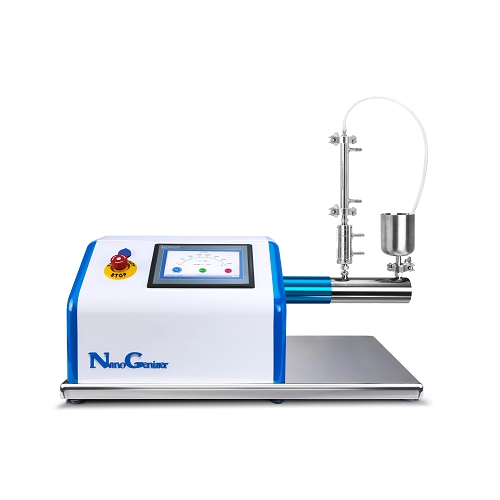
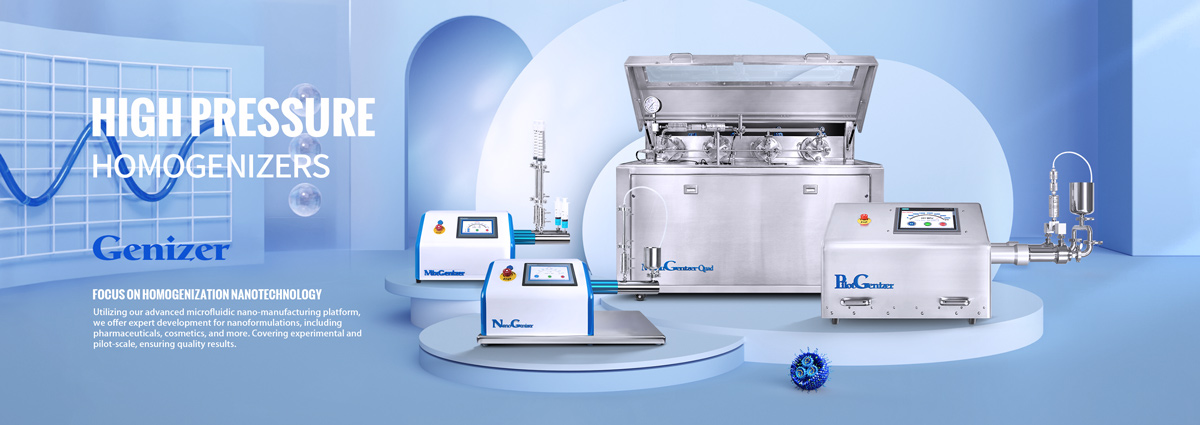
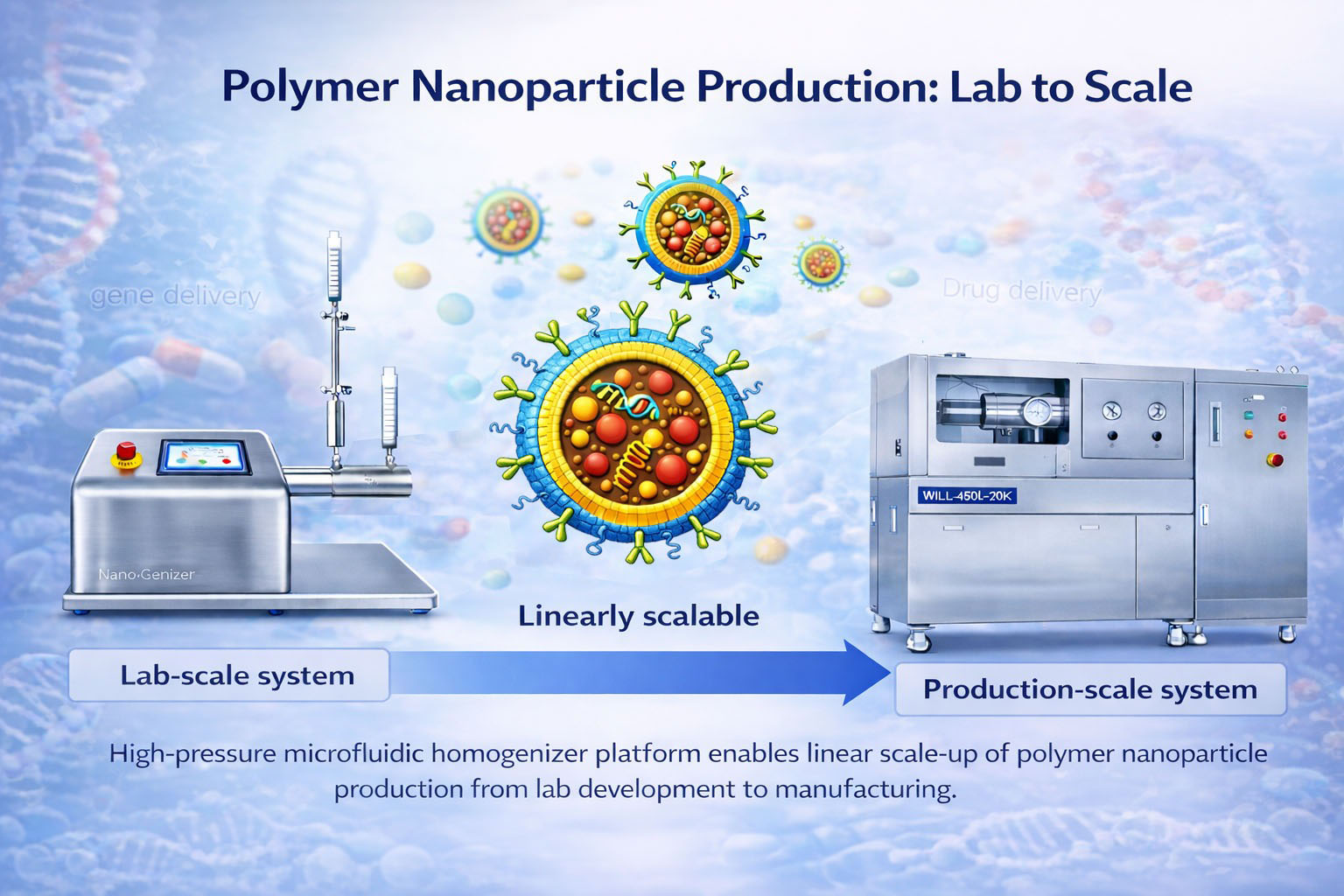
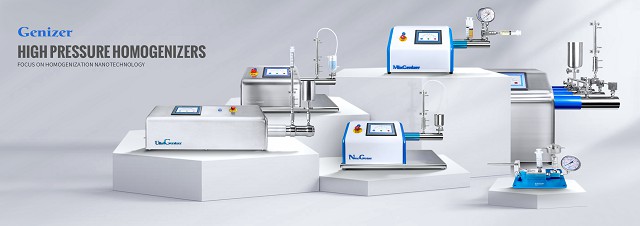
4. High-Pressure Homogenizer (HPH): Suitable for rapid homogenization at both lab scale (NanoGenizer Homogenizer) and large-scale production (WILL Series Homogenizer).
Additional Advantages:
Easy to scale: From lab research to full production systems, supporting continuous processing with repeatable results
Temperature control options: Multiple settings including pre-heating and rapid post-process cooling ensure precise particle size control and high encapsulation efficiency
These systems can be combined according to production requirements, providing efficient, controllable, and scalable liposome preparation.
Applications
Liposomes and lipid nanoparticles are used in:
Targeted drug delivery, improving circulation time and stability
Vaccine delivery systems and adjuvants
Anticancer, anti-infection, and immunotherapy drug development
Through particle size, PDI, and circulation adjustments, highly uniform and stable liposomes can be obtained with encapsulation efficiency and active ingredient stability greatly improved.
Explore Genizer Liposome Equipment
Select the ideal system for your lab or production needs:
Hand Liposome Extruder
Pneumatic Liposome Extruder
High Pressure Sanitary Pump + Online Liposome Extruder
High-Pressure Homogenizer (HPH)

UpMarketResearch offers a latest published report on “Global Pressure Homogenizer Market Analysis and Forecast 2018-2025” delivering key insights and providing a competitive advantage to clients through a detailed report.
The report contains 131 pages which highly exhibit on current market analysis scenario, upcoming as well as future opportunities, revenue growth, pricing and profitability.
It is a professional and a detailed report focusing on primary and secondary drivers, market share, leading segments and geographical analysis.
Region- wise Analysis Global Pressure Homogenizer Market covers:North AmericaEuropeChinaJapanIndiaSoutheast AsiaOther regions (Central & South America, Middle East & Africa) For More Information On This Report, Please Visit https://www.upmarketresearch.com/home/enquiry_before_buying/3184 The Major players reported in the market include:Krones AG (Germany)GEA Group (Germany)SPX Corporation (U.S.)Sonic Corporation (U.S.)Avestin Inc (Canada)Bertoli s.r.l (Italy)FBF Italia s.r.l (Italy)Netzsch Group (Germany)PHD Technology International LLC (U.S.)Microfluidics International Corporation (U.S.)Ekato Holding GmbH (Germany)Alitec (Brazil)Simes SA (Argentina)Goma Engineering (India)Milkotek-Hommak (Turkey)Silverson Machines (U.K.) Global Pressure Homogenizer Market: Product Segment Analysis:Single-valve AssemblyTwo-valve Assembly Global Pressure Homogenizer Market: Application Segment Analysis:Food & DairyCosmeticsPharmaceuticalsChemical ProcessingBiotechnology The Report covers in- depth analysis as follows:Chapter 1 Overview of Pressure HomogenizerChapter 2 Global Market Status and Forecast by RegionsChapter 3 Global Market Status and Forecast by TypesChapter 4 Global Market Status and Forecast by Downstream IndustryChapter 5 Market Driving Factor Analysis of Pressure HomogenizerChapter 6 Pressure Homogenizer Market Competition Status by Major ManufacturersChapter 7 Pressure Homogenizer Major Manufacturers Introduction and Market DataChapter 8 Upstream and Downstream Market Analysis of Pressure HomogenizerChapter 9 Cost and Gross Margin Analysis of Pressure HomogenizerChapter 10 Marketing Status Analysis of Pressure HomogenizerChapter 11 Report ConclusionChapter 12 Research Methodology and Reference To Buy This Report and Get It Delivered In Your Inbox Within 24 Hours @ https://www.upmarketresearch.com/buy/Pressure-Homogenizer-Global-Market-Status-and-Trend-Report-2013-2023 “Pressure Homogenizer Market Analysis and Forecast 2018- 2025” report helps the clients to take business decisions and to understand strategies of major players in the industry.
The report also calls for market- driven results deriving feasibility studies for client needs.
UpMarketResearch ensures qualified and verifiable aspects of market data operating in the real- time scenario.