Micron share price history can help investors both new and experienced make better decisions.
This article breaks down where the stock has been, why it has changed, and what investors should think about now. We’ll use clear language and simple explanations so the info is easy to follow.
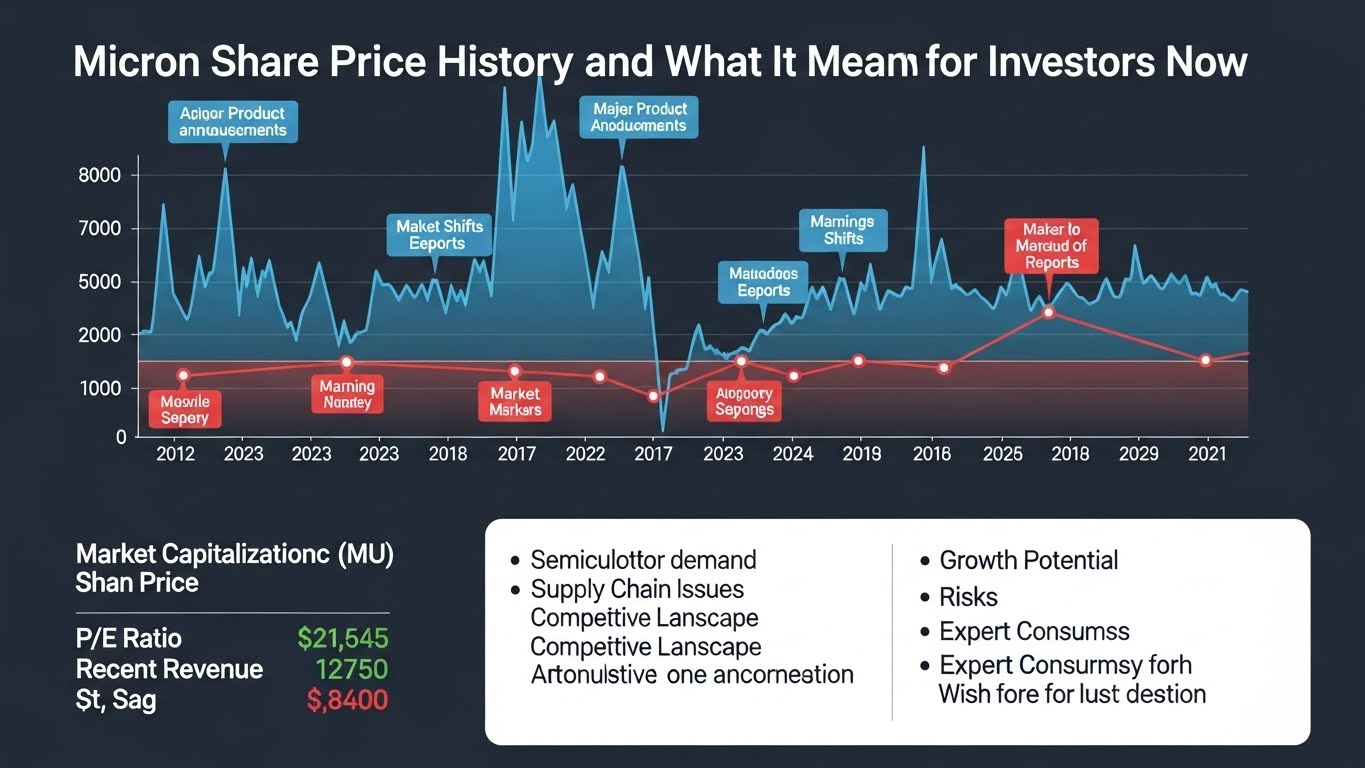
Micron’s Price Journey Over the Years
Micron’s stock started very low in the 1980s, under $1 per share in early years.
It slowly climbed as the company grew in memory chips and became a player in tech.
In recent years, the share price saw big ups and downs tied to tech demand and market cycles.
Micron’s stock has experienced major swings because memory chips are tied to tech trends and global demand. As tech companies grow, they buy more DRAM and NAND chips, which can lift Micron’s share price.
2025: A Year of Strong Growth
In 2025, Micron saw exceptional growth in its stock price.
The share price climbed more than 200%, reaching new highs by the end of the year.
This rise was driven largely by growing demand for chips used in AI systems and large data centers. Companies need fast memory, and that made Micron’s products more valuable.
How Supply and Demand Affect Price
When memory chips are in short supply but demand is high, prices go up.
This can push Micron’s share price higher because investors see stronger profit potential.
Recently, Micron forecast that memory shortages could continue for years, which means steady demand for its products.
Major Price Movements Investors Should Know
Here are some significant trends in Micron’s stock history:
Strong years: Several years showed big gains as tech demand rose (like 2025).
Down years: There were periods when tech markets slowed, and prices dipped.
Record highs: In late 2025, Micron hit extremely high levels compared to its historical prices.
Investors can use this price history as a guide to understanding how external market trends impact the stock.
What Company Success Means for the Share Price
Micron has seen strong earnings and profits, and sometimes this affects the stock price:
When Micron reports better results than expected, shares often jump.
Some analysts have raised future price targets for the stock based on growth potential.
Better earnings can signal confidence in the company’s future, making the micron share price more attractive to investors.
Industry Trends Affecting Stock Performance
Memory chip markets are very cyclical and tied to tech trends:
AI development: Demand for memory to support AI systems has grown rapidly.
Data centers: Large tech companies build huge data centers that need fast memory chips.
Supply shortages: When chips are limited, prices rise, which can boost profits for memory makers like Micron.
These broad trends help explain why micron share price can rise quickly in some years and stay flat in others.
Investor Reactions to Market News
Stock prices can be influenced by news and market reactions:
Positive earnings or good forecasts often cause price spikes.
News about supply concerns or global technology shifts can push prices higher.
Investors who watch these trends closely can time their decisions better.
Risks That Impact Price Stability
While the recent trend has been upward, there are risks:
Sudden supply policy changes in major markets can hurt sales.
Competition from other memory makers might affect growth.
Prices can be volatile and change quickly based on global tech demand.
Investors should remember that stock prices like Micron’s micron share price don’t move in a straight line; they go up and down based on many factors.
Comparing Micron With Broader Markets
Micron’s price movements are also tied to broader stock indexes:
When tech stocks rally, Micron often rises too.
If tech markets weaken, Micron can follow the same pattern.
This is why investors sometimes view Micron as both a tech and semiconductor trade.
Long‑Term vs. Short‑Term Perspectives
Long‑Term View
Long‑term investors look at overall growth trends and future potential.
Strong demand for high‑performance memory chips supports long‑term confidence.
Short‑Term View
Prices can swing daily based on news or market volatility.
Short‑term traders watch charts and technical signals more than fundamentals.
Understanding both views helps investors decide how long they should hold a position in Micron.
How to Use Price History for Decisions
Here are key ways investors use share price history:
Trend spotting: Look at past years to see how price reacted to similar market conditions.
Support and resistance levels: Historical highs and lows act as reference points.
Future projections: Analysts often base predictions on past performance and future demand. Price history is one tool among many for smart investment decisions.
What Analysts Are Saying Now
Many experts are optimistic about Micron’s future:
Some raised their price targets based on strong earnings.
Analysts point to continued AI demand and tight memory supply as bullish signals. Yet, it’s always important to balance expert views with your own research.
Final Thoughts
The journey of the micron share price shows how a company’s performance and industry demand shape stock value over time. Micron’s growth, especially in 2025, reflects strong demand for memory technology and investor confidence.
But stock prices always carry risk, and smart investors look at both price history and future trends before making choices. Understanding this history can help you decide if this stock fits your financial goals.