Businesses rely heavily on web-based systems to manage operations, serve customers, and scale efficiently. From internal dashboards to customer-facing platforms, web applications have become core business tools. As requirements grow more complex, many organizations find that generic software no longer meets their needs. This is where custom web app development services play a critical role.
Off-the-shelf software is designed for broad use cases, often forcing businesses to adjust their workflows around tool limitations. Custom web applications, on the other hand, are built specifically to support unique processes, integrations, and long-term goals. This article provides a clear, non-technical introduction to custom web application development, helping decision-makers understand what it involves, why it matters, and when it makes sense.
What Is Custom Web Application Development?
Custom web application development refers to the process of designing and building web-based software tailored to a specific organization’s requirements. Unlike pre-built tools, these applications are developed from the ground up to align with exact business workflows, user roles, and data structures.
It is important to distinguish between a website and a web application. A website primarily delivers information, such as content pages or blogs. A web application is interactive, allowing users to perform actions like managing data, placing orders, generating reports, or collaborating in real time.
Custom web apps also differ from off-the-shelf software. Ready-made tools are built for mass adoption, with fixed features and limited customization. Custom solutions are purpose-built, offering flexibility, scalability, and full ownership of functionality and data.
Common examples of custom web applications include internal management systems, customer portals, SaaS platforms, workflow automation tools, and business intelligence dashboards.
Key Components of a Web Application
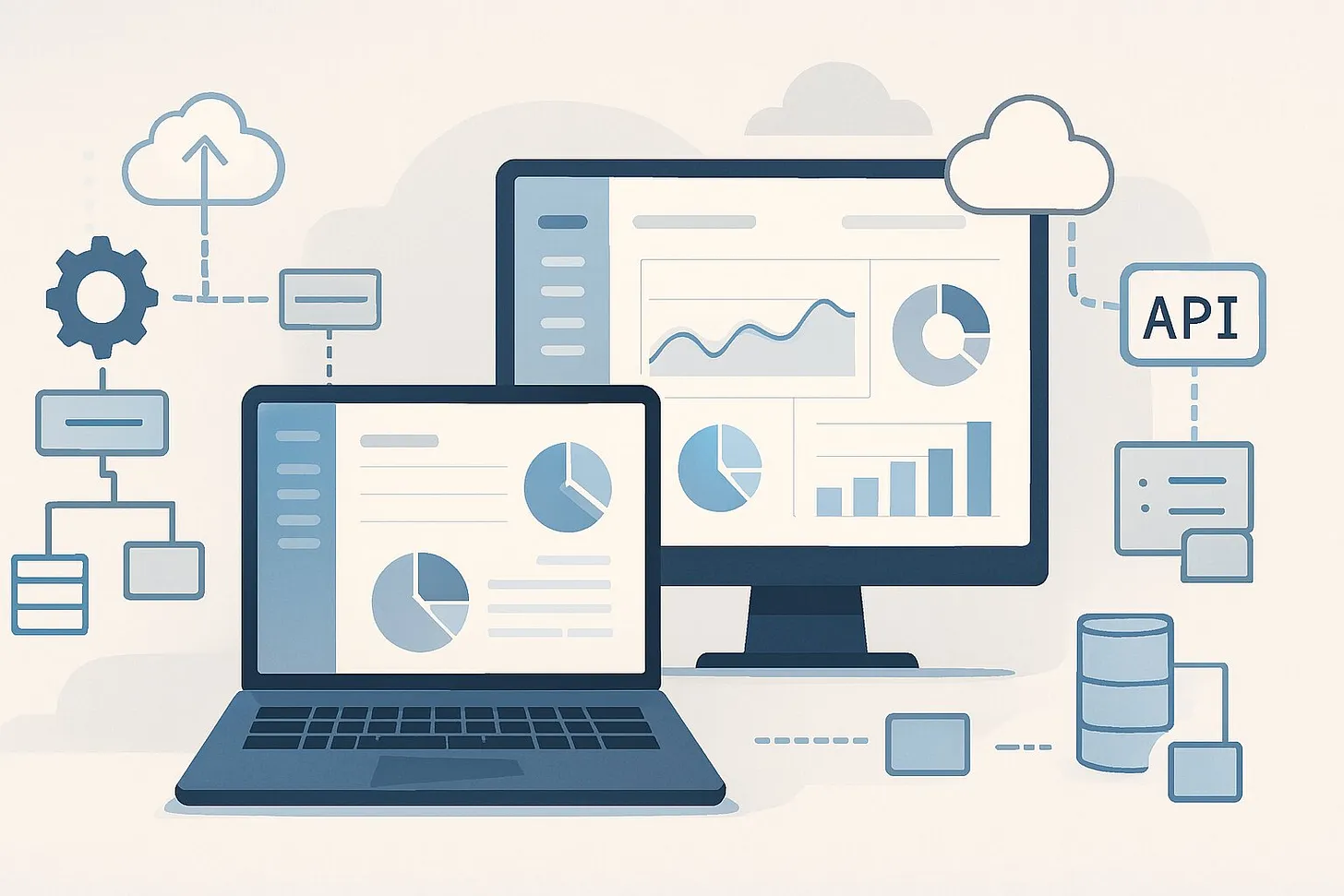
Every web application consists of several core components that work together to deliver functionality and performance.
Frontend (User Interface)
The frontend is what users see and interact with in their browsers. It includes layouts, forms, dashboards, and navigation. A well-designed frontend focuses on usability, accessibility, and performance, ensuring users can complete tasks efficiently without confusion or delays.
Backend (Business Logic)
The backend handles how the application works behind the scenes. It processes requests, applies business rules, manages workflows, and ensures data flows correctly between systems. This layer is responsible for automation, calculations, and enforcing logic that reflects real business operations.
Database
The database stores all application data, such as user information, transactions, and records. Proper database design ensures data accuracy, security, and scalability. It also plays a key role in performance and long-term maintainability.
Integrations and APIs
Modern applications rarely operate in isolation. Integrations allow web apps to connect with ERP systems, CRM platforms, payment gateways, analytics tools, and third-party services. APIs make it possible to exchange data seamlessly, reducing manual work and improving operational efficiency.
How Custom Web Applications Are Developed
Custom web application development follows a structured process designed to reduce risk and ensure alignment with business goals.
Discovery and Requirement Analysis
The process begins with understanding business needs, challenges, and objectives. Stakeholders define requirements, user roles, workflows, and success metrics. This phase ensures the application solves real problems rather than adding unnecessary complexity.
Design and User Experience Planning
Requirements are translated into wireframes and user flows. UX planning focuses on making the application intuitive and efficient for its intended users. A strong design phase reduces rework and improves adoption after launch.
Development and Testing
Development typically happens in phases, with features built and tested incrementally. Quality assurance includes functional testing, performance checks, and security reviews to ensure reliability and data protection.
Deployment and Ongoing Improvement
Once launched, the application continues to evolve. Feedback, analytics, and changing business needs drive ongoing updates and enhancements. This iterative approach ensures long-term value.
Benefits of Custom Web Application Development
Built Around Business Workflows
Custom applications are designed to match how a business actually operates. Instead of adapting processes to fit software, the software supports existing workflows, improving efficiency and reducing friction.
Scalability and Flexibility
As businesses grow, custom web apps can scale without requiring a complete system replacement. New features, users, and integrations can be added as needed.
Better Integration with Existing Systems
Custom solutions enable seamless data flow across tools, reducing duplication and errors. This is especially valuable for organizations using multiple platforms.
Enhanced Security and Control
Custom security measures can be implemented based on specific risks and compliance requirements. Businesses retain ownership of their data and application logic, reducing dependency on third-party vendors.
Common Use Cases for Custom Web Applications
Custom web applications are used across industries and functions, including:
- Internal management systems for operations, HR, or inventory
- Customer portals and self-service dashboards
- SaaS platforms serving external users
- Workflow automation tools that reduce manual tasks
These solutions are especially valuable when processes are unique or highly integrated.
Custom Web Applications vs Off-the-Shelf Software
Ready-made tools work well for standard use cases, small teams, or early-stage businesses with simple needs. They offer quick setup and lower initial costs.
Custom solutions make more sense when workflows are complex, integrations are critical, or differentiation is important. While they require higher upfront investment, they often deliver better long-term value.
Businesses should weigh trade-offs such as cost, time, flexibility, and future scalability before deciding.
Common Concerns About Custom Web Application Development
Cost Considerations
Custom development requires an upfront investment. However, long-term value often outweighs initial costs by reducing licensing fees, inefficiencies, and workarounds.
Development Time
Custom apps take time because they are built specifically for the business. Phased development helps deliver value early while managing risk.
Maintenance and Updates
Ongoing support is part of owning a custom application. Regular updates ensure security, performance, and compatibility with evolving technologies.
Technical Complexity
Complexity is managed through planning, documentation, and experienced teams. Working with skilled custom web app developers helps ensure maintainability and reliability.
Who Should Consider Custom Web Application Development?
Custom web application development is ideal for:
- Growing businesses outgrowing generic tools
- Companies with complex or non-standard workflows
- Organizations requiring deep system integrations
- Businesses seeking competitive differentiation through technology
For these groups, tailored solutions often provide strategic advantages.
Trends Shaping Custom Web Application Development
Several trends continue to influence how applications are built:
- Cloud-native development for scalability and resilience
- API-first architectures that support integrations
- Security-first development practices
- High-level use of AI and automation to improve efficiency
These trends are shaping modern web apps development services and expanding what custom solutions can achieve.
Final Thoughts
Custom web applications are no longer just IT projects. They are strategic assets that support growth, efficiency, and innovation. When designed around real business needs, they deliver long-term value that generic tools cannot match.
Aligning technology with business goals is essential, and working with professional custom web app development services ensures that applications are built to scale, adapt, and perform reliably over time.