Search engine optimization is no longer just about ranking for keywords. As AI-powered search systems become more advanced, search engines now focus on understanding intent, evaluating content usefulness, and delivering direct answers to users. This shift has changed how visibility is earned in organic search.
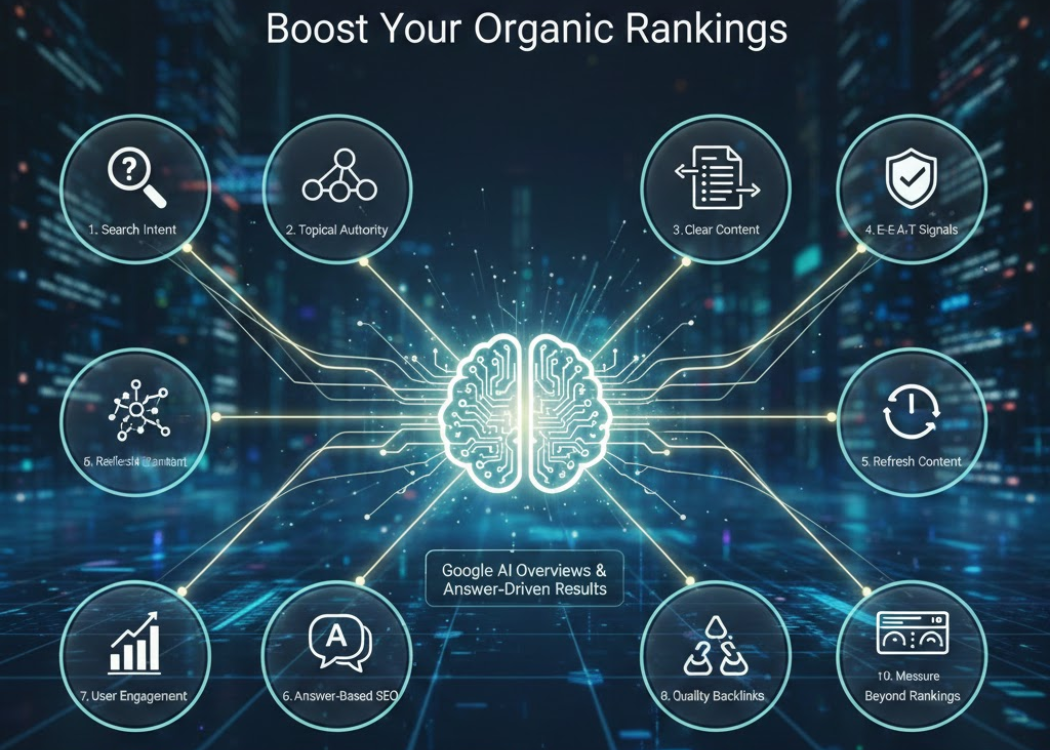
To remain competitive, websites must align their SEO strategies with how AI search evaluates and surfaces content especially within Google AI Overviews and answer-driven results. The following ten proven tactics focus on clarity, relevance, and trust, helping you improve organic rankings while staying aligned with modern search expectations.
1. Optimize for Search Intent, Not Just Keywords
AI search prioritizes why a user is searching, not just what they type. A single keyword can reflect multiple intents, such as learning, comparing options, or taking action. Content that matches the correct intent consistently performs better.
Before creating or updating a page, identify whether the search intent is informational, navigational, or transactional. Then structure the content to address that intent clearly from the beginning. When users quickly find what they are looking for, AI-driven systems interpret that as a strong relevance signal.
2. Build Topical Authority Instead of Isolated Pages
AI search systems favor websites that demonstrate depth in a subject area. Rather than publishing single pages for unrelated keywords, focus on building topic clusters that explore a subject comprehensively.
For example, a core article can explain a broad concept, while supporting pages cover subtopics in detail. Internal links should connect these pages naturally. This structure helps search engines understand expertise and increases the likelihood of your content being referenced in AI-generated answers.
3. Write Clear, Structured, and Helpful Content
Clarity plays a major role in AI search impacts on seo evaluation. Well-structured content with descriptive headings, short paragraphs, and direct explanations is easier for both users and search systems to understand.
Each section should answer a specific question or expand logically on the topic. Avoid filler content and unnecessary repetition. Pages that communicate ideas clearly are more likely to be used in Google AI Overviews and featured responses.
4. Strengthen E-E-A-T Signals Across Your Content
Experience, expertise, authoritativeness, and trustworthiness are critical in AI-driven SEO. Search engines look for evidence that content is created by knowledgeable sources with real-world understanding.
Demonstrate experience by including practical insights, examples, or observations that go beyond surface-level explanations. Expertise is reflected through accuracy and completeness. Authoritativeness grows with consistent publishing in a focused niche, while trust is built through transparency and honest information.
5. Refresh and Update Existing Content Regularly
AI search favors content that remains current and relevant. Pages that once ranked well can lose visibility if they no longer reflect updated information or search intent.
Review older articles and improve clarity, update examples, and refine structure. Even small updates.such as better headings or clearer explanations can significantly improve performance. Freshness signals help maintain rankings and improve eligibility for answer-based search results.
6. Optimize for Answer-Based Search Results (AEO)
Answer Engine Optimization focuses on making content easy for search engines to extract and present as direct answers. This is essential for visibility in Google AI Overviews and zero-click results.
To optimize for answers:
Start sections with direct responses to common questions
Use concise explanations before expanding further
Format key information in short paragraphs or lists
This approach increases the chances of your content being referenced or summarized by AI-powered search features.
7. Improve User Engagement Signals
AI search systems pay attention to how users interact with content. Engagement signals such as time on page, scrolling behavior, and continued navigation indicate satisfaction.
Improve engagement by writing in a natural tone, organizing content logically, and avoiding overwhelming blocks of text. When readers stay longer and explore related pages, search engines interpret this as a sign of value and relevance.
8. Use Internal Linking to Reinforce Context
Internal links help AI search understand how pages relate to one another. They also guide users toward deeper information, improving engagement and topical coverage.
Link related content naturally within the text, using descriptive anchor phrases rather than generic terms. A clear internal structure strengthens topical authority and supports better indexing and ranking.
9. Focus on Quality Backlinks Over Volume
Backlinks remain important, but AI search evaluates their relevance and context more carefully than before. Links from authoritative, topic-relevant sources carry more weight than large numbers of low-quality links.
Earn backlinks by publishing content that provides genuine value, insights, or clarity. Resources that explain complex topics well are more likely to be cited and referenced naturally over time.
10. Measure SEO Success Beyond Rankings
Ranking positions alone no longer tell the full story. AI-driven SEO success should also be measured through engagement, visibility in answer-based results, and organic traffic quality.
Track metrics such as time on page, content reach, and assisted conversions. These indicators provide better insight into how well your content aligns with user intent and AI search evaluation.
Conclusion: Building Sustainable SEO for the AI Search Era
AI search has redefined what it means to rank well. The focus has shifted from tactics designed to influence algorithms to strategies centered on usefulness, clarity, and trust. By applying these ten proven tactics, websites can improve organic rankings while remaining aligned with how modern search systems operate.
SEO success today depends on understanding users, delivering clear answers, and building long-term authority. Those who adapt their strategies now will be better positioned to earn visibility in both traditional results and Google AI Overviews moving forward.