
Training is the most critical point ensuring the safety, quality and regulatory compliance of Medical Devices. ISO 13485 is an international standard for Medical Device Quality Management System (QMS) places a strong emphasis on personal competence and training. Organizations must ensure that employees performing tasks affecting product quality are adequately trained and competent. In this context, ISO 13485 Lead Implementer Training provides essential knowledge to design, implement, and manage effective training systems aligned with regulatory expectations.
Understanding Training Requirements in ISO 13485
ISO 13485 requires organizations to determine the competence needed for personnel and to provide appropriate training to achieve that competence. Training is not limited to initial onboarding but includes continuous learning to maintain and enhance skills. Proper training management ensures that employees understand their responsibilities, follow procedures correctly, and contribute to patient safety. Effective training programs also reduce errors, nonconformities, and regulatory risks.
Training Needs in Medical Device Manufacturing Organizations
Identifying training need started with understanding job roles, responsibilities, and associated risks. A risk-based approach is essential, especially for personnel involved in design, manufacturing, inspection, sterilization, and regulatory activities. Training needs analysis should consider regulatory requirements, process complexity, and historical nonconformities. Lead implementers play a key role in ensuring training needs are aligned with ISO 13485 requirements and organizational objectives.
Implementing an Effective Training Management System
An effective training management system includes documented procedures that define how training is planned, delivered, evaluated, and recorded. Organizations often use training matrices to map employee roles to required competencies. Both internal and external training programs should be controlled and documented. Knowledge gained through ISO 13485 Lead Implementer Training enables professionals to design structured training frameworks that support compliance and continuous improvement.
Competency Evaluation and Training Effectiveness
ISO 13485 requires organizations to evaluate whether training has been effective. Competency can be assessed through examinations, practical demonstrations, performance reviews, or audits. If gaps are identified, retraining or corrective actions must be implemented. Ongoing monitoring ensures that training remains relevant and effective as processes or regulations change.
Documentation and Records for ISO 13485 Training Compliance
Documented information is a critical component of ISO 13485 compliance. Training records should include training content, attendance, competency evaluations, and authorization status. These records must be controlled according to document control procedures and be readily available during audits. Proper documentation demonstrates compliance and accountability.
Training Requirements During Audits and Regulatory Inspections
Auditors closely review training records to verify personnel competence. Common nonconformities include incomplete records, lack of effectiveness evaluation, or outdated training. Organizations that invest in ISO 13485 Lead Implementer Training are better prepared to address auditor expectations and avoid training-related findings.
Conclusion
Training requirements under ISO 13485 are essential for ensuring competent personnel and safe medical devices. A structured, documented, and risk-based training system supports regulatory compliance and continuous improvement. ISO 13485 Lead Implementer Training plays a vital role in helping organizations implement and maintain effective training management aligned with ISO 13485 standards.


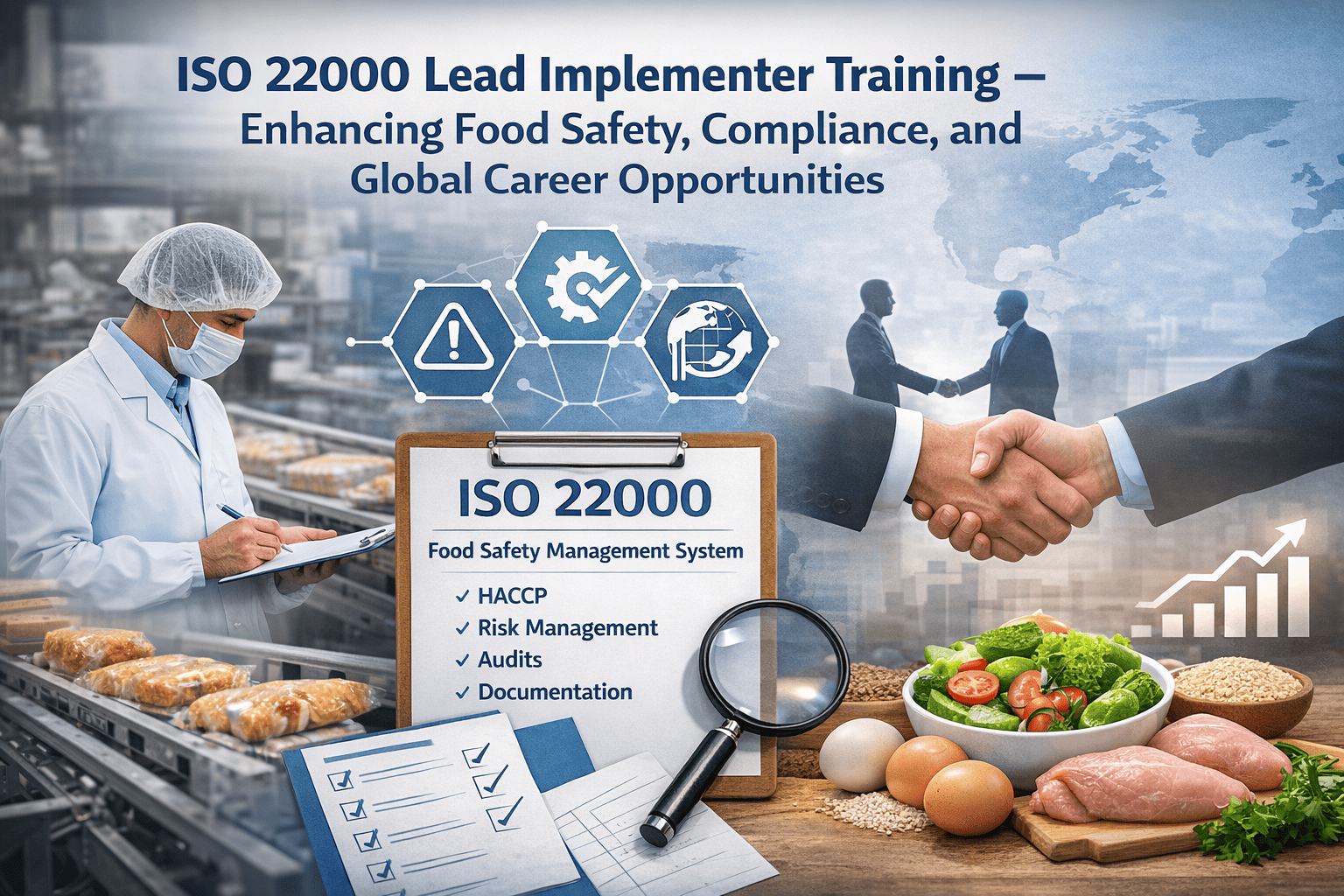
The food sector in the present era is such that maintaining safety and compliance standards is not an option but a necessity. This is where ISO 22000 Lead Implementer Training comes into play. It e