In today’s competitive and fast-paced business environment, organizations are constantly looking for efficient ways to scale operations and manage workloads. One of the most common comparisons companies make is staff augmentation vs managed services. While both models help businesses access external expertise, they differ significantly in terms of control, responsibility, and long-term impact.
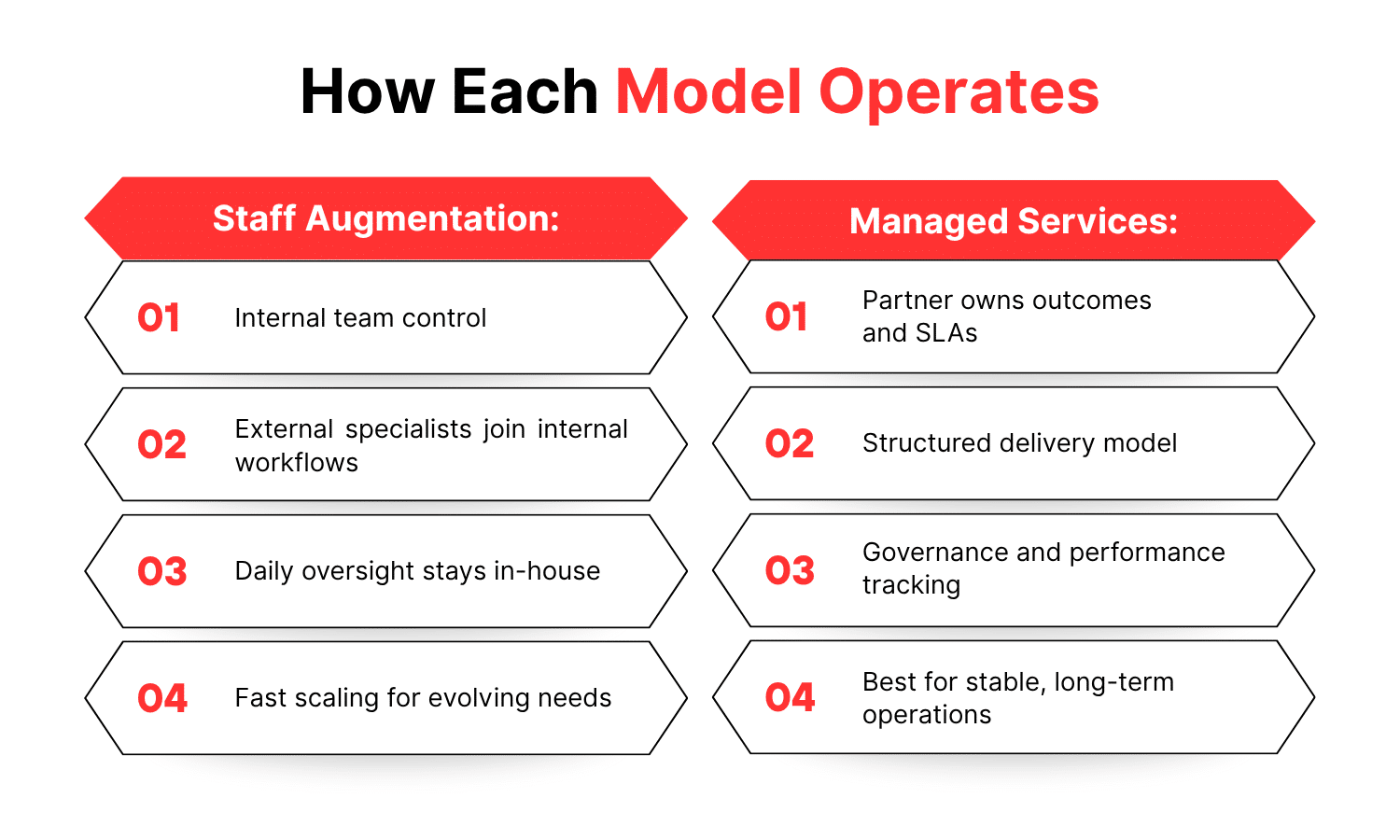
Staff augmentation is a flexible workforce model where companies temporarily add skilled professionals to their internal teams. These external resources work under the company’s direct supervision and follow existing processes. This model is ideal for businesses that want to maintain control over their projects while quickly filling skill gaps or handling short-term workload increases. It allows organizations to scale teams up or down based on project needs without long-term hiring commitments.
Managed services, on the other hand, involve outsourcing specific functions or entire processes to a third-party provider. Instead of managing individual resources, businesses focus on outcomes and performance metrics. The service provider takes responsibility for execution, quality, and delivery based on agreed service levels. This model works well for companies looking to reduce operational complexity, improve efficiency, and ensure consistent results over the long term.
When evaluating staff augmentation vs managed services, factors such as project duration, internal expertise, and budget play a key role. Staff augmentation offers greater flexibility and hands-on involvement, making it suitable for dynamic or evolving projects. Managed services provide predictability, accountability, and reduced management overhead, making them ideal for ongoing or process-driven work.
Both models offer unique advantages, and the right choice depends on business goals and operational priorities. Organizations focused on agility and control may lean toward staff augmentation, while those aiming for stability and outcome-based delivery may benefit more from managed services.
Understanding these differences helps businesses make informed decisions and choose the engagement model that best supports growth, efficiency, and long-term success.