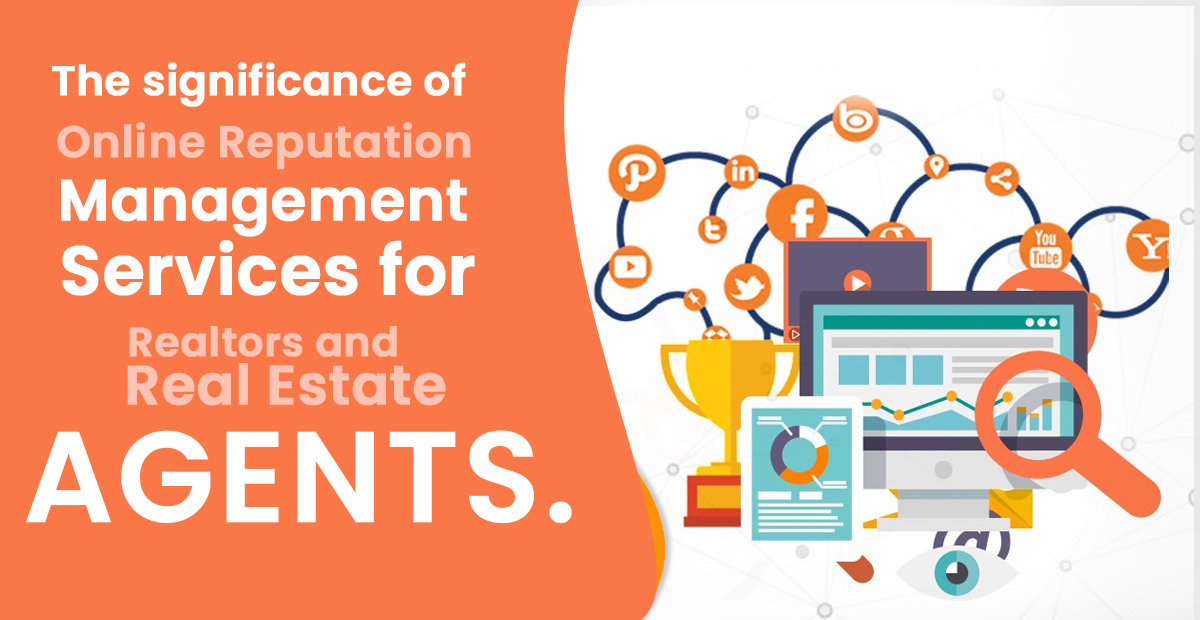


Online Reputation Management refers to the practice of controlling and improving a brand’s digital presence by managing online reviews, search results, social media mentions, and public feedback. The goal of ORM is to ensure that positive, accurate, and trustworthy information about a business is easily accessible while minimizing the impact of negative or misleading content.
ORM is not about hiding the truth or manipulating opinions. Instead, it focuses on transparency, engagement, and proactive brand communication. A well-executed ORM strategy highlights positive customer experiences, resolves issues promptly, and strengthens the brand’s digital image.
Why Online Reputation Management Matters for Businesses
Consumers today rely heavily on online research before making purchasing decisions. A single negative review or poor rating can significantly influence potential customers. Studies show that most users trust online reviews as much as personal recommendations, making ORM a powerful factor in customer decision-making.
A strong online reputation helps businesses:
Build trust and credibility
Increase customer confidence
Improve conversion rates
Enhance brand authority
Protect against negative publicity
Support long-term business growth
Without proper ORM, even high-quality businesses can lose opportunities due to unmanaged negative content or lack of online engagement.
Key Components of Online Reputation Management
1. Online Monitoring
The first step in ORM is tracking what people are saying about your brand online. This includes search engine results, review platforms, social media, forums, blogs, and news websites. Continuous monitoring allows businesses to identify reputation risks early and take corrective action before issues escalate.
2. Review Management
Online reviews play a crucial role in shaping public perception. ORM involves encouraging satisfied customers to leave genuine reviews while responding professionally to negative feedback. Addressing complaints openly demonstrates accountability and improves customer trust.
3. Search Engine Reputation Management
When users search for your brand on Google, the results they see form an immediate impression. ORM focuses on promoting positive content such as blogs, testimonials, and press mentions to ensure favorable information ranks higher and negative links are pushed down.
4. Content Creation and Optimization
Publishing high-quality, SEO-optimized content is a core part of ORM. Informative blogs, case studies, customer success stories, and brand updates help control the brand narrative and strengthen online authority.
5. Social Media Management
Social platforms are powerful reputation influencers. Active engagement, timely responses, and consistent branding across social channels help maintain a positive image and build customer relationships.
The Impact of Negative Reviews and How ORM Helps
Negative reviews are inevitable, but how a business handles them makes all the difference. Ignoring complaints can harm credibility, while responding professionally can turn dissatisfied customers into loyal advocates.
ORM helps businesses:
Address concerns promptly
Resolve customer issues effectively
Demonstrate transparency and professionalism
Prevent reputation damage from spreading
Build trust through honest communication
With the right ORM strategy, negative feedback becomes an opportunity for improvement rather than a threat.
ORM and SEO: A Powerful Combination
Online Reputation Management and Search Engine Optimization (SEO) work hand in hand. Search engines favor brands that demonstrate trust, authority, and consistent engagement. Positive reviews, quality content, and strong brand signals improve search rankings and online visibility.
A well-managed reputation:
Enhances brand credibility in search results
Improves click-through rates
Increases organic traffic
Strengthens digital authority
This makes ORM an essential part of any comprehensive digital marketing strategy.
Crisis Management and Brand Protection
In the digital age, misinformation or negative publicity can spread rapidly. ORM plays a critical role in crisis management by ensuring timely responses, clear communication, and reputation repair strategies. Businesses that act quickly and responsibly during crises can minimize damage and protect brand trust.
Professional ORM services help manage:
False information
Viral negative content
Customer backlash
Public relations challenges
Preparedness and proactive management are key to navigating reputation crises successfully.
Long-Term Benefits of Online Reputation Management
ORM is not a one-time effort but a continuous process. Businesses that invest in long-term ORM strategies enjoy sustained benefits, including improved brand loyalty, stronger customer relationships, and consistent online growth.
Key long-term benefits include:
Higher customer retention
Improved brand perception
Competitive advantage
Increased lead generation
Sustainable digital growth
Why Professional ORM Services Are Essential
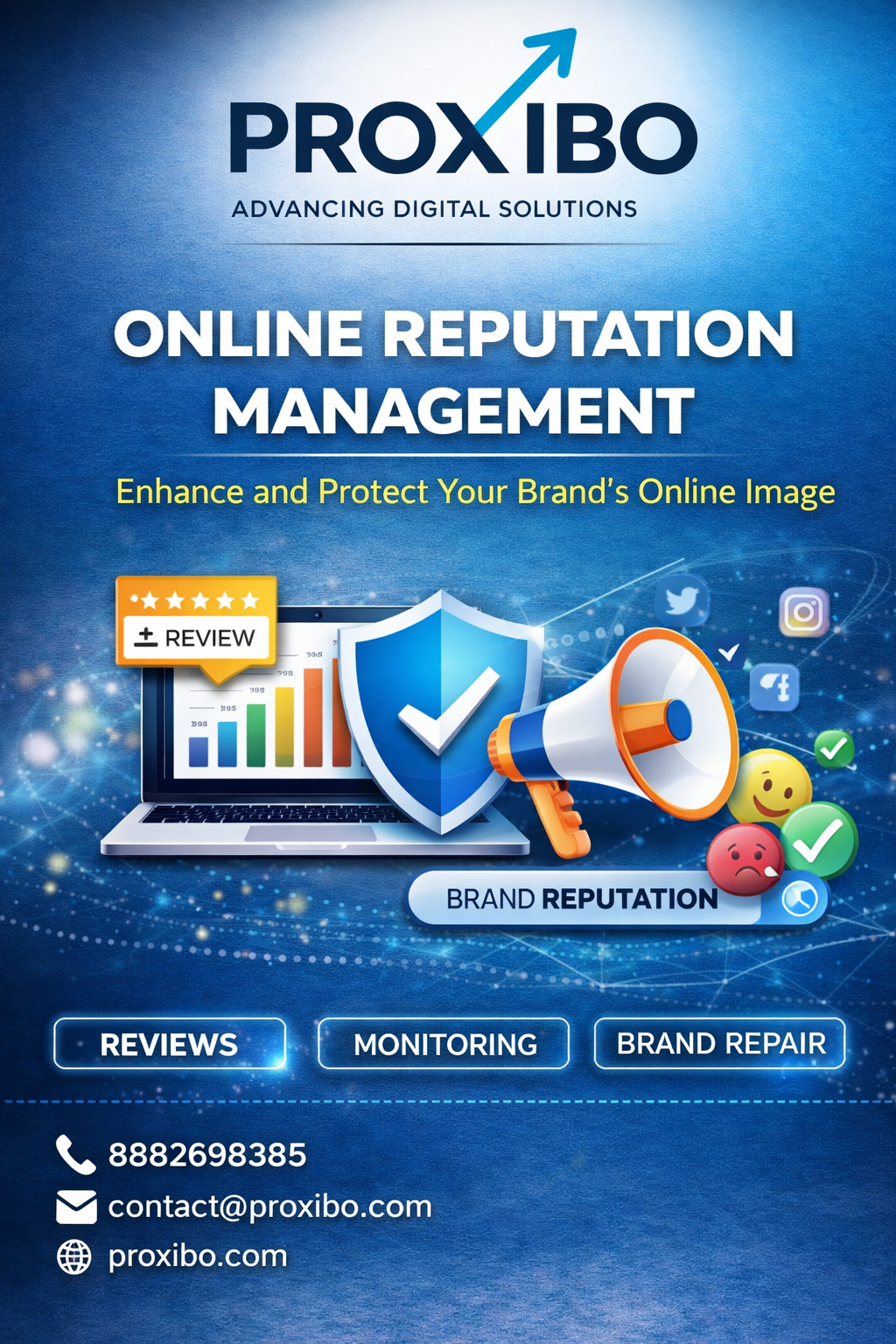
Managing an online reputation requires expertise, tools, and consistent effort. Professional ORM services, such as those offered by Proxibo, provide businesses with comprehensive solutions tailored to their needs. From monitoring and review management to content optimization and crisis handling, expert ORM ensures that brands stay in control of their digital presence.
With a structured and ethical approach, professional ORM helps businesses maintain credibility, build trust, and achieve lasting success.
Conclusion
Online Reputation Management is no longer optional—it is a necessity for businesses operating in the digital space. A strong online reputation influences customer decisions, supports SEO efforts, and protects brand value. By proactively managing reviews, content, and online conversations, businesses can shape a positive digital image and foster long-term growth.
The ultimate goal of ORM is trust. When customers trust your brand, they are more likely to engage, convert, and advocate for your business. Investing in Online Reputation Management today ensures a stronger, more resilient brand tomorrow.
If you want, I can also:
✔ Create a meta title & meta description
✔ Write a short summary for blog submission
✔ Provide ORM keywords & tags
✔ Rewrite this for guest posts or Medium