






Why Escrow Is Core Financial Infrastructure
Escrow is not an auxiliary feature in financial systems; it is a core mechanism that determines how counterparty risk is resolved. In many digital payment flows, escrow relies on centralized entities that custody funds and exercise discretionary control over settlement. This structure introduces operational risk and opacity. Crypto escrow payments require a fundamentally different model.
blip money implements escrow as protocol-level infrastructure, where settlement is enforced by deterministic on-chain logic rather than institutional decision-making.
Non-Custodial Escrow Architecture
blip money is designed around strict non-custodial principles. Assets entering escrow are locked into smart contracts that define settlement conditions explicitly. The protocol never holds, pools, or manages user funds.
This architecture ensures:
• No centralized custody exposure
• Immutable control rules
• Transparent and verifiable asset state
Participants interact through shared contract logic rather than trust in an operator.
Deterministic Smart Contract Settlement
Each escrow transaction on blip money defines all valid outcomes at the moment of creation. Once deployed, the contract enforces these outcomes automatically. Settlement, release, or rollback occurs only when predefined conditions are satisfied.
Deterministic enforcement provides:
• Predictable settlement timelines
• Reduced dispute surfaces
• Clear finality guarantees
Escrow functions as a state machine rather than a negotiated process.
Merchant Staking and Reputation Enforcement
Reliable settlement requires accountability. blip money introduces merchant staking as an economic enforcement mechanism. Merchants must stake protocol assets to participate in escrow execution.
This structure enables:
• Automatic penalties for non-performance
• Reputation scores derived from on-chain execution history
• Incentive alignment without centralized oversight
Reputation becomes an enforceable economic signal.
Competitive Fee Discovery
Fees on blip money are not fixed or imposed by the protocol. Merchants compete to fulfill escrow transactions by submitting bids. Users evaluate offers based on transparent criteria such as fee level, execution parameters, and reputation.
This results in:
• Market-driven pricing
• Reduced rent extraction
• Efficient allocation of settlement capacity
Pricing reflects real supply and demand conditions.
Infrastructure-Level Implications
By treating crypto escrow payments as protocol infrastructure, blip money enables composability with other on-chain systems. Escrow becomes reusable settlement logic rather than a platform-specific service.
Conclusion
Crypto escrow payments must be non-custodial, deterministic, and economically enforced to scale reliably. blip money delivers a protocol-native escrow model that supports predictable, trustless on-chain settlement.
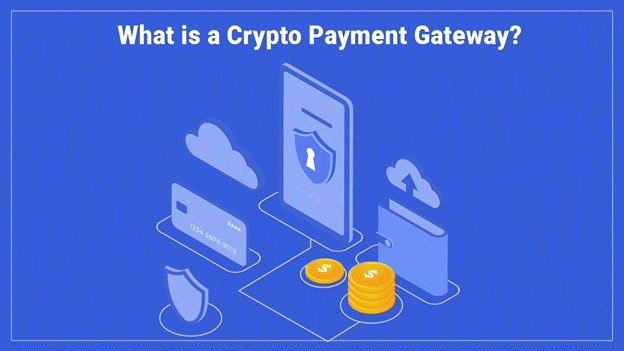


Best Crypto Payment Processor is now becoming the most priorable in crypto payments.
End your search here at Payquiry.
Payquiry provides the best customer service support for crypto customers.
You can easily integrate your crypto payment widget, choose where those funds go.
To know more visit our website now.