The increasing demand for water has caused housing society water management to become a daily challenge because of the low supply and the frequent failure of the system. Residential communities continue to rely on manual checks and delayed responses, which contribute to wastage of water and abrupt shortages. An IoT-powered Water Management App assists societies in tracking real-time water consumption and making better planning.

Problems with Reactive Water Management in Housing Societies
Reactive management is based on human observation and response lag. This has a tendency to create unnecessary issues and increased expenditures.
Manual Monitoring
The tanks are manually inspected by caretakers on a daily basis, leading to errors, slow response time, and missing overflow or low-level conditions.
Late Leak Detection
The leakage of water is not noticed, but when it is visible, water is wasted, and it will become more costly to repair.
Sudden Water Shortages
Insufficient planning encourages emergency tanker orders, which interfere with the day-to-day routines and raise the cost of maintenance in society.
Pump Damage Risks
The pumps are run with no indication of the precise water level, and as such, they run dry, and the equipment's life significantly diminishes.
Such problems render day-to-day water management stressful and inefficient.
What Proactive Water Management Means for Housing Societies
Proactive management emphasizes prevention rather than the cure.
Real-Time Awareness
Constant monitoring of the water level will mean that societies are always made aware of the amount of water that is available, rather than having to check manually.
Early Detection of the Problem
Adequate monitoring of abnormal patterns of water usage points out such possible problems even before they escalate into system failures.
Better Resource Planning
With the correct data, it becomes easier to plan the water usage and dependency on tankers.
Less Emergency Case Scenarios
Last-minute decisions are substituted with planned actions, which enhance the overall water reliability.
Predictability and stability are achieved through proactive systems.
How IoT Improves Residential Water Monitoring
The Water Management App, based on IoT technology, bridges the gap between the physical infrastructure and digital platforms. There are sensors to automatically gather and send data.
Residential Water Level Sensor
An IoT Residential Water Level Sensor can be used to check the water levels in overhead tanks and underground tanks without human control.
Continuous Data Flow
The real-time data reporting will provide consistency in monitoring during the day and night.
Remote Access
There is a possibility of viewing water information on mobile or desktop devices at all times.
Error-Free Measurement
Automation eliminates human error in the level checking processes of manual checking.
The contemporary water systems are based on IoT.
Role of a Water Management App in Daily Operations
Sensor data are converted into readable information using a Water Management App. It makes day-to-day supervision easier.
Live Tank Visibility
Shows up-to-date levels of the water on a display that can be easily understood and acted upon.
Usage Monitoring
Monitor the daily and monthly trends in water use in society.
Pump Status Tracking
Indicates the start and stop of pumps, or when they are in need of service.
Centralized Information
All information related to water is accessible in a single digital platform.
This enhances coordination and control.
Automated Alerts Enable Faster Action
Alerts minimize the reliance on overseeing all the time. The Water Management App alerts the users where it needs attention.
Low Water Alerts
There are warning notifications when the level in the tank is below the safe operating limit.
Overflow Alerts
Alerts eliminate the wastage of water due to overfilling of tanks.
Pump Protection Alerts
Reduce breakages of pumps by cautioning against dry running.
Timely Notifications
Quick notifications enable prompt corrective measures to be taken.
Using Water Data for Smarter Planning
Past data helps society to develop plans based on the use of water. Decisions are made based on data with the help of the Water Management App.
Consumption Trend Analysis
Determines high usage periods and patterns of demand on a daily basis.
Seasonal Planning Support
Helps stock up in advance of a greater demand in summer.
Tanker Usage Tracking
Scheduling of the frequency of outside water supply.
Storage Optimization Intelligence
Helps evaluate the adequate capacity of tanks.
Summing Up: Moving From Reactive to Proactive Water Management
Societies that house people experience increasing pressure to be efficient and responsible in the use of water. Replacement of reactive systems with proactive systems is one of the measures to reduce wastage, enhance reliability, and assist in better planning. A Water Management App and a residential water level sensor are based on IoT technology. These can be used to offer real-time visibility and correct data.

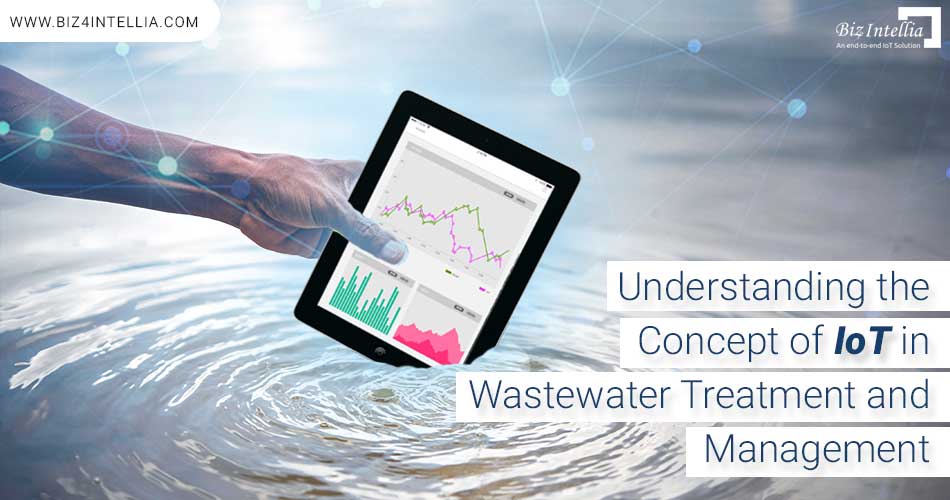
A wastewater treatment system removes contaminants from used water.
It removes toxic and harmful waste from the water before it is returned to a water body.
This reduces the chances of water pollution and ensures minimal environmental impact caused due to harmful waste.
This water can also be reused for general and industrial purposes.Implementation of IoT in the water treatment and management systems allow authorities to track the composition of water and establish EAM CMMS systems.
Both of these systems along with IoT allow the accumulation of performance and operation related data of the whole treatment plant.
This data can be used by the authorities to make informed decisions while optimizing the overall operations of the plant.IoT in wastewater management can be used to calculate residual chemicals after the treatment.