

In an increasingly interconnected world, communication barriers remain one of the most significant challenges to global collaboration. From international business meetings to cross-cultural education, accents and speech inconsistencies can lead to misunderstandings, frustration, and inefficiency. However, recent advancements in artificial intelligence have introduced groundbreaking solutions to these age-old problems. Speech Clarity AI, a cutting-edge technology leveraging accent translation software and AI voice enhancers, is transforming how we interact by improving speech clarity, accessibility, and inclusivity. This blog post explores how these innovations are reshaping communication, the technology behind them, and their potential to create a more connected future.
What is Speech Clarity AI?
Speech Clarity AI is an umbrella term for technologies that enhance spoken language by improving intelligibility and translating accents in real-time. It combines two core capabilities: accent translation software and AI voice enhancers.
Accent Translation Software
Accent translation software uses advanced algorithms to identify regional or linguistic variations in speech and convert them into a more universally understandable form. For example, a British English accent can be translated into a neutral tone to ensure clarity for someone raised in India or Brazil. This is particularly useful in scenarios where communication is critical but accents pose a challenge.
AI Voice Enhancers
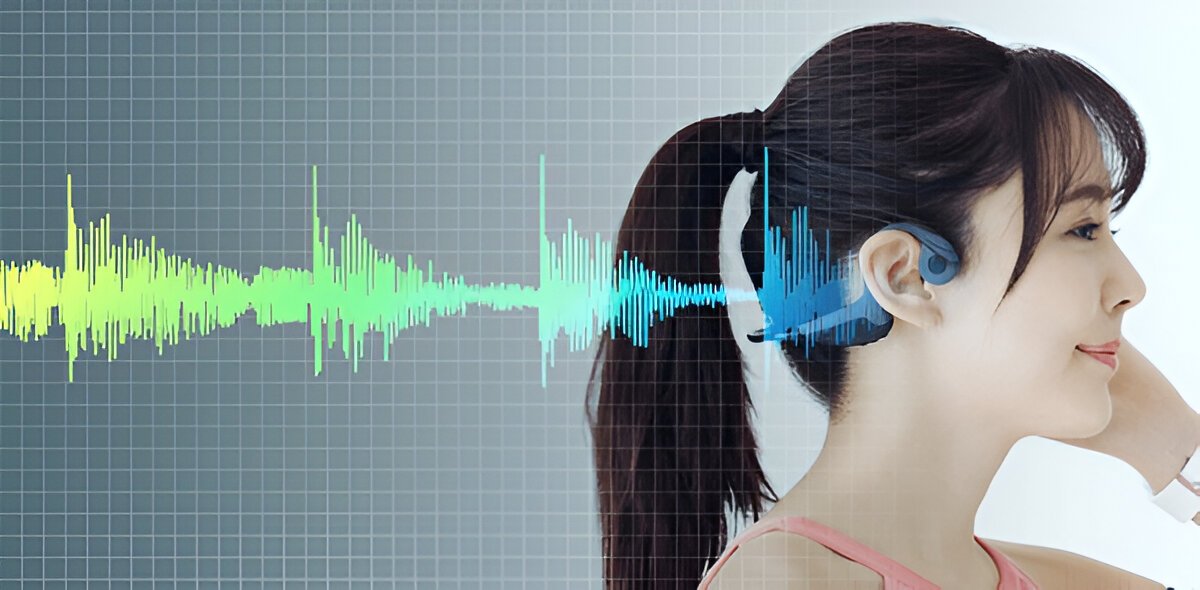
AI voice enhancers focus on improving the quality of speech itself. These tools amplify soft sounds, reduce background noise, adjust pitch or volume irregularities, and eliminate speech distortions. By refining the technical aspects of audio, they ensure that the speaker’s words are not only heard but clearly understood.
Together, these tools address two distinct but complementary aspects of speech: accuracy (through translation) and quality (through enhancement).
The Technology Behind Speech Clarity AI
The power of Speech Clarity AI lies in its underlying technologies, which blend machine learning, natural language processing (NLP), and audio signal processing.
Automatic Speech Recognition (ASR)
ASR serves as the foundation for accent translation. It converts spoken language into text and identifies phonetic patterns unique to different accents. Modern ASR systems are trained on vast datasets of diverse speech samples, enabling them to recognize and adapt to regional variations like the Australian drawl, the French nasal tone, or the German fricative sounds.
Neural Machine Translation (NMT)
Once the speech is transcribed, NMT algorithms analyze context and semantics to produce a translated version that retains the speaker’s intended meaning. For accent translation, the software maps the phonetic and syntactic features of the original accent to a target accent, ensuring the translated output sounds natural in the recipient’s ear.
AI Voice Enhancement Algorithms
Voice enhancers use signal processing techniques to refine audio. They apply filters to eliminate background noise, normalize volume levels, and use spectral analysis to clarify mumbled or distorted sounds. Some systems employ generative adversarial networks (GANs) to reconstruct speech waveforms, producing pristine audio even in low-quality recordings.
Real-Time Processing
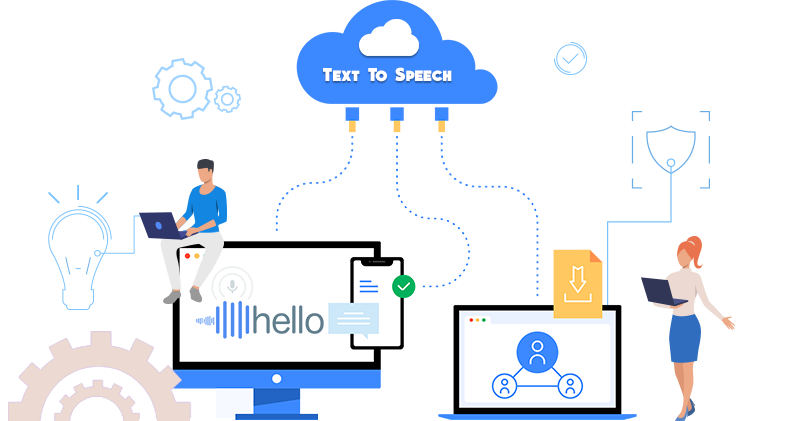
Advanced AI models operate in real-time, making these tools practical for live conversations, video calls, or lectures. This is achieved through optimized code and cloud-based processing, ensuring minimal latency without sacrificing accuracy.
Applications Across Industries
Speech Clarity AI is already making waves in industries where clear communication is paramount.
1. International Business and Remote Work
Global companies often face challenges due to linguistic and cultural diversity. Accent translation software ensures that team members from the UK, Japan, and Spain can collaborate seamlessly. For example, during virtual meetings, the AI can translate accents into a common format, reducing misinterpretations and improving productivity.
2. Education and E-Learning
In online education, students and instructors may come from vastly different linguistic backgrounds. AI voice enhancers help ensure that lecture recordings are easy to understand, while accent translation tools assist non-native English speakers in grasping complex concepts. This technology is particularly transformative for inclusive classrooms and language-learning platforms.
3. Healthcare
Clear communication is critical in healthcare settings. Patients with strong accents may struggle to convey symptoms, while medical professionals need to be understood during emergencies. Speech Clarity AI aids in accurately interpreting patient concerns and ensures that telemedicine consultations are effective, even when language barriers exist.
4. Customer Service
Call centers use AI voice enhancers to filter out background noise and clarify customer voices, while accent translation software helps representatives understand diverse accents more easily. This reduces call duration and improves customer satisfaction.
Benefits and Impact
The benefits of Speech Clarity AI are manifold. By bridging communication gaps, it fosters inclusivity, boosts productivity, and enhances user experiences. For non-native speakers, it reduces the anxiety of being misunderstood, empowering them to participate more confidently in professional or academic environments. It also supports individuals with hearing impairments by generating clearer audio that’s easier to lip-read or caption.
Moreover, the rise of remote work and hybrid education models has amplified the demand for such tools. As virtual interactions become the norm, the ability to communicate clearly across accents and languages is no longer a luxury but a necessity.
Challenges and Limitations
Despite its promise, Speech Clarity AI faces challenges. Accents are deeply tied to cultural identity, and some users may feel that translation tools erase linguistic diversity. There’s also the risk of AI reinforcing biases if training data is unrepresentative. For instance, if a model is trained primarily on American English, it may perform poorly with Scottish or Indian accents.
Another limitation is the current inability of some tools to handle rapid speech, overlapping conversations, or multiple languages simultaneously. Developers are actively addressing these gaps through inclusive dataset curation and advanced context-aware algorithms.
The Future of Speech Clarity AI
Looking ahead, the potential for Speech Clarity AI is boundless. Emerging technologies like deepfake voice synthesis could enable personalized voice avatars that adapt to specific accents or speech patterns. Integration with virtual reality (VR) and augmented reality (AR) could create immersive environments where accents are translated in real-time during virtual conferences or training simulations.
Additionally, advancements in edge AI—where processing occurs on devices rather than in the cloud—will allow for faster, more private voice enhancement without relying on internet connectivity.
Conclusion
Speech Clarity AI, through accent translation software and AI voice enhancers, is redefining how we communicate. It breaks down barriers that have long hindered global collaboration, offering a glimpse into a future where language and accent are no longer obstacles. As the technology evolves, its impact on education, healthcare, business, and social inclusion will only grow. By embracing these innovations, we can create a world where every voice—not just the loudest one—is heard clearly, accurately, and with respect.
For individuals and organizations looking to stay ahead in an increasingly globalized world, investing in Speech Clarity AI is not just a strategic move; it’s a step toward fostering a more inclusive and connected future.