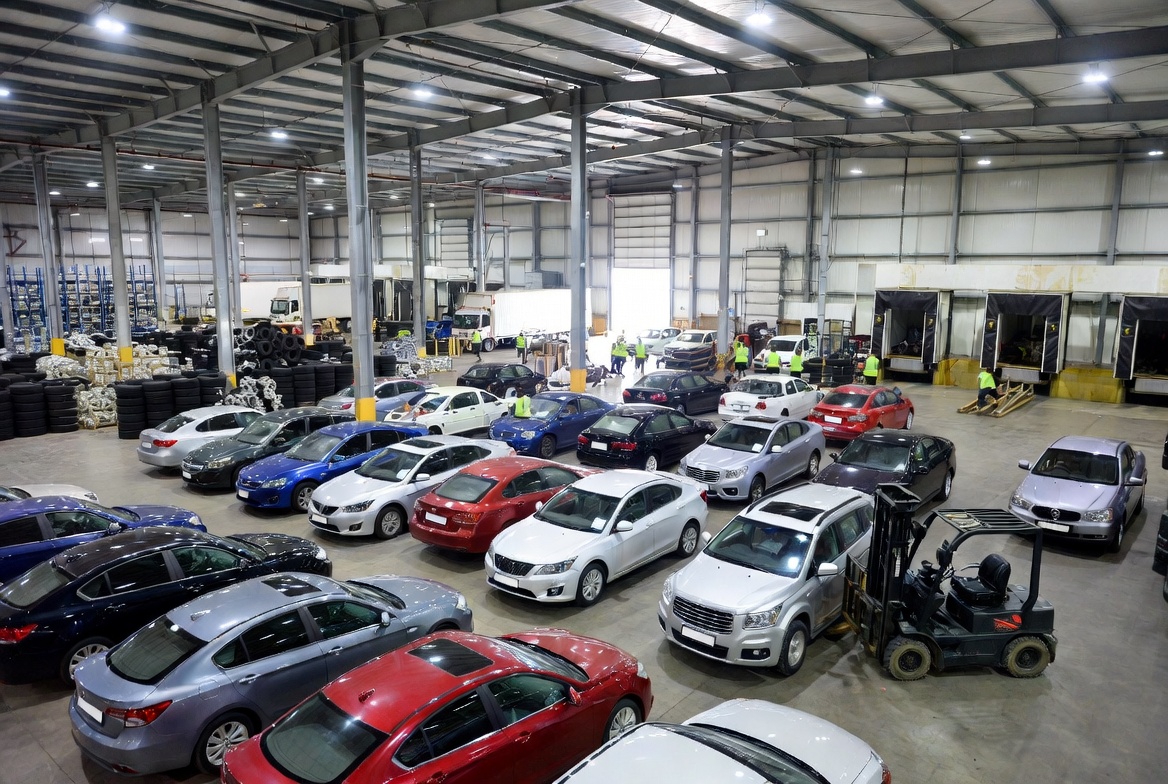
The automotive 3PL market is undergoing rapid transformation as the global automotive industry restructures its supply chains to improve efficiency, resilience, and cost competitiveness. According to industry estimates, the global automotive 3PL market size is projected to reach USD 280.0 billion in 2025 and is expected to grow at a CAGR of 8.5% during 2026–2032, reaching USD 487.0 billion by 2032. This strong growth reflects rising vehicle production, increasing complexity of automotive supply chains, and growing reliance on specialized third-party logistics providers.
Automotive third-party logistics (3PL) providers play a critical role in managing the movement, storage, and distribution of finished vehicles and auto components. As the automotive industry shifts toward electric vehicles (EVs), connected cars, and just-in-time manufacturing models, demand for advanced, technology-driven logistics solutions is accelerating globally.
Market Overview
Automotive 3PL services encompass a broad range of logistics activities, including inbound transportation of raw materials and components, warehousing and distribution, finished vehicle logistics, inventory management, and value-added services such as sequencing, kitting, and packaging. These services enable automotive manufacturers and suppliers to focus on core competencies while outsourcing complex logistics operations to specialized partners.
The market serves multiple stakeholders, including original equipment manufacturers (OEMs), Tier 1 and Tier 2 suppliers, and aftermarket participants. With production networks spanning multiple countries and regions, automotive companies increasingly depend on 3PL providers to ensure seamless coordination across global supply chains.
Key Growth Drivers
Rising Global Vehicle Production
Despite periodic disruptions, global vehicle production continues to expand over the long term, supported by rising demand in emerging markets and recovery in mature economies. Increased production volumes directly translate into higher demand for logistics services across inbound, outbound, and aftermarket segments.
Growing Complexity of Automotive Supply Chains
Modern vehicles consist of thousands of components sourced from multiple suppliers across different geographies. Managing this complexity requires sophisticated logistics capabilities, driving OEMs and suppliers to partner with experienced automotive 3PL providers.
Shift Toward Electric and Advanced Vehicles
The transition toward electric vehicles, hybrid powertrains, and advanced driver-assistance systems (ADAS) is reshaping automotive logistics. EV components such as batteries, power electronics, and electric drivetrains require specialized handling, storage, and transportation, creating new opportunities for 3PL providers.
Just-In-Time and Lean Manufacturing Models
Automotive manufacturers increasingly rely on just-in-time (JIT) and just-in-sequence (JIS) production strategies to reduce inventory costs and improve efficiency. This places greater responsibility on logistics partners to deliver components precisely when and where they are needed.
Outsourcing to Improve Cost Efficiency
Cost pressures and margin optimization are prompting automotive companies to outsource logistics operations. 3PL providers offer scale, expertise, and technology investments that individual manufacturers may find costly to develop internally.
Market Segmentation Analysis
By Type
• Finished Vehicles
• Auto Components
Auto components logistics accounts for a significant share due to the high frequency of inbound shipments and complex supplier networks. Finished vehicle logistics is also expanding, driven by growing vehicle exports and dealer network expansion.
By Service
• Transportation
• Warehousing & Distribution
• Dedicated Contract Carriage
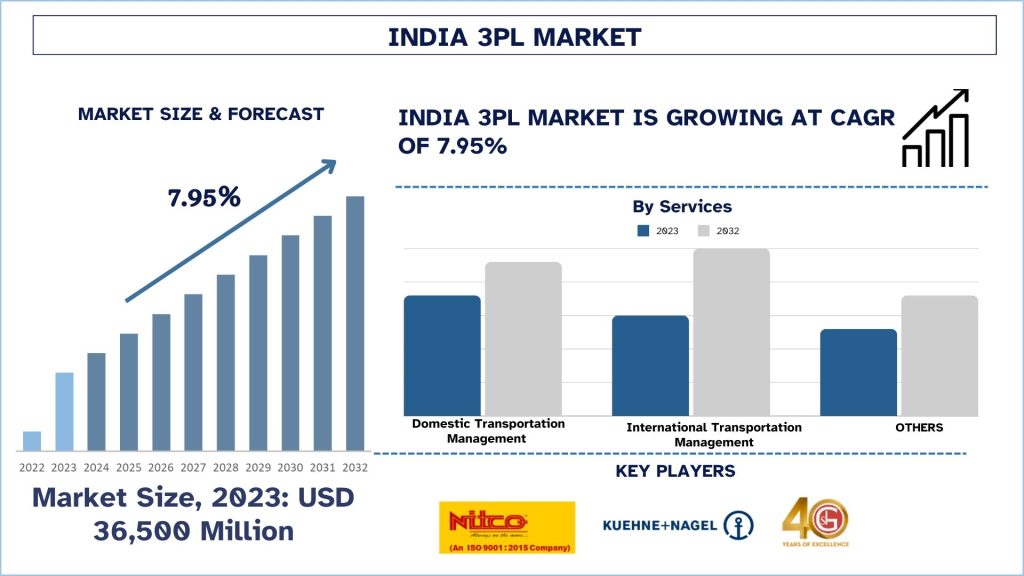
• Domestic Transportation Management
• International Transportation Management
• Value-Added Logistics Services
• Inventory Management
Transportation services dominate the market, while value-added logistics and inventory management services are growing rapidly as manufacturers seek integrated supply chain solutions.
By Transport Mode
• Roadways
• Railways
• Waterways
• Airways
Road transport remains the most widely used mode due to flexibility and last-mile connectivity. Rail and waterways are gaining importance for long-distance and cross-border shipments, particularly for finished vehicles and bulk components.
By End User
• OEMs
• Tier 1 & Tier 2 Suppliers
• Aftermarket
OEMs represent the largest customer segment, while aftermarket logistics is growing steadily due to rising vehicle parc and demand for spare parts distribution.
Competitive Landscape
The automotive 3PL market is highly competitive, featuring a mix of global logistics giants and regional service providers. Competition is based on service reliability, geographic reach, technological capabilities, cost efficiency, and ability to provide end-to-end logistics solutions.
Key competitive strategies include:
• Investment in digital logistics platforms and real-time visibility tools
• Expansion of global warehousing and transportation networks
• Development of EV-specific logistics capabilities
• Strategic partnerships with automotive OEMs and suppliers
• Focus on sustainability and low-carbon logistics solutions
Leading providers are increasingly positioning themselves as integrated supply chain partners rather than traditional logistics vendors.
Emerging Trends and Growth Opportunities
Digitalization and Smart Logistics
Automation, AI-driven analytics, IoT tracking, and cloud-based transportation management systems are transforming automotive logistics. These technologies improve visibility, reduce delays, and optimize route planning.
Sustainability and Green Logistics
Automotive companies are under pressure to reduce carbon emissions across their supply chains. 3PL providers are adopting electric trucks, alternative fuels, and optimized transport modes to support sustainability goals.
Growth of EV and Battery Logistics
The rapid expansion of EV production is creating demand for specialized logistics services for battery storage, hazardous materials handling, and reverse logistics.
Aftermarket and Spare Parts Distribution
As the global vehicle parc grows, demand for efficient aftermarket logistics is increasing. 3PL providers are expanding capabilities in parts warehousing, order fulfillment, and last-mile delivery.
Expansion in Emerging Markets
Rising vehicle production and consumption in Asia-Pacific, Latin America, and parts of Africa are creating new growth opportunities for automotive 3PL providers.
Future Outlook (2025–2032)
The global automotive 3PL market is expected to maintain strong growth through 2032, supported by:
• Increasing vehicle production and sales
• Expansion of EV manufacturing and supply chains
• Rising outsourcing of logistics operations
• Continued adoption of digital and sustainable logistics solutions
While challenges such as supply chain disruptions and cost volatility remain, the long-term outlook is positive as automotive logistics becomes more strategic and technology-driven.
10 Frequently Asked Questions (FAQs)
1. What is the size of the global automotive 3PL market in 2025?
The market is estimated at USD 280.0 billion in 2025.
2. What is the projected market size by 2032?
It is expected to reach USD 487.0 billion by 2032.
3. What is the growth rate of the market?
The market is projected to grow at a CAGR of 8.5% during 2026–2032.
4. What drives growth in the automotive 3PL market?
Rising vehicle production, supply chain complexity, EV adoption, and logistics outsourcing.
5. Which service segment dominates the market?
Transportation services account for the largest share.
6. Which transport mode is most widely used?
Roadways dominate due to flexibility and last-mile connectivity.
7. Who are the primary end users?
OEMs are the largest end users, followed by Tier 1 & Tier 2 suppliers.
8. How does EV growth impact automotive 3PL?
EVs require specialized logistics for batteries and components, increasing demand for advanced 3PL services.
9. Is sustainability influencing the market?
Yes, green logistics and emission reduction initiatives are key trends.
10. What is the long-term outlook for the market?
The outlook is strong, supported by digitalization, EV expansion, and global automotive growth.




AMA Research have added latest edition of survey study on Global 3PL Software Market with 100+ market data Tables, Pie Chat, Graphs & Figures spread through Pages and easy to understand detailed analysis.
The Research report presents a complete assessment of the Market and contains a future trend, current growth factors, attentive opinions, facts, and industry validated market data.
The research study provides estimates for Global 3PL Software Forecast till 2025*.
It is an integrated technology platform to address all the critical components of several client 3PL operations.
This software is used to manage to outsource supply chain activities such as transportation and warehousing.
Market Growth DriversIncreasing Demand from Brokers, Shippers and Third-Party Logistic Providers for Real-Time Supply Chain Visibility, Inventory Management and for Tracking Processes.It Saves Time by Utilising Automation ProcessInfluencing TrendImplementation of Artificial Intelligence in Third-Party Logistics PlatformsRestraintsHigh Cost associated with development of softwareChallengesRequirement of Skilled Professionals to Operate this Software To comprehend Global 3PL Software market dynamics in the world mainly, the worldwide 3PL Software market is analyzed across major global regions.