


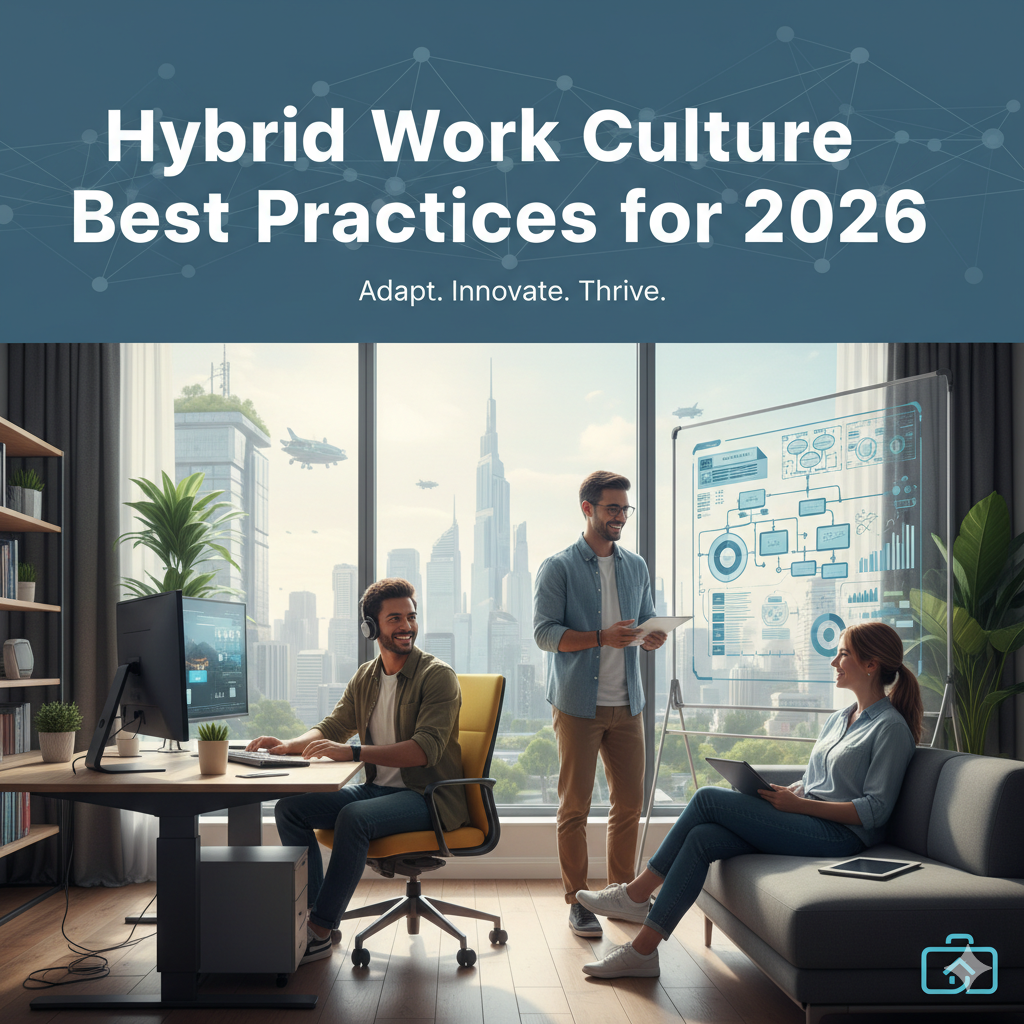
Post the pandemic, as everything has regained its normalcy, few companies are still working with the hybrid work model. While the inboxes of some employees are awash with return to office incentives, some companies have recognised the benefits and potential of letting employees work from home. Let’s read the best practices for staying productive and adaptable in the hybrid work culture in 2026 without burning out.
So, the question centres, did the pandemic temporarily breach the everyday routines, or did it really give us all truly a new way of life? How can companies still afford to let employees work in a hybrid model?
Hybrid Work Culture Best Practices for 2026
As we step into the new year of possibilities and opportunities, companies are closely looking to improve their hybrid work culture best practices. And they have concluded – a successful hybrid work model is the one that goes beyond mere policies, it is more about building ecosystems of trust, purpose and adaptability. Building a truly sustainable hybrid work culture, you need to blend flexibility with structure, technology with empathy, and autonomy with accountability.
The following hybrid work culture best practices 2026 guide leaders and teams in creating workplaces that are both resilient and human-centered.
1. Clarity and Purpose: Building Hybrid with Intent
For a thriving hybrid work culture, you need to set intentions. Far too often, it is observed that organisations opt for this work model without clarifying the ‘why’ and how’ behind it. So, the employees don’t have a clear idea on why this flexible work model exists, or how exactly connects to the business goals. A clear purpose helps align the teams around shared expectations. Leaders further also shoulder the responsibility of defining the vision for their hybrid model.
For instance, defining which layer of the organisation works remotely, planning events for collaboration in person, and most importantly, what the success metrics look like. Setting these transparent policies, and ensuring clear continuous communication about these will help you build trust and accountability. On the employees’ side, they also understand how their individual contributions support the collective outcomes.
2. Technology as the Foundation
Technology is the backbone of hybrid work. An agile technology network will allow your employees to seamlessly collaborate, create and communicate, regardless of the location. Be it unified communication platforms or the AI-enabled workflow tools, technology helps drive connection and productivity in companies with an aggressive hybrid work culture. Adding to its security benefits, this digital adoption also helps companies predict new trends and incorporate them quickly and stay ahead of the curve.
3. Redefining Leadership and Management
It isn’t a surprise that leadership and management in these changing landscapes need an upgrade too. Traditional leadership was deeply rooted in supervision and presence, but with hybrid work culture, it has now evolved to focus more on the outcomes, empathy, and empowerment. Successful leaders in a hybrid workplace have these three distinct traits –
> Set clear intentions
> Trust teams to deliver results
> No micromanagement
It surely is a task to keep a dispersed team aligned, and building trust and emotional intelligence, and prioritizing inclusivity keeps the team intact, bringing out the best in everyone. More importantly, leaders model the flexibility they advocate, showing that hybrid work is a shared cultural value, not a privilege.
Source URL: Hybrid Work Culture in 2026