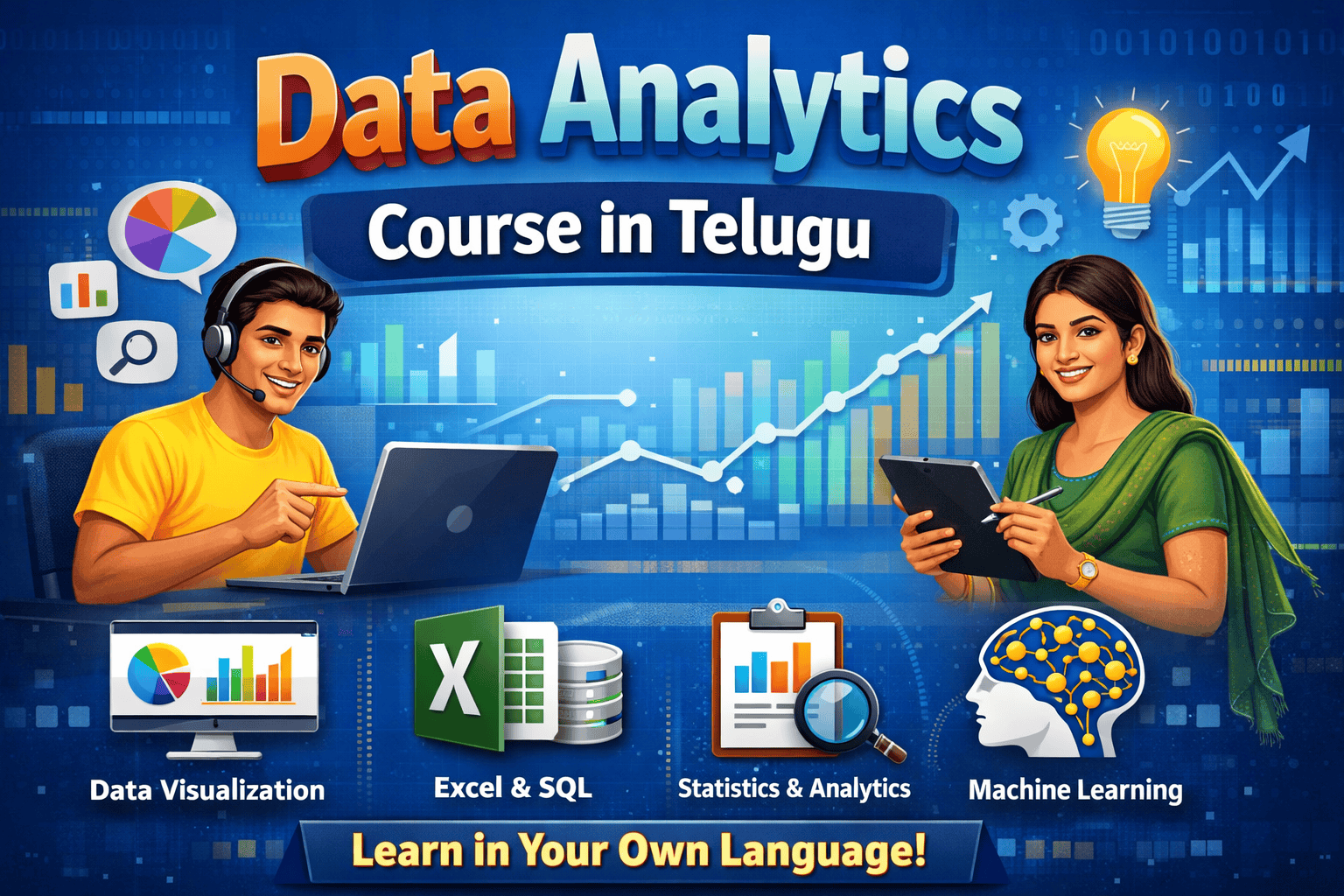
Introduction: Why Do Facts Still Feel Unclear?
Facts are supposed to bring clarity. Numbers are expected to remove confusion. Yet in reality, facts often create more debates than answers. One report shows improvement, another shows decline. One chart looks positive, another looks worrying. How can facts disagree?
The issue is not the data itself, but how it is understood. Data analytics is the discipline that brings order to facts. It explains how to read numbers correctly, connect them logically, and extract meaning that actually reflects reality.
What Data Analytics Is Truly About
Data analytics is the process of examining data to understand what it represents, how it behaves, and what it reveals about real situations.
It focuses on:
- Identifying patterns instead of isolated numbers
- Understanding change instead of snapshots
- Explaining outcomes instead of guessing
Data analytics is not about producing numbers, but about making sense of them.
Why Data Analytics Is Needed in Every Field
Every system today generates data. Schools record performance, businesses track sales, hospitals monitor outcomes, and digital platforms measure engagement. But raw data does nothing by itself.
Data analytics is needed because it:
- Converts data into insight
- Helps compare past and present
- Reveals causes behind outcomes
- Supports smarter planning
Without analytics, data remains unused information.
Data Does Not Automatically Tell the Truth
A common misunderstanding is that data always tells the truth. In reality, data can mislead if not interpreted carefully.
For example:
- A rise may hide a quality issue
- A drop may represent efficiency
- An average may hide extreme values
Data analytics teaches how to look beyond surface-level numbers.
The Analytical Thinking Process
Data analytics is a thinking process, not a shortcut.
Step 1: Define What Needs to Be Understood
Clear questions lead to meaningful analysis.
Step 2: Collect Relevant Data
Only data connected to the question matters.
Step 3: Prepare the Data
Errors, duplicates, and missing values are handled.
Step 4: Explore the Data
Trends, patterns, and unusual values are identified.
Step 5: Interpret the Findings
Results are explained in real-world terms.
Each step protects accuracy and clarity.
The Four Analytical Perspectives
Data analytics can be viewed through four perspectives.
Descriptive Analytics
- Answers what happened.
Diagnostic Analytics
- Explains why it happened.
Predictive Analytics
- Estimates what might happen next.
Prescriptive Analytics
- Suggests what should be done.
Together, these perspectives turn observation into action.
Why Data Cleaning Shapes the Outcome
Data cleaning is not just a technical step—it is a responsibility.
Poor data leads to:
- False trends
- Incorrect conclusions
- Bad decisions
Clean data builds trust in analysis and outcomes.
Data Analytics Is Not About Tools First
Many beginners believe analytics starts with software. In reality, it starts with thinking.
A data analyst must:
- Ask the right questions
- Understand context
- Validate results
- Think logically
Tools support thinking; they do not replace it.
Logic Over Complex Calculations
Advanced mathematics is rarely the main requirement in data analytics.
What matters more is:
- Logical reasoning
- Pattern recognition
- Cause-and-effect thinking
- Consistency checking
Strong logic leads to meaningful insights.
Data Visualization: When Patterns Become Visible
Some insights are difficult to explain in words alone. Visualization helps make patterns visible.
Good visualization:
- Shows trends over time
- Highlights differences clearly
- Reduces complexity
- Improves understanding
Visualization is about clarity, not decoration.
How Data Analytics Improves Judgement
Data analytics strengthens judgement by reducing emotional bias.
It helps to:
- Understand why results changed
- Compare outcomes objectively
- Measure progress accurately
- Support confident decisions
Judgement improves when evidence replaces assumptions.
Common Misconceptions About Data Analytics
Data analytics is just reporting
→ Reporting summarizes; analytics explains
You need to be very technical
→ Logical thinking matters more
Analytics guarantees correct decisions
→ It improves understanding, not certainty
Recognizing these misconceptions helps learners grow realistically.
Where Data Analytics Shapes the Real World
Data analytics influences many areas:
- Education performance analysis
- Healthcare outcome evaluation
- Business planning
- Marketing behavior study
- Operational improvement
Any system that changes over time benefits from analytics.
Skills Built Through Learning Data Analytics
Learning data analytics develops:
- Analytical reasoning
- Attention to detail
- Problem-solving skills
- Interpretation ability
- Clear communication
These skills are valuable in almost any role.
Why Learn Data Analytics in Telugu?
Learning data analytics in Telugu helps learners understand concepts clearly without language barriers, builds confidence while working with data, and allows better focus on logic, interpretation, and real-world understanding instead of struggling with technical English terminology.
Who Can Learn Data Analytics?
Data analytics is suitable for:
- Students curious about data
- Beginners entering analytical fields
- Professionals changing careers
- Non-technical learners interested in insights
- Curiosity and consistency matter more than background.
How Long Does It Take to Learn Data Analytics?
Learning analytics happens gradually:
- Understanding data fundamentals
- Practicing analysis techniques
- Interpreting real datasets
- Improving explanation skills
- Progress depends on regular practice.
- Ethics and Responsibility in Data Analytics
Data often represents real people and real situations.
Ethical analytics requires:
- Respecting privacy
- Avoiding biased conclusions
- Presenting insights honestly
- Responsible analytics builds trust.
Data Analytics Beyond Professional Roles
Even outside work, analytics helps:
- Evaluate information critically
- Avoid misinformation
- Make informed personal decisions
- Understand trends logically
- It improves everyday thinking.
Why Data Analytics Will Always Matter
Data analytics remains relevant because:
- Data generation keeps increasing
- Decisions rely on evidence
- Automation depends on analytics
- Complexity demands structure
Strong fundamentals never become outdated.
Learning Beyond Numbers and Charts
Data analytics teaches:
- How to question information
- How to validate conclusions
- How to explain uncertainty
- How to think systematically
These lessons apply far beyond analytics roles.
Conclusion: Are You Ready to Truly Understand Facts?
Data analytics gives structure to facts and meaning to numbers. It helps transform confusion into clarity and supports decisions based on understanding rather than assumptions.
If facts alone are not enough, shouldn’t you learn how to interpret them?
If understanding comes from patterns and context, shouldn’t you know how to analyze them?
And if learning data analytics in Telugu makes this clarity easier to achieve, is now the right time to start truly understanding what facts are trying to tell you?