





The digital landscape moves fast. In 2025, we saw the stabilization of generative AI; now, in 2026, we are witnessing its full integration into the very fabric of the web. For business owners and CTOs, staying ahead of these curves isn't just about "cool factors"—it is about survival, efficiency, and market relevance. If you are looking to build web apps that stand the test of time, you cannot afford to ignore the shifts happening right now.
As we settle into 2026, user expectations have hit an all-time high. Speed is no longer a feature; it’s a baseline. Personalization is no longer a luxury; it’s a demand. From AI-native architectures to quantum-safe encryption, the tools we use to construct the web are changing. Here are the top 15 web app development trends defining the industry this year.
1. AI-Native Architectures (Not Just Add-ons)
For years, AI was a "feature"—a chatbot in the corner or a recommendation engine. In 2026, we are seeing the rise of AI-native apps where the entire architecture is built around adaptive intelligence. These apps don't just react to user input; they predict it. They dynamically alter interfaces based on user behavior in real-time. This shift requires a fundamental rethink of backend logic, moving from static databases to vector databases that handle high-dimensional AI data efficiently.
2. The Maturation of WebAssembly (Wasm)
WebAssembly has been "up-and-coming" for a while, but 2026 is the year it truly democratizes high-performance computing in the browser. We are seeing video editing suites, 3D rendering engines, and complex gaming platforms running natively in Chrome and Safari without plugins. This allows a web app development company to deliver desktop-grade performance on mobile devices, blurring the line between "software" and "website" more than ever before.
3. Serverless Edge Computing
The cloud is moving closer to the user. Traditional serverless functions (like AWS Lambda) are being superseded by Edge functions that run on servers geographically closer to the user. This reduces latency to near-zero levels. For global applications, this means a user in Tokyo gets the same snappy experience as a user in New York, without the massive infrastructure overheads of the past.
4. Progressive Web Apps (PWAs) 2.0
PWAs have evolved. The "PWA 2.0" wave involves deeper OS integration. We are talking about file system access, biometric authentication (FaceID/TouchID), and advanced push notifications that rival native apps. Business leaders looking to hire web developer talent are increasingly deprioritizing native iOS/Android development in favor of these advanced PWAs, which offer a "write once, run everywhere" advantage without the 30% "Apple Tax."
5. Motion UI and Micro-Interactions
Static interfaces feel "broken" to modern users. Motion UI in 2026 isn't about flashy intros; it's about communicative motion. It’s the subtle bounce when a list reaches its end, or the morphing button that confirms a submission. These micro-interactions provide tactile feedback in a digital space, guiding the user's eye and reducing cognitive load. It’s a psychological tool as much as a design one.
6. Zero-Trust Security Architectures
With cyber threats becoming AI-augmented, traditional perimeter security (firewalls) is dead. The trend is now Zero Trust: "Never trust, always verify." Every request, whether from inside or outside the network, is authenticated, authorized, and encrypted. Modern web application development services are baking identity verification directly into the API layer, ensuring that even if a frontend is compromised, the data remains secure.
7. Voice Search Optimization (VSO) and Voice Commerce
With smart speakers and voice assistants ubiquitous, web apps are being optimized for voice navigation. This goes beyond SEO. It involves structuring data so that voice agents can "read" your app. We are seeing e-commerce flows entirely navigable by voice, requiring developers to implement natural language processing (NLP) APIs that can handle conversational commerce transactions.
8. Extended Reality (XR) on the Web
VR and AR are no longer trapped in headsets. WebXR standards have improved, allowing users to experience augmented reality directly through a mobile browser. E-commerce is the biggest beneficiary here, with "try-before-you-buy" AR features becoming standard for furniture, fashion, and cosmetics. Implementing these immersive experiences requires specialized web app development solutions that can handle 3D rendering optimization without killing load times.
9. API-First Development
In the past, we built the app first, then added APIs. Now, the API is the product. The "API-First" approach treats the connection points as the primary asset, allowing the backend to serve not just a web frontend, but mobile apps, smartwatches, IoT devices, and third-party integrations simultaneously. This modularity is why a flexible web development company will always push for robust API documentation before writing a single line of frontend code.
10. Green Coding and Sustainable Web
Digital carbon footprints are under scrutiny. "Green coding" is the practice of writing efficient code to minimize energy consumption. This involves optimizing image assets, reducing JavaScript payload sizes, and choosing green hosting providers. In 2026, sustainability credentials are becoming a competitive advantage, and optimized code literally saves money on cloud computing bills.
11. Low-Code/No-Code Integration for Enterprise
Developers aren't being replaced; they are being accelerated. Professional teams are integrating low-code tools for internal dashboards and simple CRUD (Create, Read, Update, Delete) apps, freeing up senior engineers to focus on complex core logic. This hybrid approach allows businesses to move faster. However, the governance of these tools remains a critical task for the IT department.
12. Blockchain Beyond Crypto
Forget Bitcoin. In web development, blockchain is finding its footing in identity management and supply chain transparency. "Web3" concepts are being distilled into practical utilities—decentralized login systems (killing the password) and immutable audit logs for enterprise data. When you hire web app developer teams in 2026, asking about their familiarity with decentralized identity protocols (DID) is becoming a standard interview question.
13. The Rise of "HTMX" and HTML-First
There is a growing backlash against the complexity of massive JavaScript frameworks (like complex React setups) for simple sites. Technologies like HTMX allow developers to access modern browser features (AJAX, CSS Transitions, WebSockets) directly in HTML, without writing mountains of JavaScript. This "back to basics" trend results in lighter, faster, and easier-to-maintain codebases.
14. 5G-Optimized Experiences
With 5G networks fully matured in major markets, web apps are leveraging high-bandwidth capabilities. This enables high-definition video backgrounds, real-time collaboration tools (like Figma-style multiplayer editing), and heavy data visualization without buffering. Developers are now coding "network-aware" apps that serve high-fidelity assets on 5G and scale down automatically on 4G or LTE.
15. Automated Accessibility (a11y)
Accessibility is no longer an afterthought; it’s a legal and ethical mandate. New AI-driven testing tools are automating the detection of accessibility violations (contrast issues, missing alt tags) within the CI/CD pipeline. In 2026, a web app that isn't screen-reader friendly is considered unfinished.
Conclusion
The trajectory of 2026 is clear: the web is becoming smarter, faster, and more immersive. We are moving away from monolithic, static pages toward distributed, intelligent, and component-based architectures.
For business owners, the key takeaway is that the "good enough" web standards of 2024 are obsolete. Whether you are building an internal tool or a customer-facing platform, the technology stack you choose today will dictate your agility tomorrow. To navigate this complex ecosystem, partnering with providers who offer comprehensive web app development services is essential. They can help you sift through the noise, select the right trends for your specific use case, and build a digital product that is ready for the future.


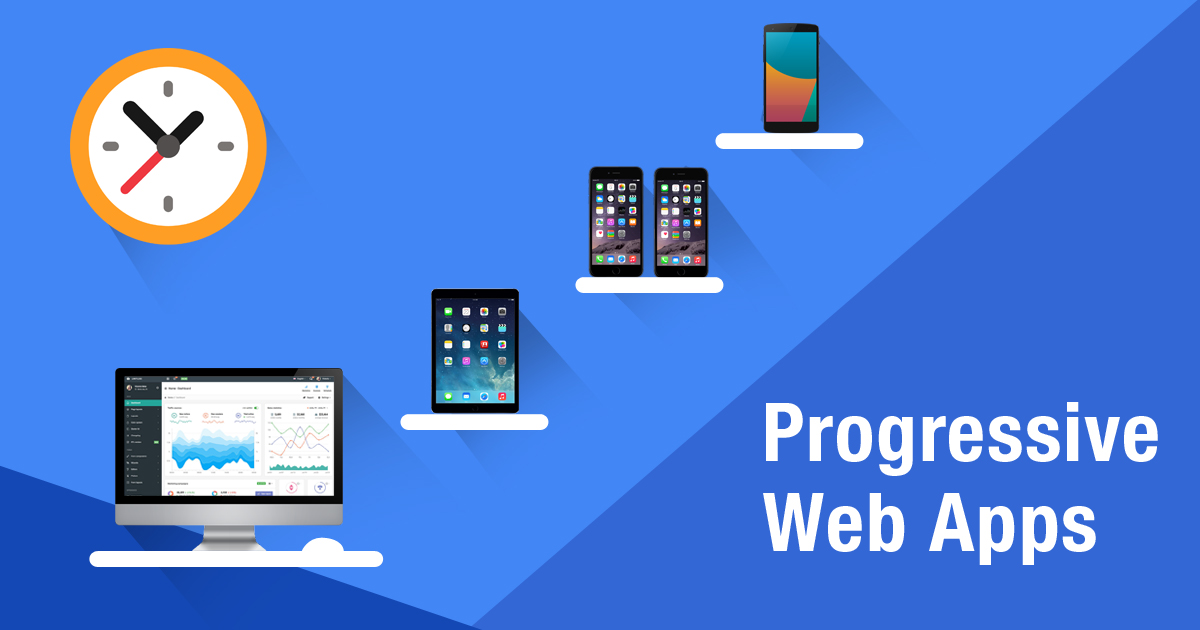
Progressive Web Apps (PWAs) can be described as a fast-performance mobile website that behaves just like an app.
Read more about PWA here.
Later, when you’re getting traction you can focus on delivering a compelling user experience; but in the beginning, it’s all about getting that initial user feedback.In this article we’ll help you think of an MVP as an efficient mechanism for getting a virtuous cycle going between value creation and data collection.
Remember, as a strategic entrepreneur optimizing for scarce resources, in most cases your best bet is to opt for the most practical solution.
Believe it or not, these can actually reach more users than mobile apps—and as browsers become increasingly functional, their capabilities are growing fast.While the business case of an app like Uber or Instagram depends directly on device features and functionality (geolocation), there are many other products out there that don’t need to interface with mobile APIs; and thanks to responsive web design, these applications can benefit from additional screen real estate, a more convenient mobile typing experience, and the cross-platform accessibility afforded by web app design.These days the tech options for mobile app development available to entrepreneurs are abundant.
The main differences between them come down to implementation speed, cost, and final product quality.
So let’s unpack four popular mobile app technologies that will illustrate the common differences among them.
These will help you identify the most practical way to validate your business idea and facilitate its concomitant product development.Progressive Web ApThis relatively new technology developed by Google enables mobile devices to add a website or web application to a smartphone’s home screen and be able to interact with it offline.To turn a regular web app into a progressive web app you just need to add a home screen icon, web application manifest, and service worker that allows the site to work offline and load faster, as well as to send push notifications.