As organizations face an increasingly complex threat landscape, security awareness training has become a fundamental component of cybersecurity strategies. However, traditional training programs are often one-dimensional and fail to address the evolving nature of threats. The introduction of artificial intelligence (AI) into security awareness training programs offers a significant leap forward, making training more dynamic, personalized, and effective at reducing human risk.
Why Traditional Security Awareness Training Isn't Enough
Traditional security awareness training programs, often in the form of static e-learning modules or once-a-year seminars, have limitations when it comes to addressing modern cybersecurity threats. While they can teach employees about common threats like phishing and password security, they don’t evolve in real-time based on the changing landscape of cyber threats. Additionally, these programs often take a one-size-fits-all approach that doesn’t cater to individual learning speeds or specific organizational needs. The static nature of traditional training programs makes them insufficient to counter sophisticated attacks such as advanced persistent threats (APTs), spear-phishing, and social engineering, which increasingly target human vulnerabilities. For example, many users fall prey to highly targeted and personalized phishing attempts that wouldn't be addressed by a standard training module.
The Role of AI in Modern Security Training
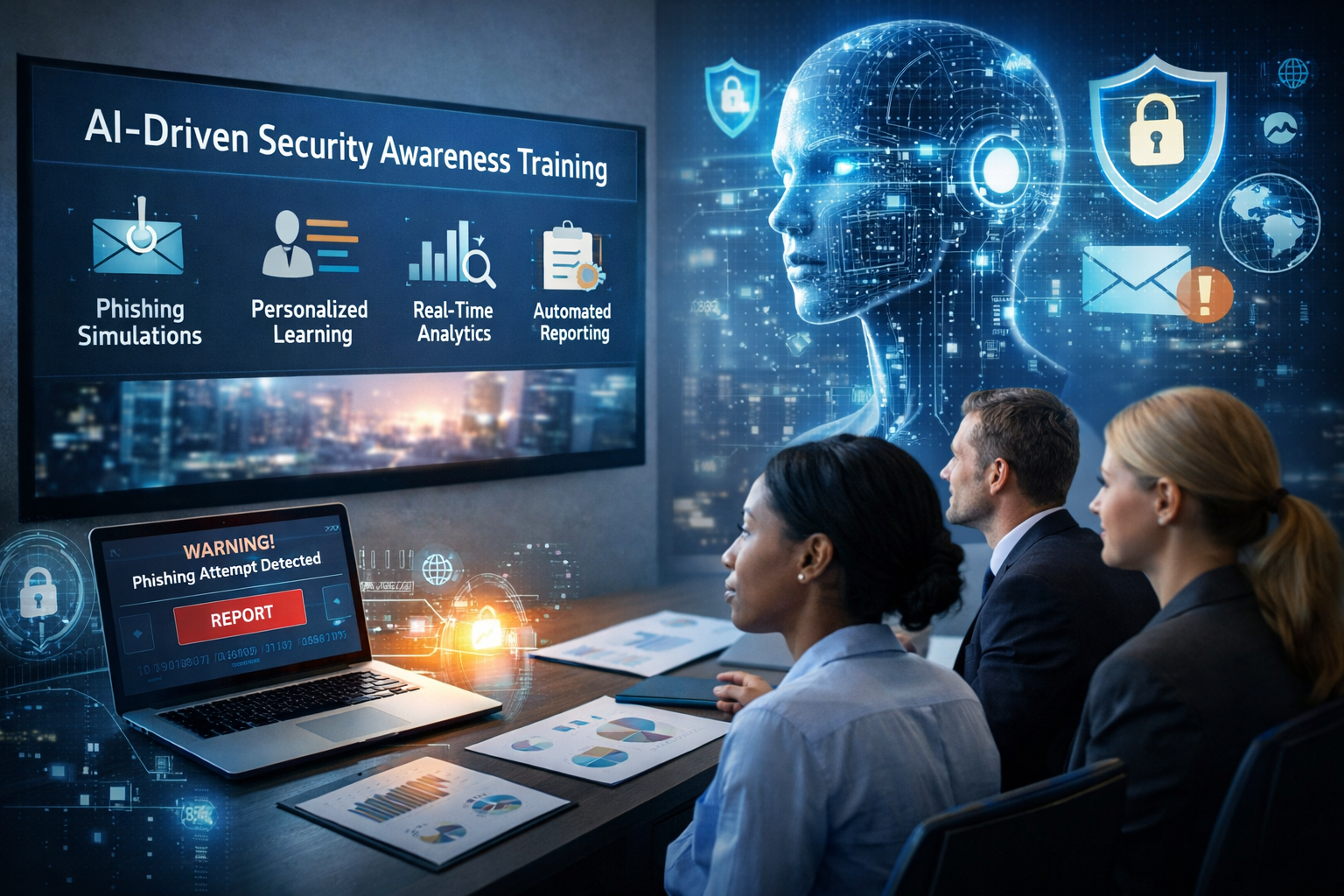
AI brings a wealth of capabilities that can significantly improve how organizations conduct security awareness training. Through machine learning algorithms and advanced data analytics, AI-powered training systems can adapt content in real-time based on individual learner performance, ensuring that training is personalized and relevant. Here’s how AI is revolutionizing security awareness training:
Personalized Learning
AI can tailor the training experience for each employee. By analyzing individual behavior, performance in simulations, and even past incidents, AI-powered platforms deliver content that focuses on an employee's specific weaknesses or potential vulnerabilities. This personalized approach is far more effective than generic training sessions. For instance, if an employee consistently fails phishing simulations, the system can recognize this pattern and offer more focused lessons or practical exercises to help them better recognize phishing attempts.
Real-Time Threat Simulation
AI enables organizations to simulate real-world cyber threats in a safe and controlled environment. These simulations can be tailored to mimic actual attacks, including phishing emails, malicious attachments, and social engineering attempts. By constantly evolving these simulations based on emerging trends, AI platforms ensure that employees receive the most up-to-date and relevant training possible. For example, AI can incorporate the latest phishing techniques, helping employees stay one step ahead of attackers.
Behavioral Analytics and Continuous Monitoring
AI-powered platforms provide continuous feedback, allowing security teams to monitor employee progress and behavior over time. The system can track how well employees perform during training and identify areas where they struggle. This ongoing data collection helps improve the overall effectiveness of training programs. Behavioral analytics can also identify employees who may be more prone to security lapses, allowing organizations to focus additional training or attention on high-risk individuals before they become a security liability.
Benefits of AI in Security Awareness Training
The integration of AI into security awareness training offers several tangible benefits:
- Adaptability: Training content evolves based on employee performance and the latest threat intelligence, ensuring that employees are always learning the most relevant skills.
- Scalability: AI-powered training platforms can be scaled across organizations of all sizes, delivering consistent and personalized training experiences to large and distributed workforces.
- Data-Driven Insights: Continuous monitoring and behavioral analytics allow security teams to identify weak spots in training programs and take proactive measures to address them.
- Reduced Human Error: By helping employees recognize and respond more effectively to security threats, AI-powered training can reduce the likelihood of costly security incidents caused by human error.
Challenges to Overcome
While the benefits are clear, the implementation of AI in security awareness training also comes with challenges. One of the main hurdles is the quality and quantity of data required to train AI models effectively. AI systems rely on large datasets to learn and adapt to new threats, which means they must continuously be fed accurate, up-to-date information. Moreover, there are privacy and ethical considerations. As AI platforms track employee behavior and performance, organizations must ensure that they respect privacy rights and comply with data protection regulations, such as GDPR.
The Future of AI in Security Awareness Training
Looking ahead, AI is poised to play an even greater role in security awareness training. As technology evolves, AI will continue to refine its ability to simulate complex, multi-faceted attacks and provide even more personalized learning experiences. Additionally, the integration of predictive analytics could enable AI systems to anticipate potential vulnerabilities before they become serious threats, allowing organizations to proactively address weak points in their security posture.
As more organizations recognize the importance of human behavior in their overall cybersecurity strategy, the need for advanced, adaptive, and AI-driven training will continue to grow. By combining the power of AI with proven cybersecurity education methods, organizations can build a robust defense against the ever-expanding range of cyber threats.
Conclusion
AI-powered security awareness training is an essential tool in the fight against modern cyber threats. It enhances traditional training programs by providing personalized, dynamic content that adapts to the learner's needs and simulates real-world attack scenarios. With its ability to reduce human error and improve employee engagement, AI-driven training is an invaluable asset for organizations looking to stay ahead of evolving cyber risks.