Introduction: Why Do Some Applications Survive Problems Easily?
Every application faces problems. Users make mistakes, servers slow down, data arrives in unexpected formats, and network connections fail. Yet some applications handle these situations calmly. They recover, inform the user clearly, and continue working. Others collapse completely over small issues.
This difference is not about luck or advanced features. It is about resilience. .NET full stack development focuses on building resilient applications—systems that expect problems, absorb them, and continue functioning without falling apart.
What Full Stack Development Really Builds
Full stack development does not just build functionality. It builds resilience across layers.
It ensures:
- User actions are handled safely
- Logic reacts correctly to unexpected inputs
- Data remains protected during failures
- The system recovers instead of collapsing
A full stack developer understands how resilience is distributed across the entire application.
Why .NET Is Commonly Used for Resilient Systems
.NET is designed around structure, predictability, and control.
In full stack systems, .NET supports resilience by:
- Encouraging layered architecture
- Promoting defensive programming
- Supporting structured error handling
- Making system behavior predictable
This structure helps applications remain stable even under stress.
Thinking in Failure Scenarios Instead of Happy Paths
Beginners often design applications assuming everything works perfectly. Full stack development changes this mindset.
Failure-aware thinking helps developers:
- Anticipate incorrect input
- Handle missing data safely
- Recover from unexpected states
- Prevent complete system crashes
Resilient software is built by preparing for failure, not ignoring it.
Front-End Layer: Resilience at the User Level
The front end is the first place where resilience matters.
Its responsibilities include:
- Preventing invalid input
- Providing clear feedback
- Handling slow or failed responses
- Keeping the user informed
A resilient front end reduces stress for both users and the backend.
Back-End Layer: Resilience in Logic Execution
The back end determines how failures are handled.
It is responsible for:
- Validating all inputs
- Protecting business rules
- Handling unexpected states
- Returning meaningful responses
In .NET full stack applications, the back end ensures that failures do not propagate uncontrollably.
Data Layer: Resilience in Information Storage
Data resilience is critical for long-term reliability.
The data layer ensures:
- Data integrity during partial failures
- Safe transactions
- Consistent updates
- Protection from corruption
Without resilient data handling, recovery becomes impossible.
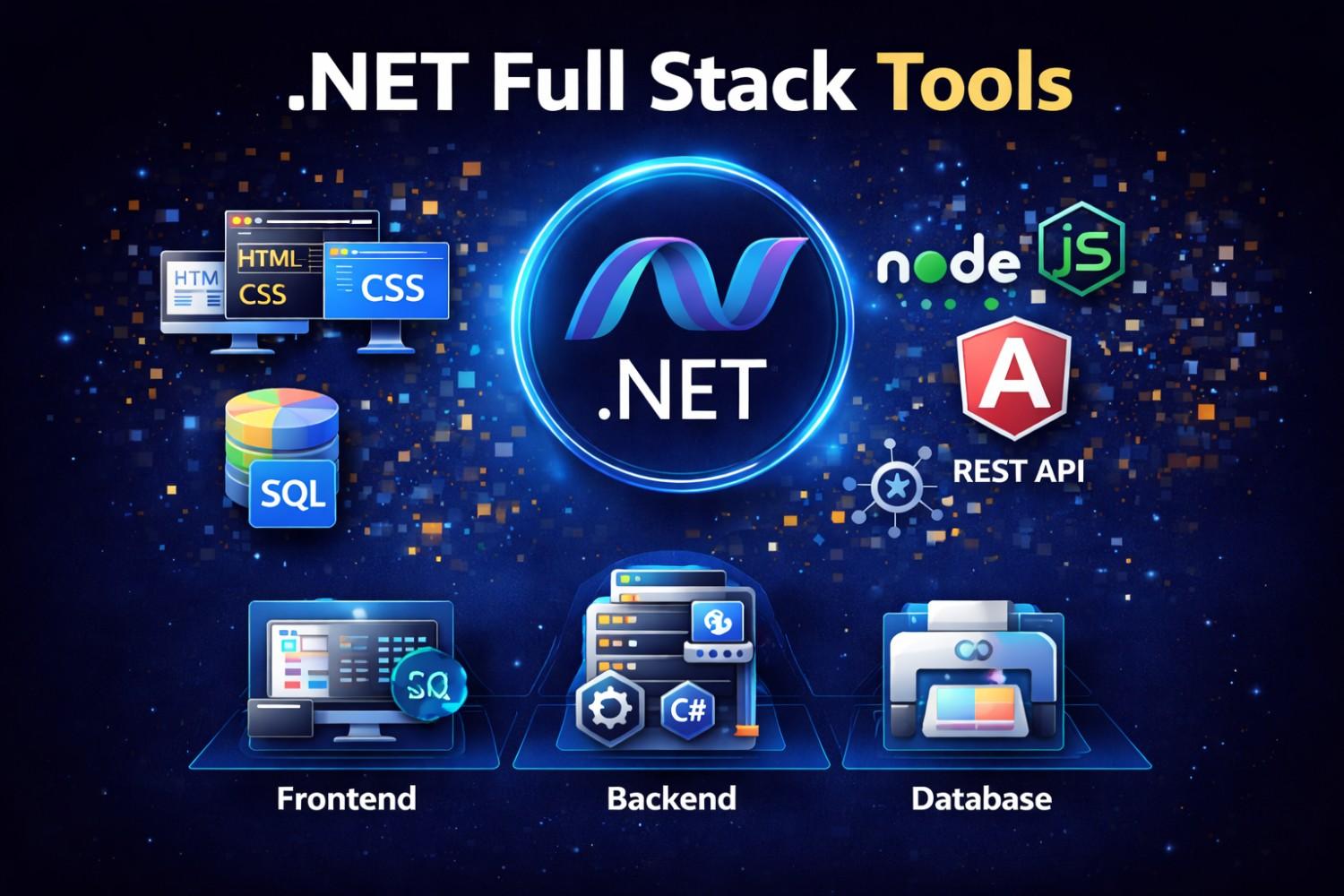
How Resilience Flows Through a Full Stack Application
Resilience is not added in one place; it flows across layers.
Typical flow:
- User performs an action
- Front end validates and prepares data
- Back end processes logic defensively
- Data layer ensures safe storage or retrieval
- System responds gracefully
- Each layer absorbs part of the failure risk.
Why Layer Isolation Improves Resilience
When layers are tightly coupled, failures spread quickly.
Clear isolation:
- Prevents chain reactions
- Limits failure impact
- Improves recovery speed
- Simplifies debugging
.NET promotes separation to improve fault tolerance.
Error Handling as a Resilience Strategy
Errors are not enemies; they are signals.
Resilient error handling:
- Prevents system crashes
- Logs useful information
- Communicates clearly with users
- Maintains application stability
- Ignoring errors reduces resilience dramatically.
- Security as Controlled Failure Prevention
- Security is about preventing harmful failures.
Full stack security resilience includes:
- Blocking malicious input
- Preventing unauthorized access
- Protecting sensitive data
- Monitoring abnormal behavior
- Security failures are among the most damaging system failures.
- Performance Under Stress
Performance is tested when systems are under load.
Resilient performance depends on:
- Controlled request handling
- Efficient backend logic
- Optimized data access
- Graceful degradation
A resilient system slows down safely instead of collapsing.
Debugging With a Resilience Mindset
Debugging resilient systems focuses on recovery paths.
Effective debugging involves:
- Identifying where recovery failed
- Tracing error propagation
- Checking fallback mechanisms
- Strengthening weak points
Most production bugs are resilience gaps.
How Full Stack Knowledge Improves Resilience
Full stack understanding naturally increases resilience.
Benefits include:
- Safer design decisions
- Better failure isolation
- Faster recovery
- Improved system confidence
Resilience improves when developers understand all layers.
Common Misunderstandings About .NET Full Stack
Full stack means handling everything manually
→ It means understanding where failures can occur
Frameworks prevent crashes automatically
→ Developers must design recovery paths
Errors should never happen
→ Errors are unavoidable; collapse is optional
Correct thinking leads to stronger systems.
Why Learn .NET Full Stack Development in Telugu?
.NET full stack concepts Telugu lo nerchukunte failure handling, system recovery, logic flow, data safety concepts clear ga ardham avutayi; language barrier lekunda real-world scenarios meeda focus pettagalugutaru, confidence perigedi, technical English confusion taggipoyi strong practical understanding build avutundi.
Who Can Learn .NET Full Stack Development?
This learning path suits:
- Students curious about how software survives problems
- Beginners entering application development
- Professionals improving system reliability
- Logical thinkers interested in robust design
- Persistence matters more than background.
How Resilience Develops During Learning
Resilience is learned step by step:
- Understanding control flow
- Handling validation errors
- Managing database failures
- Designing safe APIs
- Integrating recovery strategies
- Each stage builds confidence and stability.
- Ethics and Resilience in Software
Resilient systems protect users.
Ethical development includes:
- Preventing data loss
- Avoiding misleading behavior
- Designing safe defaults
- Preparing for worst-case scenarios
- Ethics and resilience are closely connected.
Full Stack Thinking Beyond Coding
Resilience-focused thinking improves:
- Risk analysis
- Problem solving
- Long-term planning
- System evaluation
It applies well beyond software development roles.
Why Resilient Full Stack Skills Stay Relevant
Technology evolves, but failures remain constant.
Full stack skills stay relevant because:
- Systems grow more complex
- User expectations increase
- Data value rises
- Downtime becomes costly
- Resilient design never loses importance.
Learning Beyond Tools and Frameworks
.NET full stack development teaches:
- How systems recover
- How failures are contained
- How data integrity is preserved
- How structure prevents collapse
These lessons remain valuable across all technologies.
Conclusion: Are You Ready to Build Software That Can Withstand Failure?
.NET full stack development is about building software that does not panic when things go wrong. It replaces fragile designs with resilient systems that recover, protect users, and maintain trust.
If real-world software always faces unexpected problems, shouldn’t you learn how to design for them?
If reliable applications are defined by how they recover, shouldn’t you understand resilience across layers?
And if learning .NET full stack development in Telugu makes this understanding clearer and more confident, is now the right time to move from writing working code to building software that truly survives real-world conditions?