Weather data has quietly become a critical dependency in modern software systems. From logistics platforms predicting delivery delays to travel apps adjusting recommendations in real time, accurate weather information powers decisions across industries. For developers and technology teams, integrating reliable weather data is no longer a “nice to have”—it’s a core infrastructure choice.
Yet not all weather APIs are created equal. Performance, data coverage, update frequency, scalability, and documentation quality can make or break an application in production. This guide explores how developers and API-driven businesses should evaluate weather data solutions, what technical factors matter most, and how to choose an API that supports long-term growth.
Whether you’re building a startup product, enhancing an existing platform, or contributing to an API community project, this article will help you make informed decisions based on real-world engineering needs.
Why Weather Data Matters in Modern Applications
Weather data impacts far more than weather apps. Today, it influences:
Transportation & logistics – route planning, delay prediction, fuel optimization
E-commerce – dynamic demand forecasting and regional promotions
Agritech platforms – irrigation scheduling and crop risk analysis
Travel & hospitality – pricing models and customer experience
Smart cities & IoT systems – environmental monitoring and automation
Developers are often tasked with integrating weather data deep into business logic. When the data is unreliable, delayed, or inaccurate, the downstream impact can be severe—missed SLAs, broken user experiences, and lost revenue.
This is why selecting a dependable api weather solution is more than a technical choice; it’s an architectural decision.
Key Factors Developers Should Evaluate Before Choosing a Weather API
Before integrating any external service, engineers should assess it through a technical and operational lens. Below are the most important criteria.
1. Data Accuracy and Source Reliability
Weather data typically comes from a mix of meteorological stations, satellites, radar systems, and forecast models. The best providers aggregate multiple sources and apply validation layers to improve accuracy.
Questions developers should ask:
How frequently is the data refreshed?
Is historical data validated or adjusted over time?
Are multiple data sources combined or relied upon individually?
Reliable providers clearly explain where their data comes from and how it’s processed.
2. Geographic Coverage and Localization
Not all APIs provide equal coverage worldwide. Some are strong in North America but weaker in parts of Asia, Africa, or South America.
For global products, this matters a lot.
Check for:
Country and city-level coverage
Support for latitude/longitude queries
Consistency of data across regions
Time zone normalization
If your users are global, gaps in coverage can quickly turn into support issues.
3. API Performance and Latency
From a developer’s perspective, response time matters. Slow APIs introduce bottlenecks, especially when weather data is used in real-time workflows.
Look for:
Low-latency global infrastructure
Caching strategies
Clear rate limit policies
SLA or uptime guarantees
High-performing weather APIs are built to scale under load, not just handle hobby projects.
4. Forecast Depth and Data Types
Different applications require different levels of detail. Some only need current conditions, while others depend on hourly, daily, or long-range forecasts.
A strong provider should offer:
Current weather conditions
Hourly forecasts
Daily and multi-day forecasts
Historical weather data
Specialized metrics (humidity, UV index, wind gusts, precipitation probability)
Having access to multiple data types reduces the need to switch providers as your product evolves.
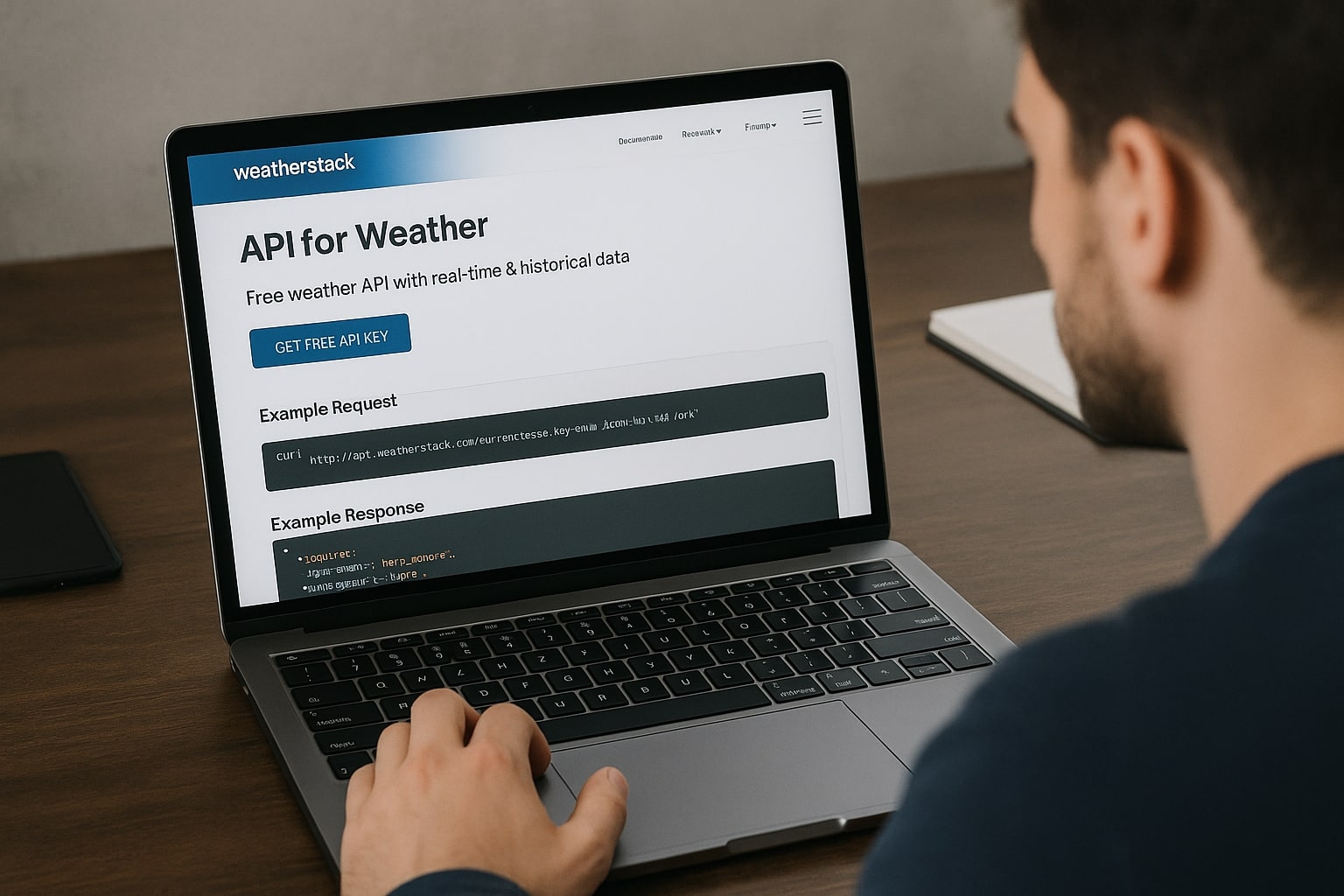
5. Developer Experience and Documentation
Good documentation saves hours—sometimes days—of development time.
From a technical standpoint, developers should look for:
Clear endpoint definitions
Request and response examples
Error handling documentation
SDKs or sample code
Versioning and changelog transparency
The best weather APIs feel like they were built by developers, for developers.
REST APIs and Integration Patterns
Most weather data services follow REST principles, making them easy to integrate into modern tech stacks.
Typical integration flows include:
Frontend apps fetching weather data via backend proxies
Server-side enrichment of business logic
Scheduled background jobs for forecasts and alerts
Event-driven triggers based on weather conditions
Developers should also consider how weather data fits into caching layers, microservices, and serverless architectures.
Security, Rate Limits, and Access Control
Weather data may seem harmless, but access control still matters—especially for commercial products.
Key security considerations:
API key management
HTTPS enforcement
Rate limiting transparency
Abuse prevention mechanisms
For teams working in regulated environments, compliance and data handling practices are also worth reviewing.
Cost Structure and Scaling Considerations
Pricing models vary widely. Some APIs charge per request, others per data type or usage tier.
Developers and product managers should evaluate:
Free tier limitations
Overage costs
Scaling predictability
Long-term pricing stability
Choosing a solution that scales smoothly avoids painful migrations later.
This is especially important when comparing the best weather apis for production use rather than experimentation.
Real-World Use Cases in Developer Ecosystems
SaaS Platforms
Weather data enhances analytics, user personalization, and operational planning.
Mobile Applications
Accurate forecasts improve engagement and retention, especially when tied to location-based features.
IoT and Embedded Systems
Weather inputs drive automation in agriculture, energy management, and smart infrastructure.
Data Science and Analytics
Historical and forecast data feeds predictive models and trend analysis.
Across these scenarios, reliability and consistency matter more than flashy features.
Avoiding Common Integration Mistakes
Even experienced developers can run into issues when integrating weather services. Common pitfalls include:
Hardcoding assumptions about data formats
Ignoring edge cases like missing data
Over-fetching unnecessary endpoints
Not handling rate limit errors gracefully
Relying on undocumented fields
Treat weather APIs like any other critical dependency: abstract them properly, monitor usage, and plan for failure scenarios.
How Weather APIs Fit into Modern API Marketplaces
API marketplaces have changed how developers discover and evaluate services. Instead of building everything from scratch, teams now compose applications from specialized APIs.
Within these ecosystems, weather APIs are often paired with:
Mapping and geolocation services
Notification and messaging APIs
Analytics platforms
IoT device management systems
This modular approach speeds up development while maintaining flexibility.
Choosing a Long-Term Weather Data Partner
Short-term testing is easy. Long-term reliability is harder to evaluate.
Before committing, consider:
Provider track record
Update frequency and roadmap
Backward compatibility policies
Community presence and support responsiveness
A stable api weather provider becomes part of your technical foundation, not just another dependency.
Frequently Asked Questions
What data formats do weather APIs usually support?
Most services return data in JSON, which integrates easily with web and mobile applications. Some also offer XML or CSV for specific use cases.
Can weather APIs be used for commercial applications?
Yes, many providers offer commercial licenses with scalable pricing tiers suitable for production environments.
How accurate are weather forecasts from APIs?
Accuracy depends on data sources, models, and update frequency. Aggregated data from multiple sources generally produces better results.
Do weather APIs support historical data?
Many services provide historical weather records, which are useful for analytics, reporting, and machine learning models.
How do developers handle API downtime?
Best practices include caching recent responses, implementing fallback logic, and monitoring provider status pages.
Is it possible to use multiple weather APIs together?
Yes. Some applications use multiple providers for redundancy or regional optimization, though this adds complexity.
Final Thoughts
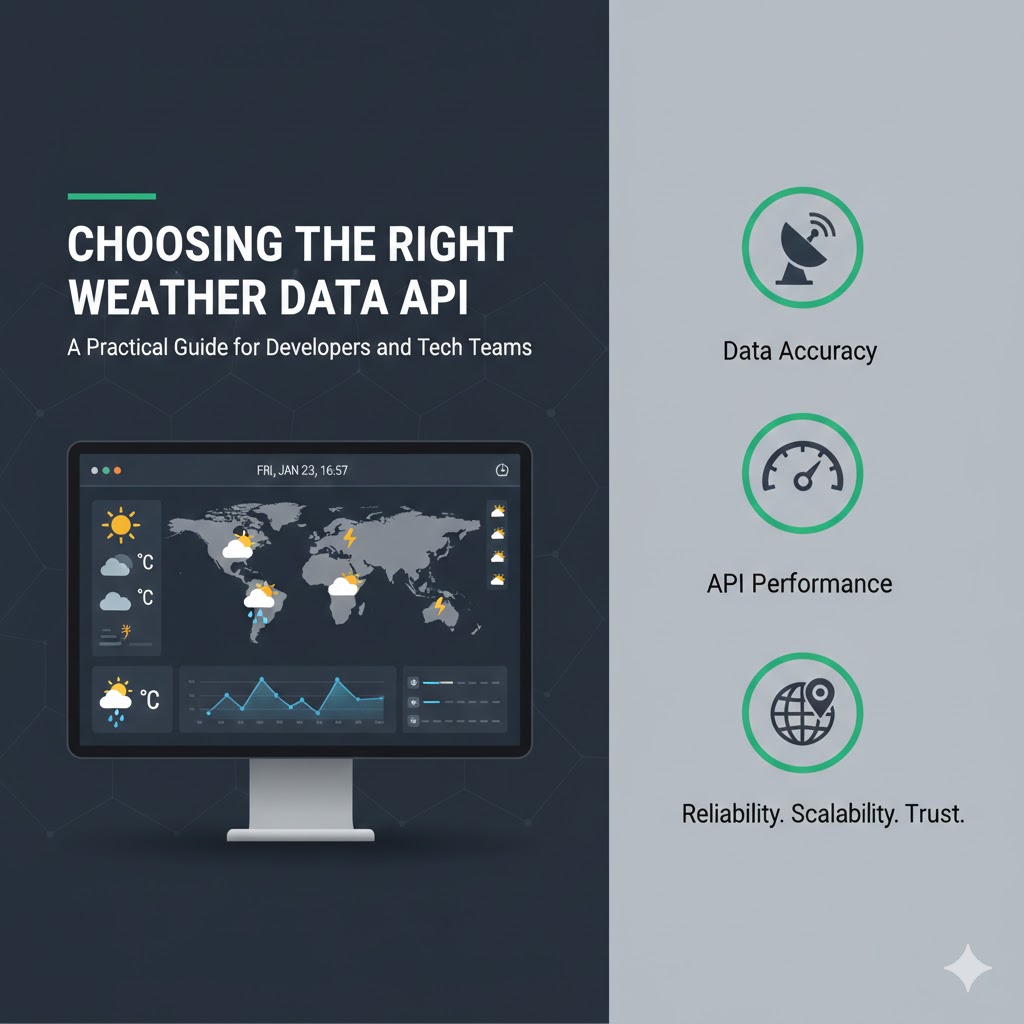
Weather data may seem straightforward, but integrating it correctly requires careful planning. Developers must balance accuracy, performance, scalability, and usability—while ensuring the solution aligns with long-term product goals.
By focusing on technical fundamentals rather than marketing claims, teams can confidently select from the best weather apis available today and build applications that remain reliable under real-world conditions.
In a world where data-driven decisions define competitive advantage, choosing the right weather API is not just about forecasts—it’s about building resilient, intelligent systems that users can trust.