Cashmere has long been associated with luxury, softness, and timeless appeal. For brands, retailers, and importers, sourcing cashmere is not just about finding a supplier; it’s about choosing the right partner. One of the most common questions buyers ask is: Should I work with a cashmere wholesaler or a manufacturer?
At first glance, the two may seem similar. Both deal in cashmere products, both supply in bulk, and both serve B2B buyers. But in reality, their roles, responsibilities, pricing structures, and flexibility are quite different. Understanding this difference can save time, reduce sourcing risks, and directly impact product quality and margins.
Let’s break it down clearly.
Understanding the Cashmere Supply Chain
Before comparing wholesalers and manufacturers, it helps to understand where they sit in the supply chain.
The typical cashmere journey looks like this:
- Raw cashmere fiber sourcing
- Processing and dehairing
- Spinning into yarn
- Knitting or weaving
- Dyeing, finishing, and quality control
- Packaging and distribution
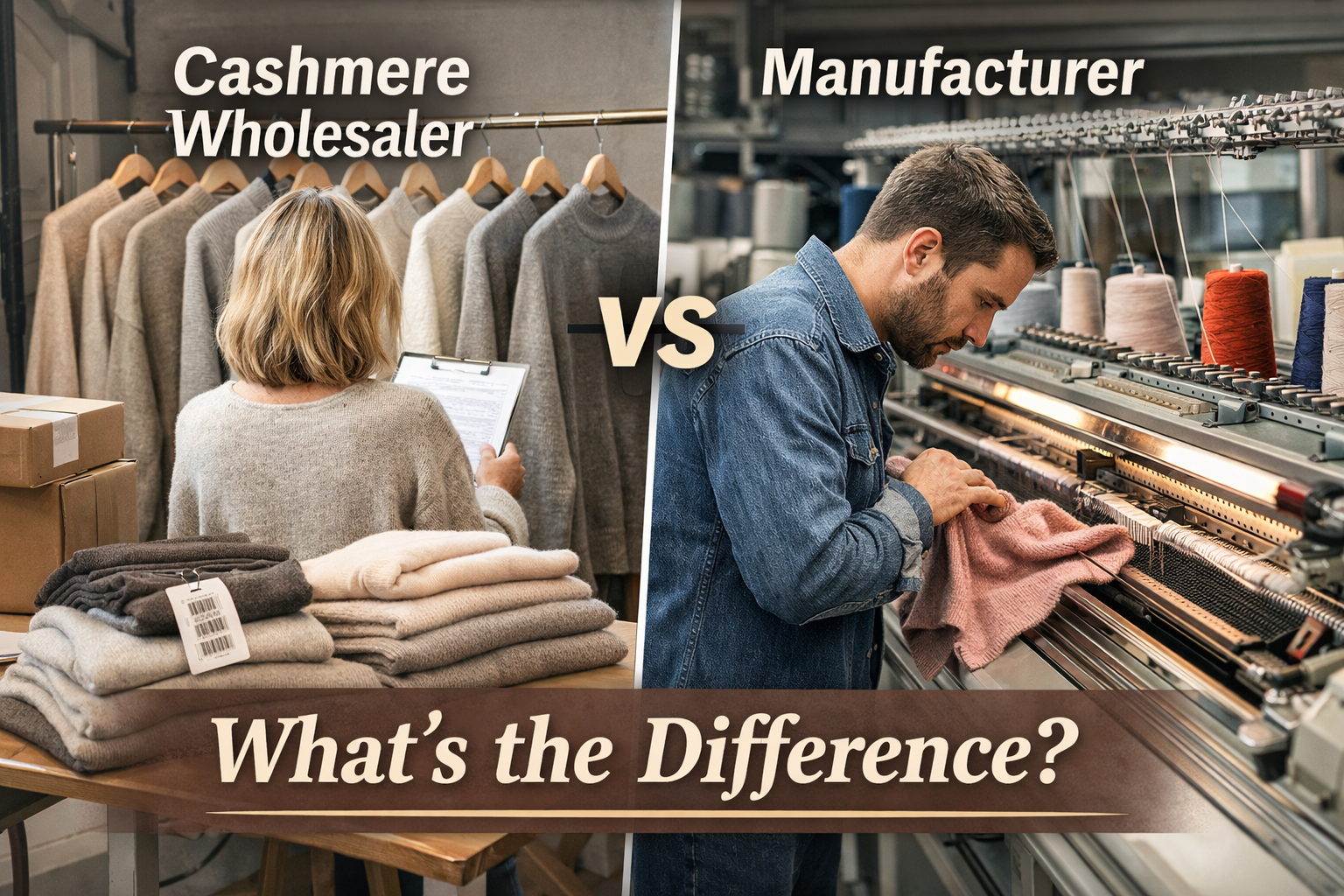
Manufacturers usually handle several of these stages internally. Wholesalers, on the other hand, operate further down the chain, focusing on distribution, consolidation, and ready-to-supply inventory.
What Is a Cashmere Manufacturer?
A cashmere manufacturer is directly involved in producing the product. This often includes spinning yarn, knitting garments, weaving fabrics, finishing, and quality testing.
Key Characteristics of a Cashmere Manufacturer
- Owns or operates production facilities
- Handles raw material sourcing or yarn processing
- Offers customization (design, GSM, blends, sizes, colors)
- Works on made-to-order or private label projects
- Requires higher minimum order quantities (MOQs)
- Longer production lead times
Manufacturers are ideal for brands that want full control over product design and specifications.
When a Manufacturer Makes Sense
Working with a manufacturer is best if:
- You are launching a private label brand
- You need exclusive designs or constructions
- You have predictable volumes
- You can manage longer timelines
However, manufacturers often expect buyers to have technical clarity of fabric specs, measurements, color codes, and compliance standards.
What Is a Cashmere Wholesaler?
A cashmere wholesaler acts as a bridge between manufacturers and buyers. Wholesalers typically stock finished cashmere products or standardized yarns and supply them in bulk at competitive prices.
Key Characteristics of a Cashmere Wholesaler
- Sources from multiple manufacturers
- Maintains a ready inventory
- Offers faster delivery
- Lower MOQs compared to manufacturers
- Simplified buying process
- Focus on consistency and availability
Rather than creating from scratch, wholesalers help buyers source efficiently.
When a Wholesaler Makes Sense
A cashmere wholesaler is ideal if:
- You need a faster turnaround
- You want to test new markets
- You prefer a lower upfront investment
- You don’t need heavy customization
- You want predictable quality
This is why many retailers, exporters, and boutique brands prefer working with wholesalers for ongoing supply.
Pricing Differences: Wholesaler vs Manufacturer
Pricing is often the deciding factor, but it’s important to understand why prices differ.
Manufacturer Pricing
- Lower per-unit cost at high volumes
- Higher upfront investment
- Tooling, sampling, and development costs
- Economical only when ordering in bulk
Wholesaler Pricing
- Slightly higher per-unit cost
- No development or sampling charges
- Better cash flow flexibility
- Ideal for smaller or repeat orders
In many real-world cases, wholesalers provide better value when time, logistics, and risk are factored in.
Quality Control: Who Does It Better?
Both wholesalers and manufacturers can deliver excellent quality, but the approach differs.
Manufacturers control production directly, which allows:
- Custom quality benchmarks
- Fiber-level control
- Specialized finishes
Wholesalers focus on:
- Supplier audits
- Batch consistency
- Pre-shipment inspection
- Standardized quality across lots
Established wholesalers like Jindaltex work closely with vetted manufacturing partners, ensuring products meet export standards without forcing buyers to manage factory-level complexities.
Where Jindaltex Fits In?
Jindaltex operates in a space that many buyers find ideal, offering the reliability of a wholesaler with the quality mindset of a manufacturer.
By partnering with trusted cashmere producers and maintaining strict quality checks, Jindaltex helps buyers access premium cashmere without the typical sourcing headaches. For retailers, exporters, and international buyers, this approach means:
- Consistent product quality
- Competitive wholesale pricing
- Faster order fulfillment
- Reduced sourcing risk
- Professional buyer support
Rather than forcing buyers to choose between flexibility and quality, Jindaltex balances both.
Which Option Is Better for Your Business?
There’s no one-size-fits-all answer. The right choice depends on your business model.
Choose a Cashmere Manufacturer If:
- You want unique designs
- You plan long production runs
- You control branding and packaging
- You have strong technical knowledge
Choose a Cashmere Wholesaler If:
- You value speed and reliability
- You need manageable MOQs
- You want stable pricing
- You prefer simplified sourcing
Many successful businesses start with wholesalers and move to manufacturers once volumes grow.
Common Buyer Mistakes to Avoid
Regardless of which option you choose, avoid these common pitfalls:
- Confusing “low price” with “best value.”
- Ignoring lead times and logistics
- Overcommitting on first orders
- Skipping quality certifications
- Working without clear specifications
Experienced partners help buyers avoid these mistakes early.
Final Thoughts
Understanding the difference between a cashmere wholesaler and a manufacturer is essential for making smart sourcing decisions. Manufacturers offer control and customization, while wholesalers provide speed, flexibility, and lower risk.
For many buyers, especially in competitive international markets, working with a reliable wholesaler like Jindaltex offers the best balance of quality, pricing, and service.
When your sourcing strategy matches your business goals, cashmere becomes not just a luxury product but a reliable growth category.
FAQs
1. What is the main difference between a cashmere wholesaler and a manufacturer?
A cashmere manufacturer produces garments or yarn from raw materials, while a wholesaler sources finished products from manufacturers and supplies them in bulk. Wholesalers focus on availability, faster delivery, and lower minimum order quantities.
2. Is it better to buy cashmere from a wholesaler or manufacturer?
It depends on your needs. Manufacturers are better for custom designs and large volumes, while wholesalers are ideal for faster sourcing, lower risk, and flexible order sizes, especially for retailers and importers.
3. Do cashmere wholesalers offer good-quality products?
Yes, established cashmere wholesalers work with vetted manufacturers and conduct quality checks to ensure consistency. Reputable wholesalers like Jindaltex focus on reliable sourcing and export-ready quality standards.
4. Are cashmere wholesalers more expensive than manufacturers?
Wholesalers may have a slightly higher per-unit cost, but they often reduce overall expenses by eliminating development costs, long lead times, and high MOQs, making them cost-effective for many buyers.
5. Can I get private-label cashmere from a wholesaler?
Some cashmere wholesalers offer limited private labeling options, such as branding, packaging, or labeling. Full customization is usually handled by manufacturers, but wholesalers can support simpler branding needs.
6. What are the advantages of working with a cashmere wholesaler?
Key advantages include faster delivery, lower minimum order quantities, easier sourcing, consistent quality, and reduced operational risk—ideal for businesses that want efficiency without managing production directly.
7. Who should work with a cashmere manufacturer?
Brands seeking exclusive designs, custom fabric specifications, or long production runs benefit most from working directly with cashmere manufacturers, provided they can manage larger volumes and longer timelines.
8. How do I choose a reliable cashmere wholesaler?
Look for experience, transparent sourcing, quality control processes, export capability, and strong buyer support. A supplier like Jindaltex demonstrates reliability through consistent quality and professional service.
9. Do cashmere wholesalers handle international shipping?
Yes, most professional cashmere wholesalers support international shipping and export documentation, making them suitable partners for global retailers and importers.
10. Can wholesalers support small or growing cashmere brands?
Absolutely. Wholesalers are often the best option for small or growing brands because they allow testing markets with lower investment and flexible order sizes.