

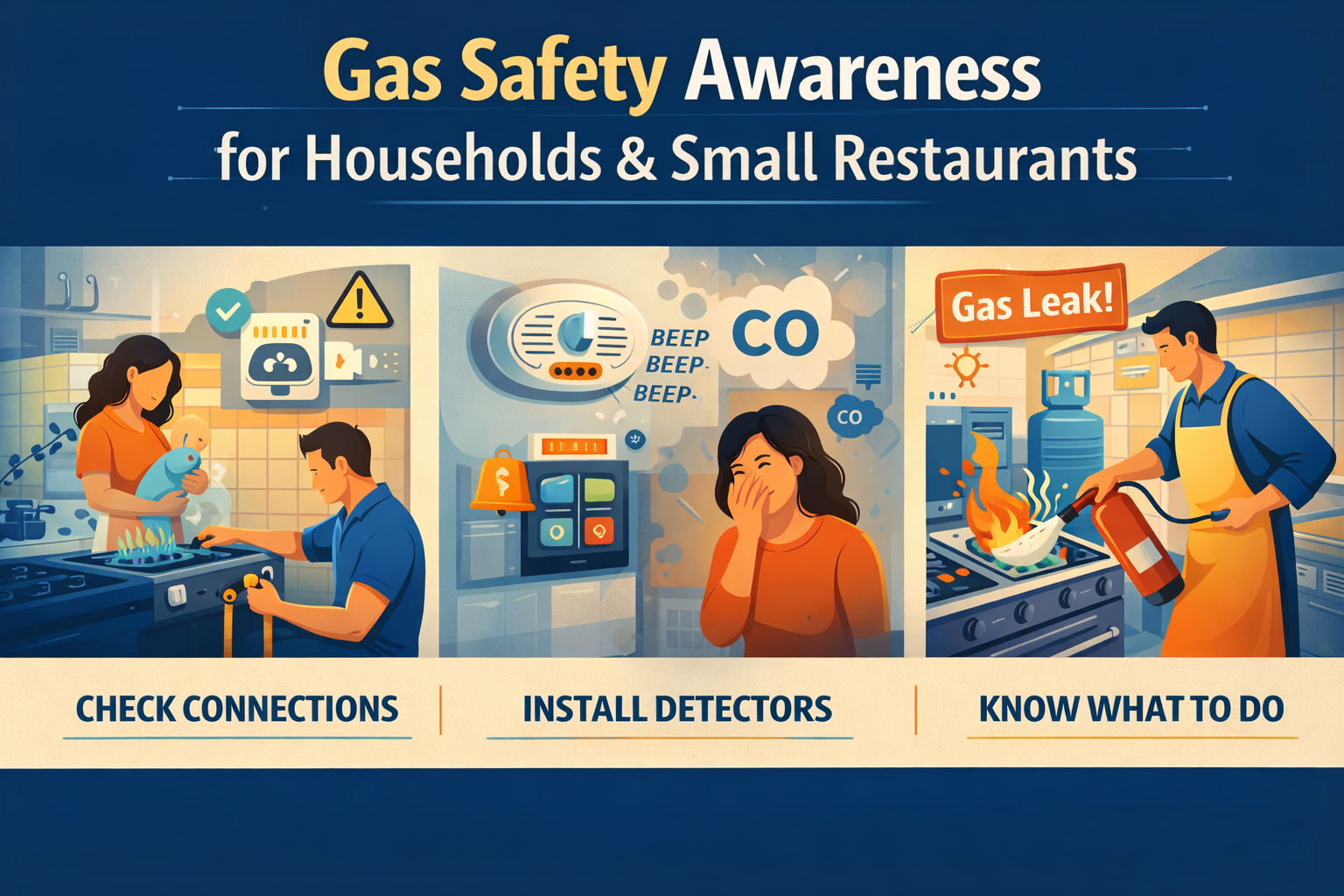
Liquefied Petroleum Gas (LPG) is one of the most widely used cooking fuels in households and small restaurants. It is used daily, often for long hours, and usually without much thought once the connection is installed. This routine use can create a false sense of safety, where the basic precautions are overlooked until a major problem occurs.
Most gas-related incidents are not the result of defective cylinders. They happen due to improper installation, worn-out hoses, poor ventilation, and lack of regular checks. In many cases, warning signs such as weak flames, gas smell, or loose fittings are ignored because they do not appear urgent at first.
While a licensed gas agency is responsible for providing certified cylinders and regulators, safety does not end at delivery. The responsibility continues with correct usage, routine inspection, and informed handling of gas equipment.
In this blog, we will learn about the safety awareness related to cooking LPG and how gas agencies spread awareness to users about safe handling and usage.
How gas systems function in homes and small restaurants
LPG gas is stored under pressure inside a cylinder. When the regulator is opened, gas flows through a rubber hose to the stove or burner. This flow is safe only when every part in between—the cylinder valve, regulator, hose, and burner—is in proper working condition.
In a household kitchen, gas is usually used for a few hours a day. The load on the system is low, and problems develop slowly.
In small restaurants, the situation is different. Multiple burners run for long hours, cylinders are changed frequently, and the system is under constant pressure. Because of this, small issues like loose joints, worn-out hoses, or slightly damaged regulators can quickly turn into safety risks if they are ignored.
A gas agency supplies certified cylinders and approved accessories, but safety does not stop at delivery. It depends on how the system is installed and maintained after delivery.
Common gas safety risks in households
In residential kitchens, gas safety risks usually develop over time rather than appearing suddenly. Let us take a look at some common reasons why LPG gas might pose a safety threat in household kitchens.
Ageing and poorly maintained gas accessories
Many households continue using the same gas setup for years without inspection, assuming everything is safe as long as the stove works. This assumption is one of the main causes of domestic gas accidents.
Rubber hoses start to harden. Regulators loosen with repeated use. Burner ports get blocked due to grease and food residue. These issues may not stop cooking immediately, which is why they are often ignored. However, worn-out components increase the risk of slow gas leaks and uneven combustion.
Improper installation and loose connections
Incorrectly fitted regulators or loosely connected hoses are another common risk in residential kitchens. Even a minor gap at the connection point allows gas to escape gradually. If it is a minor leak, it may not be detected immediately but can increase danger slowly.
Lack of adequate ventilation
Poor ventilation increases gas safety risk in homes. LPG is heavier than air and settles near the floor when it leaks. In enclosed kitchens without windows or exhaust outlets, gas can accumulate. Even a small leak can quickly create a hazardous environment.
False sense of safety
Many households assume that if the stove lights properly, the system is safe. This belief is misleading. Gas safety awareness at home requires understanding that not all risks are visible.
Gas safety challenges in small restaurants
Now, let’s see some common reasons why LPG gas might pose a safety threat in commercial restaurant kitchens.
Continuous usage
In small restaurants, gas systems operate for long hours every day. Multiple burners are used at the same time, which places continuous pressure on hoses, regulators, and burner fittings. This causes gas accessories to wear out faster than in household kitchens and increase safety risks.
High-temperature and congested kitchen conditions
Most small restaurant kitchens heat up fast because cooking goes on throughout the day. The space is usually tight, and ventilation is not sufficient. This continuous heat starts affecting rubber hoses and regulator seals, even if nothing looks wrong at first glance.
Grease accumulation near gas lines
In small restaurant kitchens, grease often builds up around burners, gas pipelines, and stove surfaces. Grease is highly flammable and can catch fire easily.
Untrained staff handling gas connections
It is seen that gas cylinder replacement and regulator handling are carried out by staff who have not received proper training. Incorrect fitting, rough handling, or ignoring gas smells and unusual flame behaviour are common issues. During busy working hours, safety instructions provided by the gas agency may be overlooked, increasing the risk of avoidable accidents.
5 safety awareness tips most LPG consumers ignore
Here are some tips which every LPG consumer should know.
1. Never assume a new cylinder is risk-free
Many people believe a newly delivered cylinder is automatically safe. In reality, minor valve issues or seal problems can exist. After every new cylinder connection, stay in the kitchen for a few minutes and observe the smell, sound, and flame behaviour. Early attention prevents unnoticed leaks.
2. Avoid using gas equipment as storage support
In many kitchens, cloths, utensils, or containers are hung on or placed over gas pipes and regulators. This adds pressure to joints and hides early signs of leakage. Gas fittings should never be used to hold or support any item, no matter how light it seems.
3. Check for heat damage, not just leaks
Gas accessories often fail due to heat damage rather than leaks. Regulators and hoses placed near hot surfaces may harden or weaken internally. Regularly check whether hoses feel unusually stiff or brittle, even if there is no gas smell.
4. Never adjust gas flow to control flame size
Some users partially close the regulator to reduce flame size instead of using the stove control. This creates uneven gas pressure and increases the chance of leakage at the regulator joint. Flame control should always be done using the stove knob, not the regulator.
5. Do not delay action because the smell is faint
A mild gas smell is often ignored because it disappears quickly. This usually indicates a slow, continuous leak. Repeated faint smells are more dangerous than a strong, sudden leak because they go unnoticed for longer periods.
Final note
Gas safety is not only about following rules; it depends on noticing small, unusual changes and taking action early. When such signs appear, contact your nearby gas agency to inspect the system and address issues before they turn into serious safety risks.
Frequently Asked Questions
1. How can LPG users check if their connection is safe?
Ans. Users should check whether the regulator fits properly, the hose is not cracked or stiff, and the flame burns blue. If they notice a gas smell or weak flame, they should stop using the stove and contact their nearby gas agency.
2. What should be done immediately if a gas smell is noticed?
Ans. The regulator should be turned off immediately, and all doors and windows should be opened for ventilation. Electrical switches should not be used. After ventilating the area, the nearby gas agency should be contacted for inspection.
3. When should LPG hoses and regulators be replaced?
Ans. LPG hoses should be replaced within the recommended period, even if they appear intact. Regulators should be checked regularly for proper fitting, and guidance from the gas agency should be taken when in doubt.