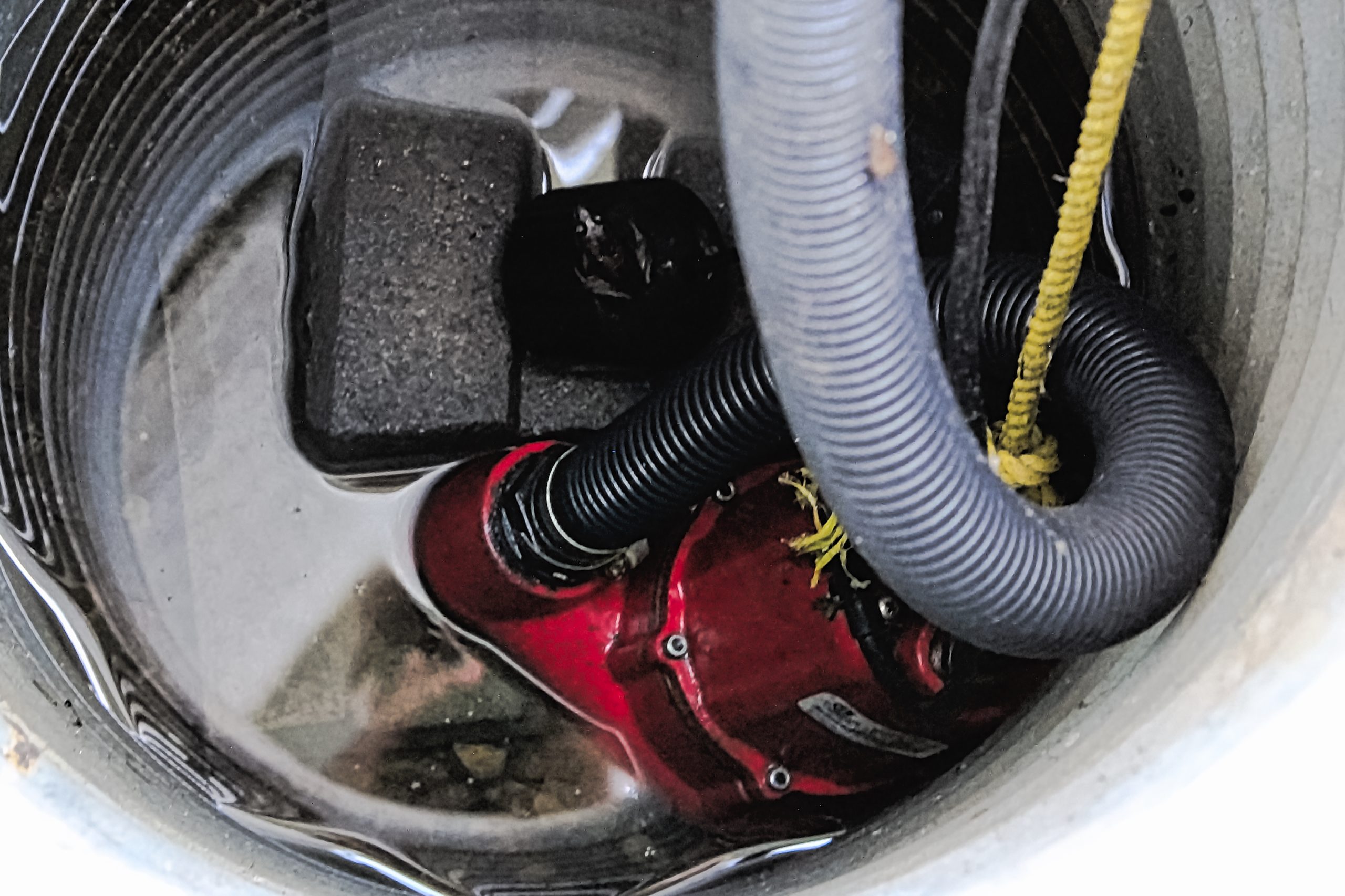
A frozen discharge line can turn a dependable sump system into a basement flood alarm overnight. I’ve seen garages filled with slush, finished basements ruined, and pumps burned out after running dead-headed against an ice plug. In cold climates, ice in the discharge line is the number-one preventable cause of winter sump failures—period. Misplaced slope, wrong pipe, missing air-break, or a check valve set in the wrong location all conspire to lock water in the run where it freezes solid.
Meet the Galváns—Rafael (39), a high school science teacher, and his spouse, Lila (37), a nurse—raising their kids Mateo (9) and Sofía (6) on five wooded acres outside Saranac Lake, New York. Their basement sump had worked fine through fall. Then the January thaw hit, followed by a hard freeze. At 2 a.m., Rafael stepped onto wet carpet. The existing system used a plastic-bodied budget pump and a discharge that pitched back toward the house. A frozen plug outside, combined with a stuck check valve inside, trapped a vertical column of water. When the pump kicked on, it dead-headed, overheated, and failed.
This checklist is exactly what the Galváns needed: slope, pipe, venting, check valve placement, backflow control, short-cycle prevention, and smart controls—plus a proven, heavy-duty Myers sump setup that won’t quit when temperatures swing. We’ll cover the essentials:
Pitching your line so it drains dry after each cycle Choosing cold-proof pipe and fittings Placing your check valve so water can bleed out Installing a freeze-resistant air-gap and splash zone Routing, depth, and insulation that beat arctic snaps A cold-climate discharge strategy with relief Power, controls, and alarms that save basements Backflow and code compliance without headaches Proper sizing and head calculations for reliable ejection Winterization do’s and don’ts from decades in the field
At Plumbing Supply And More (PSAM), we ship Myers Pumps same day when the water is rising. The models I specify are engineered for abuse: 300 series stainless hardware, robust motor windings, and smart accessories. I’ll also explain where Myers surpasses common alternatives and why that matters when pipes ice up. Let’s keep your basement dry—no matter what January throws at it.
#1. Set the Right Discharge Slope – 1/8"–1/4" Per Foot With 1-1/4" NPT, Check Valve, and Air-Break
If your discharge line doesn’t drain empty, it will freeze. Pitch is the difference between a sump that survives winter and one that fails on the coldest night of the year.
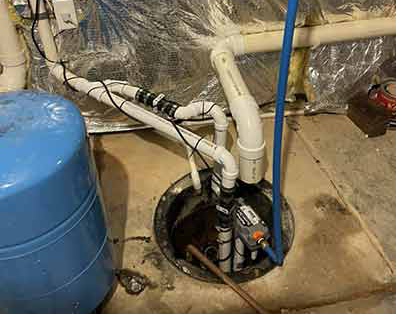
Technically, a sump discharge acts like a small-pressure drain line. Start with a 1-1/4" NPT discharge at the Myers sump pump outlet, immediately followed by a check valve rated for vertical service. From there, drive a continuous downhill slope to daylight: 1/8" per foot minimum; 1/4" per foot is my cold-climate preference. Any bellies collect water and form ice lenses. Terminate with an air-break or splash zone that can’t ice shut—no submerged outlets, no buried termination without anti-freeze measures. If you must run horizontal, keep it short, oversized, and absolutely pitched away from the house.
In the Galváns’ case, the old line rose over a foundation sill then sagged back. We re-piped with rigid, sloped discharge and a curb-side air-gap. The result: every cycle drains clear, no trapped water, no ice slugs.
Why 1/8"–1/4" Per Foot Is Non-Negotiable
A modest pitch over a 30-foot run can eliminate over a gallon of retained water. In sub-zero temps, that gallon freezes into a solid plug. Maintain consistent slope with rigid supports every 4–6 feet. Avoid heat-trap dead ends. When in doubt, add slope or step up to 1-1/2" pipe on long runs.
Check Valve Before the Rise, Not After
Install a quality check within 12–18 inches of the pump. Place it before the vertical lift so the riser drains toward the pump pit. Use a union-style, serviceable model and orient arrows correctly. This small detail prevents a permanent water column poised to freeze.
Air-Gap/Splash Stone That Can’t Ice Shut
Terminate into an above-grade air-gap aimed at a crushed stone splash bed. Even in single digits, airflow around the outlet minimizes ice. Avoid tight elbows and small openings at the termination; keep the exit wide and exposed.
Key takeaway: Gravity is your freeze shield. If the line drains, ice can’t form. Build the slope once and stop winter call-backs.

#2. Choose Cold-Proof Materials – 300 Series Stainless Hardware, Rigid PVC, and Threaded Assembly
Pipe and fittings matter. Flexible hose kinks under snow load and creates ice pockets. Thin thermoplastic fittings crack. Use durable materials that hold pitch and survive freeze-thaw cycles.
On the pump end, Myers Pumps use robust mounting hardware and corrosion-resistant components. A threaded assembly at the discharge makes service straightforward. For the line, schedule 40 PVC is the workhorse: rigid enough to maintain pitch, smooth enough to shed ice, and easy to insulate. Glue joints properly primed and solvent-welded won’t seep or trap water. Where unions are needed, use true unions with EPDM seats rated for cold service.
Lila and Rafael’s previous setup used corrugated tubing zip-tied along a fence. Snow drifted, tubing sagged, ice formed, and the outlet plugged overnight. Rigid PVC fixed all that and gave us consistent fall from the sill to daylight.
PVC vs Corrugated: No Contest in Winter
Corrugated adds friction loss, collects silt, and holds water in valleys. Schedule 40 PVC maintains smooth bore and predictable hydraulics. Even if a small section sees frost, thaw happens faster on smooth pipe than in corrugations.
Stainless Fasteners and Exterior Supports
Use 300 series stainless steel screws and straps outside. Galvanized hardware rusts, loosens, and allows sag. Stainless keeps your slope exactly where you set it—year after year.
Threaded Service Points
Create a threaded disconnect near the termination to swap ends or add a temporary thaw device. Threaded options make cold-weather adjustments fast and clean.
Key takeaway: Material choices set the stage. Rigid, smooth, stainless-supported runs drain cleanly and shrug off winter.
#3. Check Valve Strategy – Internal Seal Quality, Vertical Orientation, and Service Access
A cheap check valve can lock up, trap water, and doom a discharge run to freeze. A high-quality valve—installed right—prevents backflow and lets the line clear.
Use a clear-bodied or serviceable check valve to verify operation and maintain it seasonally. Keep it within arm’s reach of the pit cover for inspection. In cold regions, a vertical orientation with gravity assist keeps the flapper seating reliably. Size the valve to the 1-1/4" NPT discharge to avoid constriction. Avoid long horizontal runs before your first rise; if you must, incorporate a secondary slip-swing check at the base of the vertical lift to guard against water returning to the pit.
For the Galváns, the old check valve sat 12 feet up the riser, past two elbows. It held a riser full of water—prime freezing fuel. We moved the check to 14 inches above the pump and added a union for quick winter checks.
Prevent Water Column Trap
Any height of standing water above the frost line can freeze solid. Position your check and routing so the riser drains back into the pit. That water belongs in the basin, not suspended in the pipe.
Choose a Cold-Rated Flapper
Not all check valves seal the same in cold temps. Use a valve with a robust, cold-flexible flap and a positive seat. I prefer models rated for sump/effluent service with full-port passages.
Add a Cleanout/Union
A union allows quick swap if a flap fatigues mid-winter. Ten minutes saved is a flood prevented. Put serviceability on your side.
Key takeaway: Smart check valve placement prevents trapped water—and trapped water is what freezes.
#4. Exterior Routing – Depth, Daylight, and a Freeze-Resistant Termination Zone
Getting water away from the foundation matters as much as keeping it moving through the pipe. Your termination must breathe in winter and shed ice buildup.
Where code allows, run to daylight with an exposed outlet that’s protected from snow burial and far enough from the house grade to avoid freeze-back. If burying part of the run, set the pipe below local frost depth, then bring it back up near the termination to an above-grade air-gap. Provide a crushed stone field to disperse discharge without pooling. If you discharge to a dry well, include a freeze-proof bypass to daylight for winter months.
Saranac Lake sees deep frost. For the Galváns, we buried 20 feet of discharge at 48 inches, then rose to a vented, above-grade outlet that drains freely. No standing water. No ice lock.
Bury Smart, Breathe at the End
Buried pipe below frost is fine—but never finish underground without a freeze-resistant plan. An above-grade outlet with airflow wins in January.
Avoid Low Spots
Survey your grade. If the yard falls then rises, bring your line up before the rise or reroute. Water will collect in the low and freeze.
Protect the Outlet
Build a small wire mesh hood to keep leaves and snow out while allowing airflow. Never screen the outlet tightly; you need open flow in cold weather.
Key takeaway: Bury if you must, but always finish with a breathing, draining termination. Ice hates moving air—use that to your advantage.
#5. Insulation and Heat Strategy – Armaflex, UV Jackets, and Low-Watt Tracing for Extremes
Insulation doesn’t thaw a frozen line, but it slows heat loss enough to keep marginal water moving. Combine it with slope and you’ll nearly eliminate freeze-ups.
Insulate exposed PVC with closed-cell elastomeric like Armaflex. Tape all seams. Add a UV jacket or PVC wrap where sunlight and weather attack. In wind-prone sites, consider a low-watt self-regulating heat cable rated for plastic. Always follow manufacturer’s clearance and wrap instructions, and install a dedicated GFCI-protected circuit. Do not rely on heat cable alone; it’s your safety net, not your primary defense.
The Galváns had a 6-foot exposed run along the sill. Insulation plus a slim heat trace on a thermostat cured their worst freeze night risks without creating an energy hog.
Self-Regulating Heat Cable Basics
Choose a self-regulating cable designed for plastic pipe. It reduces output as temperature rises, lowering energy use. Do not cross cables or compress insulation against sharp fittings.
Protect Fittings and Unions
Insulate elbows and unions; those spots cool fastest. Use pre-formed covers or build up multiple layers with tight seams.
Thermostat and GFCI
Set the thermostat near the coldest exterior section. Power the circuit from a GFCI breaker or outlet. Test monthly—especially before the deep freeze.
Key takeaway: Insulation is cheap insurance. Add minimal heat cable in severe climates and you’ll sleep through the polar vortex.
#6. Sizing and Head: Get the Pump Curve Right – TDH, GPM, and Best Efficiency Point (BEP)
A sump that can’t overcome your discharge head runs longer, cycles harder, and is more vulnerable to freezing water in marginal sections. Size the pump to your system, not to a sale sign.
Calculate TDH (total dynamic head): vertical lift from the pump waterline to the outlet plus friction loss in pipe, fittings, and check valve. For a typical home, aim for 35–60 GPM through 1-1/4" or 1-1/2" pipe, depending on foundation size and ingress. Select a Myers sump pump whose curve places operation near the best efficiency point (BEP) at your TDH. A properly sized unit clears the basin fast, moves water past cold zones quickly, and shuts off—reducing freeze exposure windows.
Rafael’s old unit struggled at a 16-foot lift with two tight 90s and corrugated hose. The replacement Myers moved 45 GPM at his calculated 18 feet TDH, cutting run time in half.
TDH Quick Math Vertical: measure from waterline to outlet Friction: add 15–35% for 1-1/4" PVC with multiple elbows Check valve: add 1–2 feet equivalent Pick the pump where the curve shows your target flow at that TDH. BEP Beats “Biggest Pump”
Oversizing just makes turbulence and short cycles. Choose a pump that hits the flow you need efficiently. Less heat, less noise, longer life.
Pipe Size Matters
On long runs, upsize to myers deep well water pump 1-1/2" to reduce friction. Lower friction equals higher flow and shorter exposure to freezing conditions.
Key takeaway: A correctly sized pump moves water out fast, which is half the freeze battle.

#7. Cold-Climate Safeties – Bypass Port, Relief Fitting, and High-Water Alarms
When ice happens, give pressure a safe path and get notified early. A simple freeze-relief fitting can save a motor.
Add a freeze-relief tee with a small weep port just before the exterior wall. If the outside line freezes solid, the relief port discharges in a controlled location (not back into the basement). Pair it with a high-water alarm and a Wi-Fi alert if power allows. A backup, battery-powered alarm covers outages. None of this replaces slope and drainage—but it turns a worst-case freeze into a manageable drip and an early warning, not a flood.
For the Galváns, a 3/16" relief port in a capped tee (discharging to an exterior splash shield) and a loud alarm by the stairs added peace of mind on sub-zero nights.
Relief Without Mess
Route your relief to a protected exterior splash block or a dedicated drain. Label it. You want a controlled discharge, not a mystery spray.
Alarms Save Carpets
A high-water alarm buys time. By the time you hear a struggling pump, water is already rising. Install it at the correct height—just above normal high-water level.
Backup Power Considerations
Add a battery backup for the alarm. If your area sees frequent outages, consider a backup pump circuit or a generator.
Key takeaway: Redundancy and alerts turn minor freeze events into quick fixes, not disasters.
#8. Control and Power – Dedicated Circuit, Thermal Protection, and Smart Cycling
Winter exposes weak electrical setups. Voltage dips, long extension cords, and improper protection kill pumps under stress.
Run a dedicated 15A or 20A circuit to the sump with a properly grounded, GFCI-protected receptacle. Use the factory cord—no cord splices, no extension cords. Verify that your Myers pump includes thermal overload protection and test shutoff and reset behavior before deep winter. Float switch travel must be unobstructed so the pump doesn’t short-cycle. If your basin sees trickle inflow, optimize the on/off levels to reduce starts per hour.
Rafael’s previous sump shared a circuit with a freezer and dehumidifier. Low voltage on start-up tripped thermal protection repeatedly, shortening the life of the motor. A dedicated circuit stabilized the system.
Float Freedom
Give the float clear travel. Tie back wires, trim guide rods, and keep the pit tidy. Short cycling is the enemy in cold conditions.
Test Cycle Before the Freeze
Simulate high inflow with a hose and confirm discharge, shutoff, and drain-back. Watch how quickly the line clears. Adjust as needed.
Label the Breaker
Mark the sump circuit clearly. When a breaker pops in a storm, seconds count.
Key takeaway: Solid power and clean controls prevent the “failed during the cold snap” story I hear every January.
#9. Code, Backflow, and Safe Discharge – Air Gap, Backflow Prevention, and No Storm Sewer Tie-Ins
Shortcuts to storm sewers or sanitary lines create massive liability and real freeze risk. Follow code and keep your outlet safe.

Most jurisdictions require an air-gap at termination to prevent backflow contamination. Never connect a sump discharge to a sanitary sewer. Storm sewer connections are often prohibited and can freeze solid. Use a backflow device only where code specifies and design the outlet to drain completely. Keep the discharge a safe distance from property lines and sidewalks to avoid ice hazards.
The Galváns’ old line tied into a shallow, partially clogged yard drain. It froze every January. We separated it to a dedicated air-gap and splashed it into stone, 12 feet from the foundation, per local code.
Know Your Local Rules
Check with your building department. Air-gap, distance, and discharge location rules protect you and your neighbors.
Protect Walkways
Direct water away from driveways and walkways. Ice hazards create real injuries and legal issues.
Mark the Outlet
A simple stake and reflective tag keep snowblowers and plows from burying or crushing the outlet.
Key takeaway: Compliant routing reduces freeze risk and keeps you out of regulatory hot water.
#10. Why Myers Wins Winter – Stainless Hardware, Field-Serviceable Design, and Real Warranty Support
Freeze protection starts in the trench, but reliability starts in the pit. When your basement’s dry on a February night, you’ll thank the brand that built the motor and the hardware right.
Myers Pumps, backed by Pentair, deliver what winter demands: durable housings, stout windings, balanced impellers, and field-friendly components. Threaded unions, stainless fasteners, and robust float assemblies hold up to cold, vibration, and frequent cycling. The support matters, too—PSAM stocks parts, ships same-day, and provides real technical help when the water’s rising. Pair that with a thoughtful discharge strategy and you’ve got a system that shrugs off freeze-thaw cycles.
Rafael’s basement is dry now because we combined the right Myers sump, correct pipe, and cold-proof routing. That’s the blueprint.
Serviceability in the Real World
A pump that’s easy to pull, inspect, and reinstall gets serviced before it fails. Myers’ practical design shortens downtime when winter’s at its worst.
Warranty With Teeth
An industry-strong warranty and real stocking support beats a brochure promise. When you need a replacement fast, availability is everything.
Built to Take a Beating
Cold starts, power blips, and hard inflow surges define winter. Myers units handle it without complaint.
Key takeaway: Choose the pump that’s built like your discharge line—no compromises, no weak links.
Comparison Insight: Myers vs Goulds and Wayne in Cold-Climate Sump Duty (Detailed)
Material and motor quality show up fast in winter. Myers uses robust construction with corrosion-resistant hardware and balanced, efficient impellers that maintain flow under load. In budget models from Wayne Pumps, bearings and seals see accelerated wear from frequent cold starts and voltage fluctuations; 1-year warranties reflect that reality. Goulds offers solid performance in many applications, but cast iron components in certain configurations can corrode when exposed to aggressive condensate or damp pits, increasing maintenance in freeze-prone environments. Myers’ attention to stainless hardware and stout float mechanisms pays off when floats ice or pits sweat in cold snaps.
In real homes, installation and serviceability decide outcomes. Myers’ field-friendly, threaded assembly and common fittings mean fast swaps without proprietary parts. Wayne’s budget focus often yields shorter service lives (3–5 years typical), and when a mid-winter replacement is needed, total cost balloons from emergency labor and collateral damage. Goulds builds quality pumps, yet spec mismatches and corrosion risk in humid basements can creep in over time. With PSAM’s stocking and support, Myers keeps downtime minimal.
The value proposition is obvious: a winter-ready discharge paired with a Myers sump reduces freeze incidents, runtime, and unplanned service. Considering the 3-year coverage and Pentair-backed QA, Myers is worth every single penny.
Comparison Insight: Myers vs Franklin Electric on Serviceability and Ownership Costs (Detailed)
On paper, several premium brands perform well. The difference appears during year four on a sub-zero morning. Myers sump units prioritize field-serviceable design—threaded discharge assemblies, accessible fasteners, and floats that are easy to adjust or replace. Franklin Electric produces respected products, but in many categories their systems lean into proprietary controls and dealer-centric service pathways. When something sticks or ices and you need a quick swap, open compatibility and parts availability at PSAM keep you operational.
From an efficiency and durability standpoint, Myers’ balanced impeller design and robust windings handle frequent winter cycling without excessive heat. Energy use stays controlled when the pump operates near its curve sweet spot. Over a 10-year window, the reduced emergency calls, fewer motor replacements, and measurably lower collateral damage from freeze incidents make the total cost of ownership lower than systems that require specialized service or out-of-stock parts. For the Galváns, the math was simple: one properly supported Myers sump, a correctly sloped discharge, and a flood-free winter. The peace of mind during cold snaps is worth every single penny.
FAQ: Myers Sump Pump, Discharge Line Slope, and Freeze Protection
1) How do I determine the correct horsepower and flow for my sump system in winter?
Start with inflow rate and total dynamic head (TDH). Measure vertical lift from waterline to outlet, add 1–2 feet for the check valve, then add 15–35% for friction through 1-1/4" PVC and fittings. Target 35–60 GPM for most homes. Choose a Myers sump model whose curve hits your desired GPM at your calculated TDH. Operating near the pump’s BEP reduces heat and runtime, which helps push water past cold zones quickly. If you’re at 16 feet vertical with four elbows, you might see ~20 feet TDH. A properly sized Myers will move 40–50 GPM there, clearing the basin before freeze can set in. My recommendation: upsize pipe to 1-1/2" on long runs, maintain 1/8"–1/4" per foot slope, and confirm actual cycle times with a test fill.
2) What GPM does a typical home need, and how do multi-stage impellers factor in?
Most basements do well at 35–60 GPM. Larger footprints or high groundwater can push you to 70+ GPM. Sump pumps typically use single-stage impellers designed for higher volumes at lower heads versus deep well units. The goal is to evacuate quickly, not build pressure. Choose a Myers model delivering your target volume at your TDH. Multi-stage designs are more common in well pumps; in sumps, efficiency at low head and debris tolerance matter more. Keep discharge friction low—smooth PVC, gentle bends—so your selected GPM is realized at the outlet, minimizing freeze windows.
3) How does Myers maintain reliable efficiency under cold, frequent cycling?
Balanced impellers, stout bearings, and motor windings designed for repetitive starts keep efficiency from falling off when temperatures drop. The motor’s thermal protection prevents sustained overheating during abnormal conditions, while quality float switches avoid short cycling. Combine that with a sloped, draining discharge and the pump runs fewer, shorter cycles. In my field experience, a well-matched Myers system holds performance across winter without the “bogged-down” feel you get when flow is choked by corrugated hose or undersized pipe.
4) Why are 300 series stainless fasteners and hardware so important in sump applications?
Cold basements sweat. Condensate, salt from winter boots, and humid pits corrode standard hardware fast. 300 series stainless steel resists corrosion, keeping brackets tight, floats aligned, and unions serviceable. Corroded straps and screws let exterior piping sag—creating bellies that trap water and freeze. Stainless protects both the pump mounting and the exterior support system, preserving the slope you worked hard to set. It’s a small cost difference that avoids big winter failures.
5) How does a Teflon-like, low-friction discharge interior help in freezing climates?
Smooth-bore PVC offers low friction. Water exits faster, and little remains behind to freeze. Corrugated pipe, by contrast, creates mini reservoirs at each groove. Those grooves slow flow, harbor silt, and encourage ice lenses. While sump discharges don’t use Teflon-impregnated pump staging like a well pump, the concept holds: lower friction equals faster evacuation, less residual moisture, and better freeze resistance. I always recommend Schedule 40 PVC for cold climates for that reason.
6) What’s the difference between 2-wire and 3-wire in this context—does it matter for sumps?
2-wire vs 3-wire applies mostly to submersible well pumps. Sump pumps are plug-in units with integrated controls or float switches; you’re not using external control boxes like in a deep well. What matters for sumps is a dedicated, grounded, GFCI-protected circuit and a float that cycles cleanly. For your well system, Myers offers both 2-wire and 3-wire configurations; for your sump, focus on proper amperage, dedicated power, and clean float travel.
7) Can I install a Myers sump system myself?
Yes, many homeowners do. The keys: set correct slope (1/8"–1/4" per foot), use Schedule 40 PVC with solvent-welded joints, install a vertical, serviceable check valve within 12–18 inches of the pump, and terminate with a code-compliant air-gap and splash zone. Insulate exposed runs, and add heat cable if you’re in an extreme climate. Use a dedicated GFCI-protected outlet and test cycles with a hose before winter. If any of this is outside your comfort zone, a licensed contractor can complete the job quickly. PSAM can supply a full fittings kit and answer sizing questions.
8) Where exactly should the check valve go to prevent freeze-ups?
Install it vertically within 12–18 inches of the pump outlet, before the main rise. This lets the vertical riser drain back into the pit rather than holding a full column of water above the frost line. Use a full-port, sump-rated valve with a union for service. Avoid placing the first check high up the riser or after long horizontals; that traps water where it can freeze.
9) How long should a Myers sump pump last with proper winterization?
With good installation and winterizing practices, 8–12 years is realistic in residential service. I’ve seen well-maintained Myers units go well beyond that. The biggest killers are short cycling, voltage issues, and frozen discharges that force the pump to run against a blockage. Maintain slope, protect power, and test your system every fall. Do that, and Myers rewards you with long service life.
10) What maintenance keeps my discharge freeze-proof? Inspect slope and supports each fall; tighten stainless straps Verify check valve orientation and seal; replace if sticky Flush the line to clear silt; sediment holds moisture and freezes fast Insulate exposed runs; verify heat cable (if installed) and GFCI Test-pump two full cycles; watch for clean, quick termination flow Clear the splash zone; maintain open air-gap and remove debris Thirty minutes in October beats a flood in January. 11) How does Myers’ warranty stack up in sump applications?
Myers’ industry-strong coverage reflects quality—stronger than many budget brands that cap you at a single year. In practice, that means real support if a manufacturing defect appears. Pair that with PSAM’s same-day shipping and technical guidance, and you minimize downtime. Budget brands with short coverage leave you paying out of pocket when a mid-winter failure hits—often the worst moment.
12) What’s the 10-year total cost: Myers vs a budget sump?
Consider two budget replacements at 3–4 years each, two service calls, and a water remediation bill from one freeze-up. Now compare that to a properly installed Myers with a ten-minute annual check and no mid-winter failure. Even if the sticker price is higher on day one, the Myers approach saves money—fewer replacements, fewer emergencies, less energy waste from inefficient runs, and zero flood restoration. Over ten years, the dry-basement math favors Myers—every single time.
Conclusion: Build It to Drain, Choose Myers to End the Winter Guesswork
Freeze-proofing a sump discharge isn’t complicated—but it is unforgiving. Set 1/8"–1/4" per foot continuous slope. Use Schedule 40 PVC, stainless supports, and a vertical check valve near the pump. Terminate above grade with an air-gap over stone. Insulate exposed runs. Add an alarm and a simple relief. Size the pump to your TDH so it clears the line fast. Do those things, and your PSAM myers pump system will run right through arctic snaps.
The Galváns went from soggy carpet to a dry, dependable basement because we combined a properly engineered discharge with a stout, serviceable Myers pump—plus PSAM’s parts-in-stock support. That’s the blueprint I’ve used on thousands of installs and service calls. If you’re ready to stop worrying every time the forecast drops below zero, pair best-practice slope and terminations with a Myers sump from PSAM. It’s dependable, field-proven, and—when the ice comes knocking—worth every single penny.