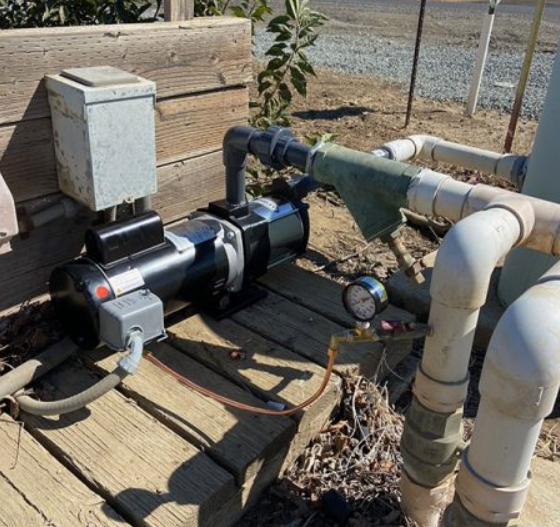
A cold shower that turns into no shower at all—pressure drops, air spurts at the tap, and the kitchen sink wheezes out a final gasp. In my world, that sound usually means the well pump has given up or it’s running far off its curve. Without a city main to lean on, a private well is either working or it’s not, and when it’s not, everything stops: laundry, livestock watering, dishwashing, even simple handwashing. Testing your flow rate and head pressure correctly is what separates years of reliable service from an expensive guessing game.
Meet the Arriagas from rural Pendleton, Oregon—Miguel Arriaga (41), a farrier who shoes horses across Umatilla County, and his spouse, Jenna (39), a school speech therapist. Their kids, Elena (11) and Mateo (8), are used to chores after school—until last month when their old 3/4 HP Goulds pump began short-cycling and then lost pressure completely. The Arriagas’ well is 265 feet deep with a 1-1/4" drop pipe, and they pull around 9-10 GPM for the house plus a small pasture hydrant. On inspection, we found low flow at the hydrant, burnt motor windings, and iron staining at fixtures. The previous pump operated miles off its pump curve. When we replaced it with a 1 HP Myers Predator Plus 10 GPM series built in 300 series stainless steel and a Pentek XE high-thrust motor, the difference was immediate—but only because we tested flow rate and head properly before committing to a model.
In this guide, I’ve mapped out the 10 most important steps for testing and verifying flow rate and head for a Myers submersible setup, with techniques that contractors use on service calls and homeowners can replicate safely. We’ll cover accurate static and dynamic water level measurements, TDH math, pressure tank interaction, pump curve reading, wire sizing checks, and on-site flow tests—so you don’t oversize, starve the pump, or burn out a good motor. This is also where Myers shines: stainless steel hardware, Teflon-impregnated staging, and that Pentek XE motor—all backed by a strong 3-year warranty and PSAM support. Whether you’re replacing an old unit or confirming the right upgrade, following the steps below eliminates guesswork.
What we’ll cover:
Static water level and drawdown testing for correct TDH Pressure, head, and elevation math you’ll actually use On-site flow testing at the hose bib and hydrants Matching GPM targets to real household demand Reading Myers pump curves like a pro Correct wire sizing and voltage drop checks 2-wire vs 3-wire controls and diagnostic differences Filtering, sediment, and how grit affects staging and life Warranty, efficiency, and total ownership cost Final verification before drop-in
Awards and achievements you’ll appreciate while testing: Myers Predator Plus models reaching 80%+ hydraulic efficiency near BEP, Pentek XE motors with thermal and lightning protection, Made in USA quality, UL and CSA listings, and an industry-leading 3-year warranty. At PSAM, I stock the documentation and curve charts, and I’ll walk you through your numbers—so your next pump decision is confident, not hopeful. I’m Rick Callahan, and I’ve spent decades sizing and troubleshooting well systems across the West. Let’s get your tests right the first time.
#1. Establish True TDH: Static Level, Drawdown, and Friction Loss – Accurate Math for a Myers Submersible Well Pump
A pump can’t be sized or verified without knowing total dynamic head (TDH), so we start with measurements—not guesses—that reflect how your system actually behaves under load.
Technically, TDH is the sum of vertical lift from the pumping water level, pressure converted to feet of head, and friction losses through pipe, fittings, and valves. For the Arriagas’ 265-foot well, we measured static at 95 feet and dynamic drawdown to 135 feet under flow. That means vertical lift used in TDH is from 135 feet, not 95. Add pressure requirement (for 50 PSI, convert to feet: 50 × 2.31 = 116 feet), plus friction loss (1-1/4" drop pipe at ~10 GPM adds roughly 5–12 feet depending on length and fittings). Their calculated TDH was approximately 135 + 116 + 10 = 261 feet at their target 9–10 GPM.
Arriaga example: Miguel and Jenna were shocked to learn their previous pump was selected using static level only—off by 40 feet of head once the well drew down. That mismatch destroyed efficiency and burned the motor early. With TDH verified, the Myers Predator Plus 1 HP, 10 GPM series landed right on curve.
How to Measure Static and Dynamic Levels Safely
Use an electronic water level meter for accuracy. Record static level with no water running. Then open a hydrant and measure dynamic level after 10–15 minutes of steady flow. Don’t skip the stabilization period—levels can drift. Log both numbers and note the drawdown; that’s the vertical lift you’ll actually pump against.

Converting Pressure to Head—Your Everyday Formula
Convert required house pressure to feet of head using PSI × 2.31. For 40/60 PSI Myers deep well pump features switches, size for the high side (60 PSI = 139 feet) if you want strong flow at peak demand. If your home sits above the wellhead, add elevation difference to the pressure value.
Friction Losses that Sneak into TDH
Friction at 10 GPM through 1-1/4" pipe is modest, but add elbows, a pitless adapter, check valves, and a long run to the tank—those feet add up. Use conservative tables or a friction calculator. As a rule of thumb, add 5–20 feet based on length and fittings complexity.
Key takeaway: TDH that ignores drawdown is wrong. Get TDH right, and your Myers pump runs at its best efficiency point instead of burning amps for nothing.
#2. Flow Testing at the Spigot – Real-World GPM Validation with a Pressure Gauge and a Bucket
You can’t trust a nameplate for actual flow at your fixtures; you verify it. A simple timed-bucket test tells you whether your Myers pump is delivering the goods at your target pressure.
Technically, we want GPM at sustained pressure. Use a hose bib outfitted with a quality pressure gauge. Open the bib fully, allow pressure to stabilize, and measure how long it takes to fill a 5-gallon bucket. Repeat at least three times. For the Arriagas, we logged 5 gallons in 30–32 seconds at 53–55 PSI—roughly 9.4–10 GPM steady. That aligned with the chosen Predator Plus 1 HP curve at their 260-foot TDH.
Arriaga example: Elena timed the fills while Miguel watched the gauge. Seeing 9–10 GPM at real operating pressure made the numbers tangible—and confirmed the old pump had been underdelivering for months.
Gauge Placement and Pressure Tank Influence
Test on a bib located downstream of the pressure tank so the pump cycles normally. Avoid testing right after the pump shuts off; you’ll get an artificially high initial flow. Aim for mid-cycle readings to keep results consistent.
Multiple Fixtures: What Happens to Flow?
Open a second fixture—like a pasture hydrant—while testing. Note the pressure dip and new fill time. This simulates real demand. If pressure falls off a cliff, your TDH or pump curve match is suspect, or restrictions exist downstream.
Acceptable Variance and Repeatability
Expect minor swings (±5–10%). If results vary wildly, you might have a sticky pressure switch, clogged filter, or a pump sliding off the curve due to voltage drop. Repeat testing at different times of day to rule out well recovery issues.
Key takeaway: A timed bucket and a $20 gauge can validate a $2,000 decision. Trust the numbers, not the hunch.
#3. Match the Curve: Reading Myers Predator Plus Pump Curves Against Your TDH and GPM Target
Once TDH and real flow are known, the pump curve is your truth-teller. Myers provides clear curves for each model, mapping GPM over head with efficiency bands.
Technically, you locate your TDH on the X-axis (feet of head) and slide up to intersect the curve for your desired GPM. The best place to operate is near the pump’s best efficiency point (BEP). For the Arriagas at ~260 feet TDH and 9–10 GPM target, the Myers Predator Plus 1 HP, 10 GPM series hit the sweet spot. Operating near BEP means higher efficiency, cooler motor temps, and longer life—exactly what the Pentek XE motor is optimized to support.
Arriaga example: With the new curve in hand, Jenna immediately saw why their old 3/4 HP unit struggled at 260 feet—it just wasn’t built to maintain that flow at that head.
When to Step Up Horsepower or Stages
If your duty point sits at the ragged right end of a curve (or below it), consider a higher HP or more stages. A slight bump—from 3/4 HP to 1 HP—can pull your duty point back into the efficiency island, especially around 250–300 feet TDH.
Avoiding Shut-Off and Overpumping Risks
The shut-off head is the far-right limit; you never want to operate near it. Flow will be near zero, velocity slows, and heat builds. That’s when motors cook. Verify your point is comfortably left of shut-off by 25–50 feet of head.
Reserve Capacity vs Oversizing
A little spare capacity is smart; oversizing invites short cycling, pressure swings, and wasted energy. Myers curves make it easy to pick the model that holds pressure under your worst-case drawdown without blowing past BEP at light loads.
Key takeaway: Put your duty point on the curve, near BEP, and your Myers pump repays you with 8–15 years of quiet reliability.
#4. Materials and Durability: Why 300 Series Stainless and Teflon-Impregnated Staging Matter for Real-World Head and Flow
Head and flow don’t live on paper; they live in water with minerals, sand, and pressure cycles. Material choices determine whether the pump still matches its curve after years of service.
Technically, 300 series stainless steel resists corrosion from mineral-rich and mildly acidic water, protecting the shell, discharge bowl, shaft, coupling, and suction screen. Inside, Teflon-impregnated staging with self-lubricating impellers resists abrasion from fines, holding clearance tolerances longer. When clearances stay true, efficiency holds, and the pump curve remains accurate. Add an internal check valve and a robust threaded assembly for field service, and you’ve got a submersible that maintains performance over time.
Arriaga example: Their previous impellers showed visible scoring from silt. With the Predator Plus stages, that kind of grit won’t chew through the stack nearly as fast, keeping Elena’s showers steady even when the well runs a little dirtier in summer.
Iron and Hard Water Reality Checks
Iron staining doesn’t just color fixtures; it deposits on impellers. Stainless and engineered composites shed buildup better than porous cast components. Combine with periodic filter changes upstream of the tank to preserve curve performance.
Sand and Silt: Velocity and Wear
High-velocity channels inside composite stages are less prone to sanding. Maintain acceptable GPM—don’t choke the pump downstream—so velocities keep fines from settling. Myers staging tolerates moderate fines, protecting your efficiency.
Check Valve Integrity and Water Hammer
A solid internal check valve keeps columns stable and reduces water hammer that can damage stages and thrust bearings. Add an external spring check topside if runs are long or elevation changes steep.
Key takeaway: Durable materials protect your head/flow numbers from drifting with age. Myers builds for the water you actually have.
#5. Power Reality: Voltage, Wire Gauge, and the Pentek XE Motor’s Role in Holding Flow Under Load
A pump sized right on paper can still underperform if voltage sags. Motors run hotter, efficiency drops, and your measured flow tanks—especially at higher head.
Technically, the Pentek XE motor is a high-thrust, single-phase motor with thermal overload protection and lightning protection designed to sustain torque at depth. That said, voltage drop across long wire runs can starve a motor. Check amperage draw against nameplate, test voltage at the pressure switch and well cap under load, and verify wire gauge based on run length and amperage. For 230V 1 HP units with long runs, upsizing wire from 12 AWG to 10 AWG often stabilizes voltage and restores flow.
Arriaga example: We measured 226V at the panel but only 214V at the well cap under load. Upsizing the drop to 10 AWG and re-terminating the wire splice kit brought line voltage back up, sharpening their flow by nearly 0.7 GPM.
2-Wire vs 3-Wire and Control Nuances
Myers offers 2-wire configuration and 3-wire configuration options. Two-wire units integrate start components in the motor, simplifying installs; three-wire units use an external control box—helpful for diagnostics and component replacement. Both can be tested effectively with proper voltage checks.
Amperage and Heat: The Quiet Killers
High amps indicate head too high, clogged intake, or voltage sag. Heat shortens insulation life. Check amps while flowing; compare to curve sheet expectations. Correct issues before you cook a good motor.
Grounding and Surge Protection
Bond your system correctly. A proper ground and a quality surge protector at the panel are cheap insurance for motors operating hundreds of feet underground.
Key takeaway: The Pentek XE is efficient and tough, but only as healthy as the power you feed it. Verify volts and amps—your flow depends on it.
#6. Pressure Tanks, Switches, and Cycling: Testing Flow Without Letting Controls Skew the Picture
Pressure tanks and switches affect testing. Short cycles, inaccurate cut-in/cut-out points, or undersized tanks distort results and punish pumps.
Technically, your pressure switch settings (e.g., 40/60 PSI) determine operating range, while the tank’s drawdown volume determines cycle frequency. An undersized tank makes a correctly sized pump look unstable during tests. The fix is simple: confirm switch accuracy with a gauge, set tank precharge 2 PSI below cut-in, and ensure you’ve got enough drawdown for your pump’s output—typically a minimum of one minute run time per cycle.
Arriaga example: Mateo helped me check the tank precharge—set to 28 PSI for a 30/50 switch before we standardized at 38 PSI for a 40/60 setup. Cycling stabilized, and our bucket tests became consistent.
Calibrating Pressure Switches for Reliable Testing
Kill power, bleed pressure to zero, verify precharge, then power back on and observe cut-in/cut-out. Adjust the large nut for 20 PSI differential and fine-tune the small nut for spread if needed. Accurate controls make accurate flow tests.
Drawdown Matters: Sizing the Tank
If your pump does 10 GPM, a tank that offers 10 gallons of drawdown between 40/60 PSI gives roughly a one-minute run time. More is better. Short cycling is efficiency’s enemy and fudges your test data.
Avoiding Flow Restriction During Tests
Remove or bypass clogged cartridge filters and calcified fittings before testing. You want to measure pump performance, not a dirty filter’s mood.
Key takeaway: Get your controls honest first; then your flow tests tell the truth.
#7. Installation Integrity: Drop Pipe, Pitless Adapter, and Check Valves—Testing for Hidden Head Losses
Flow tests that don’t match the curve can point to plumbing losses—not pump defects. Hidden restrictions steal GPM and inflate TDH.
Technically, a misaligned pitless adapter, partially closed valves, or a failing check valve will act like extra head. Scale inside drop pipe, debris at the intake screen, or a mis-sized tank tee all add friction. Inspect fittings, verify full-port ball valves, and confirm the pitless is clean and fully seated. If you pull the pump, examine the cable guard placement and ensure the intake sits well above the well bottom to avoid sand ingestion.
Arriaga example: Their pitless had a rough casting ridge catching debris. A quick cleanup and gasket refresh brought back nearly 4 PSI at the same flow rate.
Diagnostic Steps Without Pulling the Pump
Full-flow test at the wellhead if possible Compare pressure before and after filters Listen for chatter at the check valve (water hammer evidence) Thermal scan of aboveground lines for partial blockages
When a Pull Is Justified
If voltage and plumbing check out but flow still underperforms, it’s time to lift. On the bench, check impeller stack integrity, spin the shaft, and inspect the threaded assembly for serviceability—one of Myers’ advantages.
Rebuild or Replace?
Myers’ field-serviceable design often means a rebuild is viable. If stages are eroded or bearings sloppy, replacement restores curve performance and extends life.
Key takeaway: Don’t blame the pump until you’ve ruled out head loss in the hardware. Plumbing fixes are cheaper than a new motor.
#8. Comparison: Myers Predator Plus vs Goulds and Franklin Electric—Testing Performance Where It Counts
A well-chosen pump should test strong at the hose bib five years after installation—not just day one. Materials, motor design, and serviceability determine whether your numbers hold.
From a technical standpoint, Myers Predator Plus leans on 300 series stainless steel for the shell and discharge bowl, with engineered composite impellers and Teflon-impregnated staging. Efficiency stays high even with moderate fines. The Pentek XE motor delivers torque with lower heat rise and includes thermal and lightning safeguards. Many Goulds units still incorporate cast components that can corrode in acidic or mineral-heavy water, altering clearances and shifting the curve. Certain Franklin Electric setups may require proprietary control boxes that complicate field service.
In real applications, Myers’ field-serviceable threaded assembly means a qualified contractor can refresh a stage stack or replace a worn wear ring on-site without a total swap. That keeps your flow test results close to day-one performance. With Myers’ industry-leading 3-year warranty and US manufacturing, the long-term numbers favor the homeowner: fewer pull jobs, fewer service calls, and a steady 8–15 year expectation—longer with excellent water quality and maintenance.
Bottom line: When your testing routine confirms consistent GPM at operating pressure year after year, the purchase proves itself. With Myers and PSAM’s support, the reliability is worth every single penny.
#9. Sediment, Filters, and Intake Screens: Preserve Your Flow Numbers with Smart Protection
Dirty water is real, and it will skew your flow test results if you ignore it. Protect the pump and keep testing valid by controlling fines and iron.
Technically, the intake screen on a Myers pump keeps large particles out. Up top, a whole-house spin-down or sediment filter with a clear bowl lets you see what the well produces during seasonal changes. If iron’s present, consider an iron filter downstream of the pressure tank to avoid starving the pump. Keep flow rates through filters matched to their capacity; undersized filters mimic head loss and drag down testing.
Arriaga example: Summer storms stirred fines. With a 100-mesh spin-down before the tank tee, Miguel purges grit weekly. His flow tests now remain consistent season to season.
Intake Placement and Well Bottom Clearance
Maintain 10–20 feet above the well bottom to reduce sand ingestion. If the water table lowers seasonally, confirm the pump won’t approach the muck zone. A torque arrestor helps keep the assembly centered.
Filter Maintenance and Test Protocol
When performing flow tests, check the filter first. If it’s loaded, measure pressure before and after the housing to quantify head loss. Clean it, then retest. Better yet, log results both ways for a baseline.
Iron and Manganese Strategy
Oxidized iron accumulates inside plumbing. Schedule periodic flushes and consider media https://www.plumbingsupplyandmore.com/convertible-shallow-well-jet-pumps-1-2-hp.html sized for your GPM. Too fine a media creates restriction; too coarse lets staining pass. Balance is key.
Key takeaway: Good filtration protects the pump curve you paid for. Keep filters clean, and your Myers unit keeps hitting its numbers.
#10. Final Verification: System Checklist and Documentation to Lock in Your Myers Pump’s Performance
Before calling a job complete, run a verification routine and document the system. Your future self will thank you.
Technically, collect: static level, dynamic level at steady flow, final TDH calculation, sustained GPM at operating pressure, voltage at panel and well cap under load, amperage draw, pressure switch settings, tank precharge, and filter differential. Note discharge size (usually 1-1/4" NPT), wire gauge, run length, and model/serial of the pump. With Myers, attach the curve sheet with your duty point circled.
Arriaga example: Jenna keeps a folder in the mudroom. If their flow dips next summer, Miguel can compare readings to baseline and know whether it’s a filter, a control, or a well level shift.
Baseline Readings to Repeat Annually
5-gallon timed bucket at one interior faucet Pressure at cut-in/cut-out Voltage under load Well recovery test after a long irrigation run Consistency is health; drift is a clue to solve early.
Warranty and Service Notes
Register your Myers unit for the 3-year warranty. Keep PSAM invoices and install notes. If you ever need support, clean documentation cuts downtime.
Rick’s Picks: Test Kit Essentials
Quality pressure gauge on a hose adapter Electronic water level meter Clamp meter for amperage and a multimeter for voltage Spin-down filter with clear bowl Spare pressure switch and gauge With these, you’ll diagnose 90% of issues in one trip.
Key takeaway: Documentation is part of testing. Nail your baseline, and your Myers pump’s performance stays predictable.
Comparison: Myers vs Red Lion and Grundfos—Real Costs Over Ten Years When You Test and Size Correctly
Numbers win arguments. Across a decade, what does your testing-backed selection actually cost to live with?
Technically, Red Lion thermoplastic housings face cracking risk under pressure cycles and thermal swings. Grundfos often leans into 3-wire configurations with more complex control systems and higher upfront control costs. Myers, with stainless construction, field serviceable design, and the Pentek XE motor, maintains high efficiency near BEP: that means 5–20% lower energy use at the same duty point. When you test TDH and set the curve correctly, the system sees fewer starts, less motor heat, and reduced wear.
In real life, that translates to fewer pulls, fewer emergency Saturdays, and more consistent flow tests at the bib five years in. Families like the Arriagas don’t budget for surprise pump jobs because the unit performs. And when something does need attention, threaded assemblies and widely available parts let any qualified contractor handle service without proprietary barriers.
Add the 3-year warranty, US manufacturing, and PSAM’s same-day shipping for replacements or parts, and the math favors Myers over a decade of actual use. Reliability, efficiency, and serviceability make a Myers Predator Plus worth every single penny.
FAQ: Expert Answers from Rick Callahan
How do I determine the correct horsepower for my well depth and household water demand?
Start with your total dynamic head (TDH) and target GPM. TDH equals vertical lift from dynamic water level plus pressure converted to feet (PSI × 2.31), plus friction loss. A typical 3–4 person home needs 7–12 GPM. Example: dynamic level 140 feet, 60 PSI (139 feet), and 10 feet of friction equals ~289 feet TDH. If your target is 9–10 GPM, look at Myers Predator Plus pump curves and choose the model where your 10 GPM intersects around 289 feet. That’s often a 1 HP or 1.5 HP depending on staging. Verify with a timed bucket test at pressure, and check voltage and amperage under load to ensure the motor is comfortable. My recommendation: choose a Myers model operating near its BEP at your duty point; it’ll run cooler and last longer.
What GPM flow rate does a typical household need and how do multi-stage impellers affect pressure?
Most homes run well at 8–12 GPM with a 40/60 PSI switch. Multi-stage impellers increase pressure capability by stacking head per stage; more stages equal more head at a given flow, allowing a 10 GPM pump to deliver pressure at 200–300+ feet TDH. The best part: when you size for your true TDH, a Myers multi-stage design holds pressure consistently even when multiple fixtures open. If you irrigate or water livestock, verify total demand—irrigation might require an additional 5–10 GPM. A Myers Predator Plus 10 GPM series, correctly matched, keeps showers hot while a washer runs, because its head capability is built into the stages.
How does the Myers Predator Plus Series achieve 80% hydraulic efficiency compared to competitors?
Operating near the best efficiency point (BEP) is key. Myers Predator Plus impellers and diffusers are engineered to minimize recirculation losses, and the Pentek XE motor keeps torque steady with lower slip and heat. Combined with Teflon-impregnated staging, internal clearances stay tighter over time, preserving efficiency. Competitors with cast components or looser tolerances can drift off-curve as wear sets in. At real-world duty points—say 250–300 feet TDH at 9–10 GPM—the Predator Plus often shows 5–20% less energy use. That savings shows up on your power bill and in lower winding temperatures, which extends life.
Why is 300 series stainless steel superior to cast iron for submersible well pumps?
Submersibles live in water 24/7. 300 series stainless steel resists corrosion from minerals and mild acidity, preventing pitting and maintaining structural integrity under pressure cycles. Cast iron can rust and leach, altering stage alignment over years, while stainless maintains precise geometry. Stainless discharge bowls, shafts, and screens also make disassembly and field service cleaner. For wells with iron, manganese, or hardness, stainless slows accumulation, keeping performance closer to day-one. That’s a major reason I spec Myers Predator Plus in challenging water conditions: the materials protect your pump curve and your investment.
How do Teflon-impregnated self-lubricating impellers resist sand and grit damage?
In a submersible, fine abrasives erode impeller edges and diffusers, widening clearances and lowering efficiency. Teflon-impregnated staging with self-lubricating impellers reduces friction and abrasion. The engineered composite resists gouging and sheds fines better, so hydraulic profiles stay intact longer. For light-to-moderate sand, this protection dramatically slows performance decay. Combine with proper intake height above the well bottom and a spin-down filter topside to keep grit under control. Result: the flow you measure in year one remains close in year five, and the pump stays on its curve.
What makes the Pentek XE high-thrust motor more efficient than standard well pump motors?
The Pentek XE motor is built for continuous duty with higher thrust capacity to handle multi-stage stacks without overheating. It features thermal overload protection and lightning protection, while optimized windings and rotor design reduce heat at a given load. That means lower amperage draw at your duty point and longer insulation life. Under voltage sag, XE motors maintain torque better; paired with proper wire sizing, your pump delivers specified GPM at pressure without strain. In my field work, XE motors routinely show cleaner amperage profiles and better survival after brownouts than commodity motors.
Can I install a Myers submersible pump myself or do I need a licensed contractor?
Competent DIYers can install a Myers submersible well pump with the right tools and safety practices: a well hoist or tripod, torque arrestor, proper check valve, wire splice kit, and knowledge of electrical codes. That said, licensed installers bring pulling rigs, megohm meters for motor testing, and the experience to avoid costly mistakes—like setting depth wrong or miscalculating TDH. If water is critical (livestock, rental), hire a pro. At PSAM, we’ll supply the pump, curve sheets, fittings kit, and guidance either way. My advice: if you’re new to wells beyond 150 feet, use a contractor and keep your warranty clean.
What’s the difference between 2-wire and 3-wire well pump configurations?
A 2-wire well pump has internal start components in the motor—simplifying installation and reducing parts count. A 3-wire well pump uses an external control box with start capacitor and relay—making aboveground diagnostics and component replacement easier. Performance can be similar if sized correctly. For the Arriagas at 1 HP and 230V, both would work; they chose 2-wire for simplicity and fewer components to mount. I recommend 3-wire for very deep wells or when on-site troubleshooting speed is a priority. Either way, Myers gives you both options with consistent curve performance.
How long should I expect a Myers Predator Plus pump to last with proper maintenance?
With correct sizing at BEP, clean power, and periodic filtration checks, expect 8–15 years from a Predator Plus. In clean water with stable voltages, I’ve seen 20+ years. Maintenance means documenting baseline flow/pressure, cleaning sediment filters regularly, verifying pressure switch function yearly, and ensuring voltage at load remains within spec. The 3-year warranty protects you up front; thoughtful care protects you long term. If you’re drawing heavy irrigation loads, consider a dedicated irrigation pump to limit high-hour usage on the house unit.
What maintenance tasks extend well pump lifespan and how often should they be performed?
Quarterly: Inspect and flush spin-down filters; check pressure before/after filters to track restriction. Semiannually: Verify pressure switch cut-in/cut-out, tank precharge (2 PSI below cut-in), and inspect electrical connections. Annually: Perform a timed bucket test and compare to baseline; measure voltage and amperage under load at the well cap; check well recovery after extended draw. As needed: Pull and inspect if flow declines without an aboveground cause; service impellers and wear ring thanks to Myers’
field serviceable
design. These steps keep your pump on its curve and catch minor issues before they become pull jobs.
How does Myers’ 3-year warranty compare to competitors and what does it cover?
Myers’ 3-year warranty outpaces many brands that stop at 12–18 months. It covers manufacturing defects and performance issues under normal use, provided installation and electrical work meet code and best practices. In my experience, this longer coverage reflects confidence in the Predator Plus Series—from stainless construction to the Pentek XE motor. Keep your PSAM invoice, model and serial numbers, and install documentation. If you ever need support, we streamline the process. That extra year or two of coverage often saves a full replacement cost—real dollars back to your household.
What’s the total cost of ownership over 10 years: Myers vs budget pump brands?
On paper, a budget submersible might be $300–$500 cheaper. Over 10 years, I often see two or three replacements due to early bearing wear, cracked housings, or inefficient motors spiking power bills. Myers’ higher hydraulic efficiency (80%+ near BEP) trims energy costs by 10–20% annually, and the longer service life avoids pull fees and downtime. Add the 3-year warranty and US parts availability, and the math swings hard toward Myers. Homeowners like the Arriagas end up with stable flow, fewer emergencies, and lower all-in cost. That reliability is exactly why I stock Myers at PSAM.
Conclusion: Get the Testing Right—Then Let Myers Do What It Was Built to Do
Testing flow rate and head is not an academic exercise; it’s the difference between living with water and living without it. When you:
Measure static and dynamic levels, Convert PSI to feet and add friction honestly, Validate GPM with a timed bucket at pressure, Check voltage and amperage under load, Align your duty point with the Myers Predator Plus curve,
you get a system that runs in its comfort zone for years. That’s where 300 series stainless steel, Teflon-impregnated staging, and the Pentek XE motor prove their worth—quietly, efficiently, day after day. The Arriagas now see 9–10 GPM at 53–55 PSI, with clean starts and no short cycling. Their folder of baseline numbers means Jenna can spot issues early, and Miguel can fix small problems before they become big ones.
If you’re sizing or verifying a Myers submersible well pump, call PSAM. I’ll pull the curve sheets, help you run the numbers, and ship the right pump—often the same day. Tested right, installed right, and documented right, a Myers Predator Plus is the kind of investment that pays you back every time you turn the tap.
Mastra 4 inch submersible pump - R95-VC series, find complete details about Mastra 4 inch submersible pump - R95-VC series, Submersible impeller pump, Exporter of submersible pump, submersible pump set - Guangdong Ruirong Pump Industry Co., Ltd.https://www.mastrapump.com/Mastra-4-inch-submersible-pump-R95-VC-series-pd46988875.html

The best submersible well pump supplies an entire household with water from a well.There many types of submersible well pumps available.These deep well pumps are designed to operate beneath the earth’s surface by being completely submerged in liquid and made to push water to the surface, here https://waterfiltersadvisor.com/best-submersible-well-pump/.