Fast shipping isn’t just about moving quicker it’s about removing friction between steps. The most reliable approach is a lane that links Piece Picking directly to pack, turning mixed totes into a steady, predictable flow. Here’s how a modern robotic piece picking system does that, what to validate before you buy, and where the ROI shows up first.
How the lane actually works
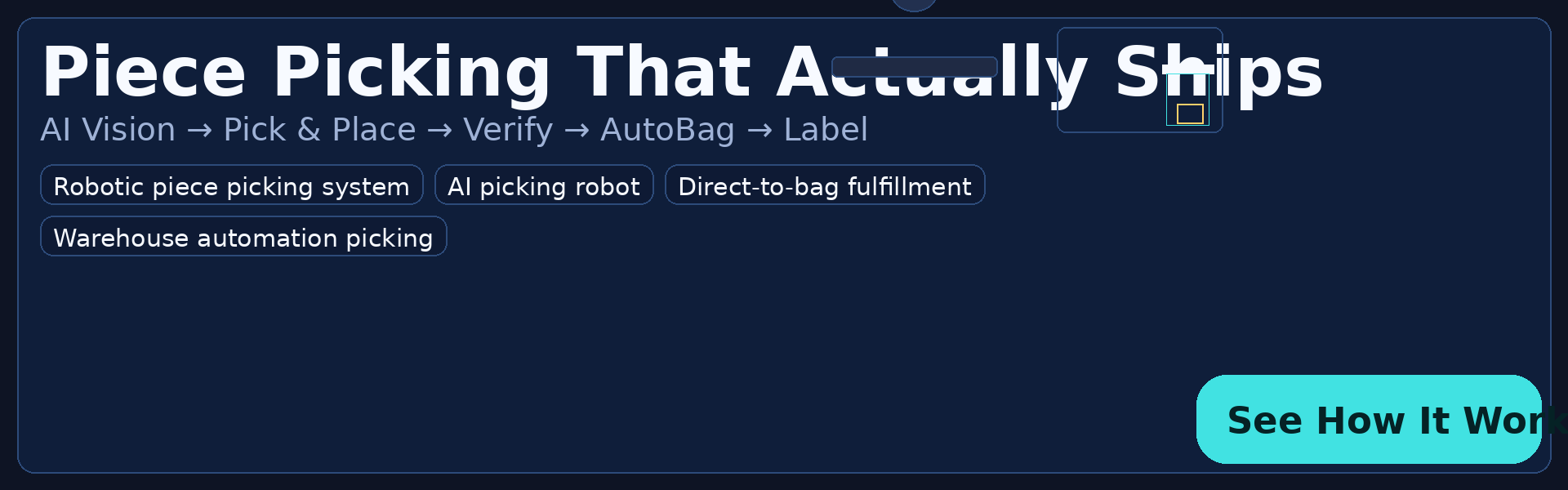
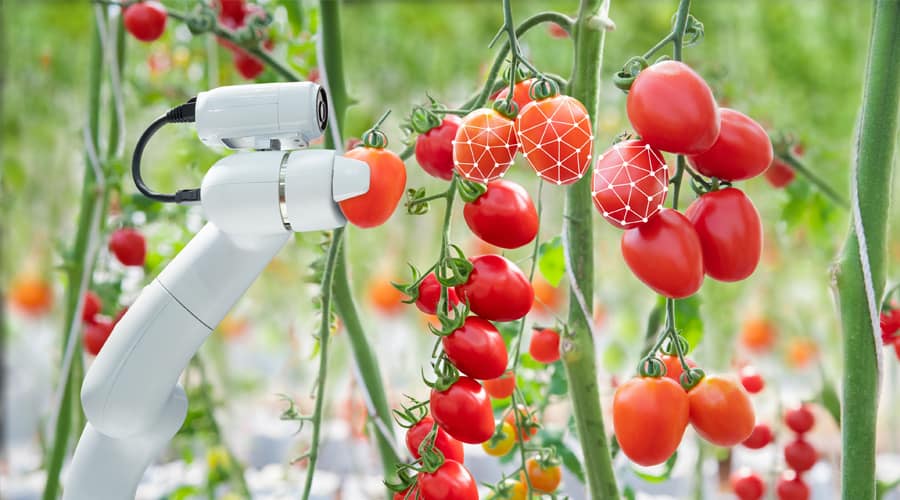
At the core is an AI picking robot guided by ai vision picking. Cameras identify the next SKU, choose a stable grasp, and the arm performs a precise transfer. In most configurations the arm runs as a pick and place robot, handing items to the next step chute, carton, or a bagging throat. Pair the cell with robotic bagging (often called autobagging) and you unlock direct-to-bag fulfillment: pick → drop → seal → label → sortation. Fewer touchpoints compress cycle time and improve presentation at weigh/scan.
Built for the real world
Real floors operate in random picking conditions mixed orientations, glossy film, soft mailers, clear clamshells. Modern automated piece picking handles this variety with depth sensing, grasp libraries, and confidence checks. The result is fewer mispicks and steadier throughput across shifts exactly what warehouse automation picking needs to keep promise dates without adding headcount or floor space.
What to validate in a pilot
Before scaling, run a focused trial with your SKUs and presentation:
- SKU coverage & accuracy: Include rigid boxes, soft goods, and reflective packaging; track first-pass pick success and exception rates over multi-hour runs.
- Sustained throughput: Measure average picks per hour (not just peak bursts) under your lighting and tote pitch.
- Integration depth: Confirm clean handshakes to WMS/WES, scanners, scales, and the bagger so confirmations and labels post automatically.
- Changeover & learning: New items should take minutes; look for systems that improve grasp strategies over time.
- Uptime & service: MTBF/MTTR, spare-parts access, and remote diagnostics determine day-two performance.
Selecting platforms with data not hype
Teams often research topics like piecepicking vs osaro when mapping the landscape. Treat those searches as a cue to compare options with your data: run side-by-side trials using the same SKUs, presentation, and a neutral scorecard coverage, sustained PPH, exception recovery, integration effort, and support quality. The best warehouse picking robot is the one your operators trust on a peak Monday afternoon.
Packaging that matches the picker
If your order mix skews to single-item parcels, connect picking directly to a bagger. A tuned lane lets the pick and place robot feed packaging at cadence while robotic bagging seals, labels, and verifies true direct-to-bag fulfillment. For multi-line orders, route to carton flow but keep the same vision-confirmed pick step to protect accuracy and rhythm.
Where the ROI appears
Shorter path to ship: Seconds saved per order add up across thousands of parcels.
Higher first-pass yield: Vision confirmation and standardized handoffs cut reships and rework.
Calmer operations: Supervisors focus on exceptions and flow instead of firefighting.
Scalable architecture: Start with one lane; replicate horizontally as volume grows.
A well-designed robotic piece picking system driven by an AI picking robot, orchestrated as pick and place, and finished with robotic bagging turns item handling into a dependable engine. Validate on your floor, compare platforms with real metrics, and scale what works. That’s how warehouse automation picking becomes faster cycles, fewer errors, and promises kept day after day.