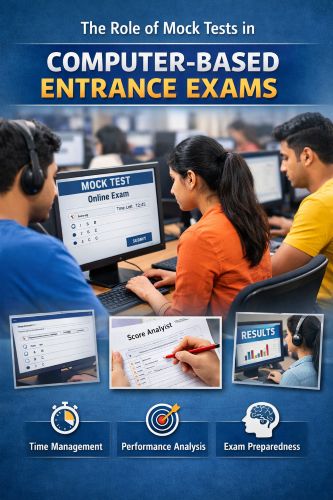
Computer-based entrance exams have completely transformed the way students prepare, practice, and perform. Unlike traditional pen-and-paper tests, these exams demand not just subject knowledge but also familiarity with digital interfaces, time pressure, and on-screen problem-solving. For aspirants preparing for competitive exams like the BITSAT exam, mock tests are no longer optional add-ons. They are a core part of a smart preparation strategy.
Mock tests bridge the gap between preparation and performance. They help students understand how concepts translate into marks under real exam conditions, reduce anxiety, and improve speed and accuracy over time. When used correctly, they can significantly influence final outcomes.
Understanding the nature of computer-based entrance exams
Computer-based entrance exams test much more than syllabus coverage. Students must adapt to navigating between questions, using on-screen calculators when allowed, managing time without physical cues, and staying focused in a digital environment for several hours.
In exams like BITSAT, where speed plays a major role and the question pattern can feel intense, familiarity with the interface is critical. Mock tests simulate these conditions, helping students adjust to the rhythm and pressure of the actual exam.
Key challenges students often face in computer-based exams include:
* Reading and interpreting questions quickly on a screen
* Managing time across multiple sections without paper-based tracking
* Avoiding careless errors due to speed pressure
* Maintaining concentration during long test durations
Mock tests are designed to address all these challenges systematically.
Why mock tests matter more than just practice questions
Solving individual practice questions is useful for concept clarity, but mock tests serve a different purpose altogether. They replicate the real exam environment and test a student’s overall readiness.
Mock tests help students:
* Experience the real exam flow from start to finish
* Build stamina for long test durations
* Learn how to switch between sections strategically
* Identify weak areas that may not be obvious during casual practice
For students targeting top scores in the BITSAT exam, mock tests act as a reality check. They reveal whether preparation is exam-ready or still theoretical.
Improving time management and speed
Time management is one of the biggest differentiators in competitive exams. Even well-prepared students can struggle if they spend too much time on difficult questions.
Mock tests train students to:
* Allocate time wisely across sections
* Decide when to skip and return to questions
* Balance accuracy with speed
* Avoid getting stuck on low-yield questions
Over multiple attempts, students naturally develop an internal clock. They begin to sense how long a question deserves and when it is better to move on. This skill is almost impossible to develop without full-length mock tests.
Understanding marks, rank, and performance trends
One of the most practical benefits of mock tests is performance analysis. Students often wonder how their score translates into competitiveness, especially when thinking about BITSAT marks vs rank.
Regular mock tests help aspirants:
* Track score improvement over time
* Understand realistic score ranges
* Compare performance across sections
* Set achievable score targets
While mock test scores are not exact predictors of final ranks, they provide valuable benchmarks. They also help students evaluate whether their current preparation level aligns with their target campus or branch.
Reducing exam anxiety and building confidence
Exam anxiety is common, especially in high-stakes entrance tests. The unfamiliarity of a computer-based exam can amplify stress, even for confident students.
Mock tests reduce anxiety by:
* Making the exam format feel familiar
* Normalizing pressure through repeated exposure
* Helping students handle mistakes calmly
* Building confidence through measurable improvement
When students walk into the actual exam having already attempted several realistic mocks, the experience feels like “just another test” rather than a life-defining moment. This mental shift can significantly improve performance.
Identifying strengths and weaknesses early
Another major advantage of mock tests is targeted improvement. Instead of guessing which topics need more attention, students get clear data.
After each mock test, students can analyze:
* Topics where accuracy is low
* Questions that consume excessive time
* Sections that consistently pull scores down
* Patterns of repeated mistakes
This allows for smarter revision plans. Instead of revising everything again, students can focus on high-impact improvements.
Mock tests and strategic preparation planning
Mock tests are most effective when integrated into a structured study plan. They should not be taken randomly or only at the end of preparation.
A smart approach usually includes:
* Early-stage mock tests to understand exam demands
* Mid-stage tests to evaluate conceptual strength
* Final-stage tests to refine strategy and speed
For students who have already completed major syllabus portions and are preparing alongside the BITSAT application form process, mock tests help ensure that preparation stays aligned with exam timelines.
Choosing the right mock test series
Not all mock tests offer the same value. The quality of questions, exam interface, and analysis tools matter greatly.
A good BITSAT mock test series should:
* Match the actual exam pattern and difficulty level
* Offer detailed performance analysis
* Provide multiple full-length tests
* Allow students to track progress over time
The goal is not to attempt the highest number of tests but to learn from each one. Reviewing mistakes is often more valuable than taking another test without analysis.
Learning adaptability through mock tests
Computer-based exams often require on-the-spot decision-making. Sometimes a section feels tougher than expected, or time runs faster than planned.
Mock tests teach adaptability by:
* Exposing students to varied difficulty levels
* Encouraging flexible section-wise strategies
* Helping students stay composed under pressure
This adaptability becomes crucial on exam day when conditions may not be ideal.
Final thoughts on mock tests and exam success
Mock tests are not just practice tools; they are performance tools. For competitive exams like the BITSAT exam, where speed, accuracy, and composure define success, mock tests play a decisive role.
They help students convert preparation into results by improving time management, reducing anxiety, clarifying strengths and weaknesses, and offering realistic performance insights. When combined with consistent study and smart revision, mock tests can significantly enhance outcomes.
For aspirants navigating syllabus completion, revision, and the BITSAT application form timeline, mock tests bring structure and clarity to preparation. Over time, they also help students understand where they stand in terms of BITSAT marks vs rank expectations.
In the end, success in computer-based entrance exams is not just about knowing more, but about performing better. Mock tests are the training ground where that performance is built.

Get our BITSAT crash course at an affordable price.
We intake limited students in a batch so that we focus on every student diligently.