If you own a business that serves a specific city, town, or region, your best customers are already searching for you online. Every day, people type phrases like “plumber near me,” “best marketing agency in Miami,” “IT support company in Dallas,” or “roof repair in Phoenix.”
These searches are not casual browsing. They come from people who have a real problem and want a solution fast.
That is why local SEO for lead generation has become one of the most powerful growth channels for modern businesses. When done correctly, local SEO places your brand in front of high-intent customers at the exact moment they are ready to call, book, or request a quote.
Let’s break down how local SEO works, why it converts so well, and how you can use it to consistently generate local leads.
What Is Local SEO and Why It Drives Leads
Local SEO is the process of optimizing your online presence so your business appears in local search results when people look for services in your area.
Instead of targeting broad national keywords, local search marketing focuses on:
- Service + city keywords
- “Near me” searches
- Neighborhood or zip-code searches
The big difference is intent.
Someone searching “marketing services” might be researching.
Someone searching “digital marketing agency in India” is usually ready to take action.
That is why local SEO optimization delivers fewer but far more valuable visitors. These visitors convert at a much higher rate.
How Google Displays Local Businesses
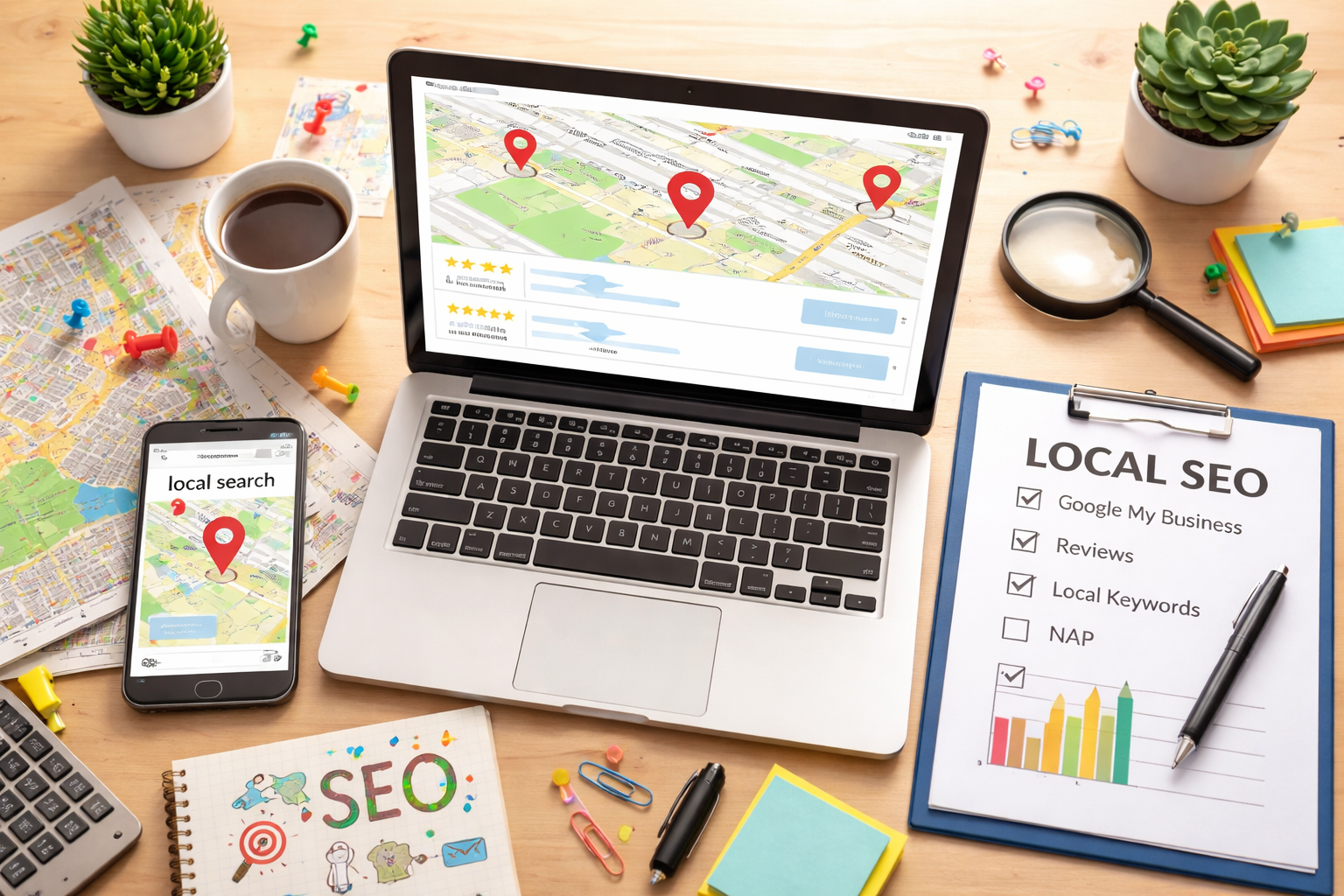
When users perform a local search, Google typically shows:
- A map with three highlighted businesses
- Individual business profiles with reviews and photos
- Organic website listings below
This layout is designed to make choosing and contacting a business easy. Users can call, message, or get directions in seconds.
If your business appears in these areas, you are positioned directly in the decision zone.
Recommended for reading: Is Answer Engine Optimization (AEO) Replacing Traditional SEO?
Google Business Profile Optimization: Your Top Lead Source
Your Google Business Profile is often your most important local SEO asset. For many customers, it becomes their first impression of your business.
A well-optimized profile helps you:
- Appear in more local searches
- Build trust instantly
- Receive direct calls and messages
Key Google Business Profile optimization steps:
- Choose the most accurate primary category
- Add all relevant services
- Upload real photos of your team, office, and work
- Write a strong business description with keywords
- Keep hours and contact details updated
When your profile is complete and active, Google is more likely to show your business for relevant searches, and customers are more likely to contact you.
Location Pages That Convert Visitors Into Customers
If you serve multiple cities, you need location-based SEO pages that speak directly to each market.
- Effective location pages include:
- Services offered in that city
- Local customer testimonials
- Common problems and solutions
- Pricing factors or estimates
- Clear calls-to-action
Avoid copying the same content across all pages. Each page should feel unique and helpful.
These pages help you rank for service + city keywords and turn visitors into leads.
Recommended for reading: What is voice search SEO? A beginner’s guide to voice optimization
Reviews: The Hidden Conversion Booster
Online reviews are one of the strongest local ranking factors and a major trust signal for customers.
When people compare businesses, reviews often determine who gets the call.
A simple review strategy:
- Ask every satisfied customer
- Send a direct review link
- Respond to all reviews
A steady stream of positive reviews increases visibility, clicks, and conversions.
Local Content That Attracts Buyers
Content is not just for blogging. It plays a big role in local digital marketing and lead generation.
Create content around:
- Cost of services in your city
- Common local issues
- Seasonal service tips
- Comparison guides
Examples:
- “How Much Does Web Design Cost in Los Angeles?”
- “Emergency HVAC Repair in Houston: What to Do First”
These topics attract people who are close to making a decision.
On-Page SEO That Supports Local Rankings
Every important page on your website should include:
- City and service in the title tag
- City and service in the H1
- Mentions of service area in content
- Internal links to location pages
This helps search engines understand where you operate and what you offer.
Mobile Optimization Is Non-Negotiable
Most local searches happen on smartphones.
Your site must:
- Load fast
- Be easy to read
- Have click-to-call buttons
- Use short forms
If your site is slow or confusing, you lose leads even if you rank well.
Tracking the Right Metrics
Instead of focusing only on rankings, track:
- Phone calls
- Form submissions
- Direction requests
- Conversion rates
These metrics show whether your local SEO strategy is producing real business results.
Common Local SEO Mistakes
- Ignoring Google Business Profile
- Thin or duplicate location pages
- No review strategy
- Poor mobile experience
- No conversion tracking
Fixing these alone can lead to quick improvements.
Why Local SEO Is a Long-Term Lead Engine
Unlike paid ads, which stop the moment you stop spending, local SEO services build long-term assets.
Over time:
- Rankings improve
- Reviews grow
- Brand trust increases
- Cost per lead decreases
That compounding effect is why local SEO remains one of the highest-ROI marketing channels for businesses.
Final Thoughts
Local SEO is not about chasing traffic. It is about being visible when people are ready to buy.
When your business appears in local search results, your profile is optimized, your website converts, and your reputation is strong, local SEO becomes a reliable lead generation engine.