





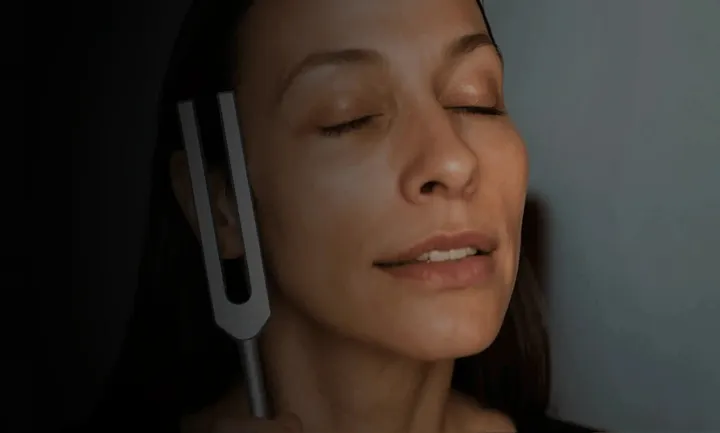
Vibroacoustic therapy (VAT) is a clinical form of vibration sound therapy that uses low frequency vibration waves applied directly into the body to promote relaxation, nervous system regulation, and emotional calm — and it shares fundamental principles with tuning fork vibration.
In this guide, you’ll learn what vibroacoustic therapy is, how mechanical vibration influences the body and mind, and how tuning forks fit into the broader category of vibration-based wellness approaches.
- On this page
- What is vibroacoustic therapy?
- How low-frequency vibration affects the nervous system
- VAT vs tuning forks: similarities & differences
- What research says
- How to use tuning forks with vibration principles
- FAQ
What is vibroacoustic therapy?
Vibroacoustic therapy (VAT) is a type of sound-based therapy that delivers low frequency sine wave vibrations (usually between ~30–120 Hz) directly into the body through specialized devices like mats, chairs, tables, or transducers. These vibrations are intended to be felt as well as heard and are thought to interact with mechanoreceptors and sensory systems.
VAT was developed in Norway in the 1980s and has since been explored in clinical and wellness settings to support relaxation, stress reduction, and physical comfort. The U.S. FDA classifies many vibroacoustic devices as therapeutic vibrators, reflecting their use in muscle relaxation and minor pain relief.
Rather than relying solely on sound heard through the ears, VAT combines audible tones with mechanical vibrations that travel through body tissues. This is similar to other forms of vibration therapy that aim to influence nervous system state.
How low-frequency vibration affects the nervous system
The human sensory system responds to both sound and mechanical vibration. Vibroacoustic therapy and tuning forks share a core idea: low frequency vibration can influence nervous system regulation by stimulating sensory receptors and encouraging the body to shift from “alert” states into calmer patterns.
Research shows that vibration-based interventions can increase parasympathetic activity (the “rest-and-digest” branch of the nervous system), reduce physiological markers of stress, and promote relaxation responses in humans.
Source: https://pmc.ncbi.nlm.nih.gov/articles/PMC11436230
Key idea:
Slow, steady mechanical vibration (whether from VAT devices or tuning forks) provides rhythmic input that can help the nervous system reduce tension, lower stress markers, and support emotional calm.
VAT vs tuning forks: similarities & differences
Both vibroacoustic therapy and tuning forks use low-frequency vibration to influence the body:
Vibroacoustic therapy uses specialized devices that transmit sound-generated vibration across large body surfaces.
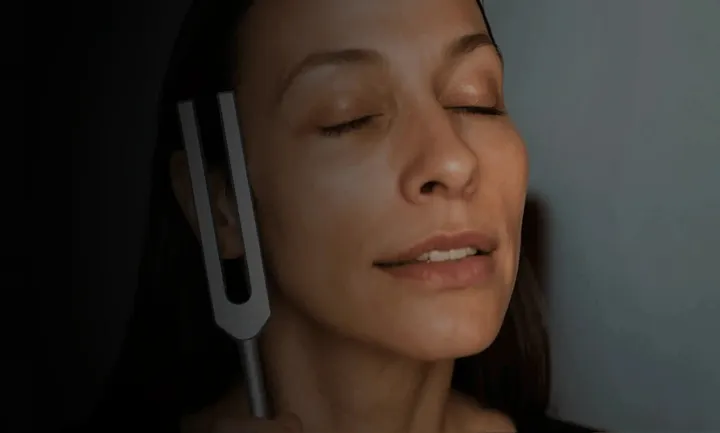
Tuning forks deliver mechanical vibration into bone and tissue at specific frequencies you control manually.
While VAT devices are typically larger and designed for whole-body application, tuning forks provide a portable, targeted vibration tool that individuals can use at home. Both approaches rely on the body’s capacity to sense and respond to low frequency vibration.
What research says
Scientific research on vibroacoustic therapy and related low-frequency vibration approaches is ongoing. Early studies suggest that VAT may help with stress, psychological relaxation, and physical comfort, but more large-scale clinical trials are needed.
Become a member
For example, one study using a vibroacoustic sound massage reported increases in parasympathetic nervous activity and reductions in psychological stress markers.
Other research exploring VAT in adults with pain found characteristics and outcomes that may inform future investigation into non-invasive vibration therapies for physical discomfort and nervous system support.
Important: While vibroacoustic therapy shows promise for relaxation and comfort, the research field continues to grow and is not yet conclusive for specific medical conditions.
How to use tuning forks with vibration principles
You can bring some principles of vibroacoustic therapy into your daily routine using tuning forks. Because tuning forks create controlled mechanical vibration, they’re well-suited for:
- Relaxing the nervous system before sleep or meditation
- Calming stress and anxiety signals
- Supporting body awareness and relaxation
Try incorporating these simple routines with tuning forks you already own:
- 5-minute reset: Strike a fork like 128 Hz and place it on the chest while breathing slowly.
- Focused calm: Use a mid-frequency fork like 256 Hz near the ears to encourage nervous system regulation.
These techniques borrow from the heaviest vibration input principles used in VAT — rhythmic, steady vibration perceived by the body and nervous system.
Frequently asked questions
Is vibroacoustic therapy the same as sound therapy?
Vibroacoustic therapy is a type of sound therapy that combines low frequency sound with mechanical vibration felt through the body, whereas general sound therapy may focus only on audio.
Can tuning forks mimic vibroacoustic therapy?
Yes — tuning forks deliver similar mechanical vibration at specific frequencies your body can sense, offering a portable way to use vibration for relaxation and nervous system support.
Does research support VAT and vibration healing?
Some studies suggest low frequency vibration reduces stress and may support physical comfort, but the scientific evidence is still emerging and not definitive for specific medical outcomes.
The easiest way to start
Whether you’re exploring sound therapy, nervous system regulation, or relaxation tools for stress relief, tuning forks provide a simple, science-aligned way to experience mechanical vibration at home.
We help people use vibration and sound to calm the nervous system, reduce tension, and support better rest and balance every day.
Original Content is published on this url:- https://purefrequencies.com/blogs/news/vibroacoustic-therapy-tuning-forks-what-science-says-about-vibration-healing


Would you rather stay at home than go into a health care facility or nursing home?
Faith Home Healthcare LLC is the best home health agency in nj, will provide the following home health care programs at flexible schedules and cost-friendly service rates.->We are here to help when you need us->On call 24/7 availability for client needs->Flexible, fast and friendly scheduling->Regular quality assurance->Thorough care management and family support->State certified and experienced care team staff24X7 Service Available Hourly Home Health Aide | 24×7 Live In Care | Developmental Disabilities | Respite home care | Skilled Nursing | Hospital to homecare | Physical Therapy | Occupational Therapy | Speech Therapy | Specialized Carehttps://www.faithcareus.com/services/